


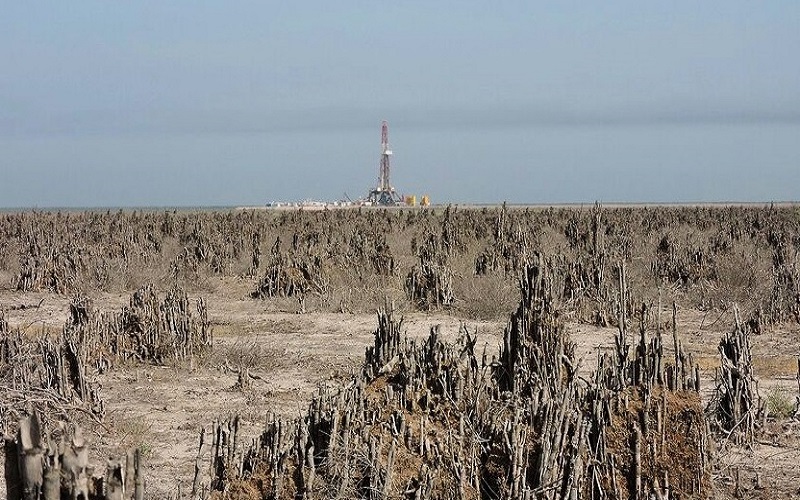

Iran is facing an escalating environmental crisis, with nearly half of its wetlands drying up and turning into dust traps, a senior government official warned. On Thursday, January 30, 2025, the Vice President of Iran and the Head of the Department of Environment, Shina Ansari, highlighted the severity of the situation, emphasizing the urgent need for intervention.
A Nationwide Environmental Emergency
During a visit to Isfahan province, Ansari addressed the region’s environmental challenges, stating: “In the Zayandeh Rud watershed and other areas, industries and agriculture have developed with high water consumption, while we are currently facing a serious water shortage problem in the country.”
According to Ansari, years of environmental neglect have led to a critical situation that is no longer confined to a single region. She noted that apart from Gilan province, all of Iran’s 31 provinces are struggling with severe environmental degradation.
Groundwater Depletion and Land Subsidence
One of the most alarming consequences of Iran’s water mismanagement is land subsidence. Ansari pointed out that Kerman province and the Rafsanjan Plain have the highest rate of subsidence, while Khorasan Razavi province is the most at risk in terms of affected land area. Isfahan, meanwhile, ranks highest in terms of subsidence occurring in urban and residential areas.
Violations of Water Rights and Policy Failures
Environmental experts have long warned about the misallocation of water resources. The Tasnim News Agency reported last year that despite Iran’s Comprehensive Water Law, which mandates that environmental water rights should be prioritized after drinking and sanitation but before agriculture and industry, the government has failed to uphold these regulations.
Masoud Bagherzadeh Karimi, Deputy Director of Wetlands and National Parks Affairs at the Environmental Protection Organization, confirmed this mismanagement, stating on August 2, 2024: “Human interference is the main cause of the drying up of wetlands, with drought as an additional contributing factor.”
Iran’s Irony: A Pioneer in Wetlands Protection, Yet a Major Culprit in Their Destruction
Iran’s environmental crisis is particularly striking given its historical role in wetland conservation. The country played a pivotal role in the establishment of World Wetlands Day by spearheading the Ramsar Convention, signed on February 2, 1971, in the city of Ramsar. This international treaty, the oldest of its kind, was designed to protect wetland biodiversity, with Iran positioned as a key advocate. Today, however, the country is struggling to uphold the very principles it once championed.
The Vital Role of Wetlands
Wetlands serve as crucial components of the global ecosystem, providing oxygen production, water storage, purification, carbon sequestration, nutrient production, and soil stabilization. Their destruction not only exacerbates Iran’s environmental challenges but also poses significant threats to public health and food security.
Global Recognition of Iran’s Water Crisis
The international community has also taken note of Iran’s worsening water crisis. In an April 2024 report, the World Resources Institute ranked Iran among the 25 countries facing the most severe water scarcity and stress. The report attributed this crisis to “decades of poor water management and unsustainable water use for agriculture.”
Urgent Action Needed
As Iran’s wetlands continue to disappear, the consequences will extend far beyond environmental degradation, affecting agriculture, public health, and economic stability. Without immediate and decisive action to reform water policies, regulate industrial consumption, and restore damaged ecosystems, Iran’s environmental crisis will only deepen, placing millions at risk.