
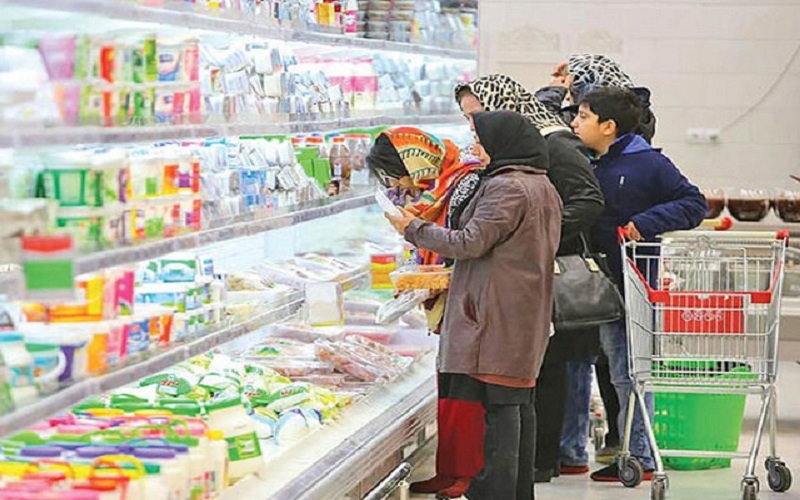

The relentless inflation in Iran has pushed the cost of essential food items to unprecedented levels, making it increasingly difficult for families to afford even the most basic necessities. Today, the minimum food expenses for a family of four surpass the average wages of most Iranian workers, exacerbating the financial strain on households.
The Minimum Caloric Requirement and the Rising Costs
Global standards indicate that adults between the ages of 18 and 60 require between 2,000 and 3,000 calories per day to meet their basic nutritional needs. Achieving this intake necessitates three meals a day, including at least one hot meal. However, skyrocketing food prices in Iran have made even a minimal diet unaffordable for a significant portion of the population.
Essential staples such as bread, dairy products, oil, rice, legumes, and eggs have witnessed dramatic price hikes. Even with the exclusion of expensive proteins like red meat and chicken, the current minimum wage of approximately 10 to 12 million tomans is insufficient to cover the nutritional needs of a family of four. This calculation does not even account for additional essential expenses such as housing, clothing, medical care, and education.
The Cost of a Simple Breakfast
To illustrate the severity of the situation, consider the cost of a minimal breakfast comprising bread, cheese, and butter:
- Bread: Prices have surged multiple times in 2024. Regular Sangak Bread now costs 10,000 tomans, while a simple Barbari Bread (Easy Persian Flatbread) without sesame is priced at 5,000 tomans.
- Cheese and Butter: A family of four consuming 400 grams of cheese and 200 grams of butter daily faces an expenditure of approximately 140,000 tomans per day.
- Eggs: Adding eggs to breakfast, even at a minimal rate of one per person twice a week (priced at 5,000 to 6,000 tomans per egg), brings the total weekly breakfast cost to over 1 million tomans.
Lunch and Dinner: A Struggle to Afford a Hot Meal
The cost of preparing a hot meal for lunch, even without meat, is staggering. A meal consisting of imported rice, liquid oil, beans, potatoes, onions, and tomato paste for four people now costs nearly 350,000 tomans.
Key Food Prices in 2024:
- Imported rice: 75,000–90,000 tomans per kilo
- Liquid oil (1,300 grams): 95,000 tomans
- Potatoes: 60,000 tomans per kilo
- Onions: 35,000 tomans per kilo
- Legumes: Chickpeas – 95,000 tomans/kg, Lentils – 120,000 tomans/kg, Pinto beans – 230,000 tomans/kg
- Vegetables: 40,000 tomans per kilo
- Low-fat yogurt: 40,000 tomans for 900 grams
- Red meat: 860,000 tomans per kilo
- Chicken meat: 89,000 tomans per kilo
With limited consumption of red or chicken meat just twice a week, a family’s weekly lunch costs exceed 3 million tomans. Dinner, typically comprising simpler foods such as mashed potatoes, lentils, bean stew, soup, or bread and cheese, adds an additional 1.2 to 1.5 million tomans to the monthly food bill.
The Harsh Reality: Food Costs Outpacing Wages
The total cost of three daily meals for a family of four averages around 5 million tomans per week, translating to over 20 million tomans per month. This is far beyond the reach of many Iranian families, particularly those relying on the government-mandated minimum wage.
A December 2024 report from the Parliament Research Center indicated that more than 50% of Iranians were unable to meet the minimum daily caloric requirement of 2,100 calories. Given the continued inflation of food prices, this percentage has likely increased further, signaling a growing malnutrition crisis in the country.
A Deepening Economic Divide
Workers and labor unions have long protested the glaring disparity between the government’s approved minimum wage and the actual cost of living. This gap becomes even more severe when factoring in additional expenses like housing, medical care, and education.
Studies show that the percentage of the minimum wage required to cover food costs has risen from 52% in December 2020 to 65% in December 2024. With the latest round of inflation in early 2025, this figure is expected to increase further. Even with the recently approved minimum wage increase to 16-17 million tomans, it remains well below the estimated 20 million tomans needed solely for food expenses.
The Erosion of the Middle Class and Rising Poverty
In recent years, even Iran’s middle class has experienced a sharp decline in purchasing power. Many families have been forced to cut unnecessary expenditures, including social gatherings, new clothing, household repairs, entertainment, travel, and even medical care. The rising cost of living has not only affected the working class but has also driven a significant portion of the middle class into financial hardship.
The poverty and misery index in Iran has surged over the past decade, with the gap between the wealthy elite and the struggling middle and lower classes widening. If inflation and wage disparities continue unchecked, the economic crisis will only deepen, pushing more Iranian families below the poverty line and further exacerbating food insecurity across the nation.