


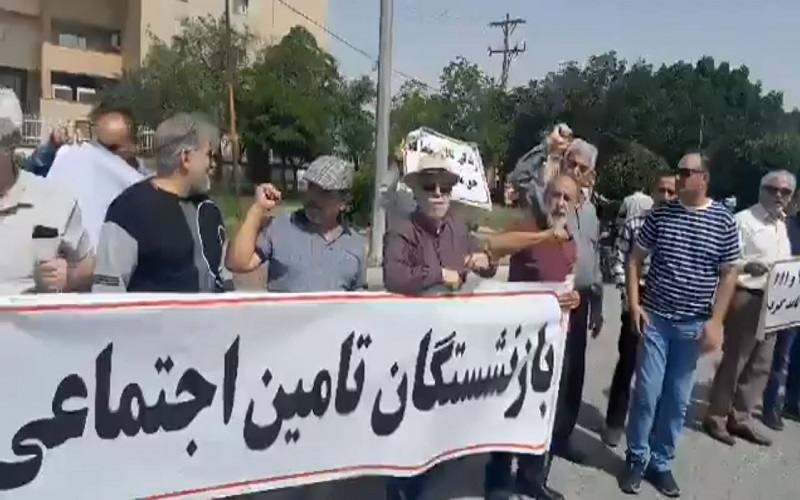

Despite a staggering 100–400 percent rise in drug prices in recent months, Iran is now facing a new and even harsher wave of medication inflation. This crisis has been triggered by the regime’s mismanagement and the suspension of foreign exchange subsidies for pharmaceuticals, further eroding access to essential medicines.
According to a report by the state-run ILNA news agency, since the beginning of 2025, the cost of some life-saving drugs has surged by as much as 600 percent. As a result, a growing number of retirees and workers are being forced to abandon treatment—either for themselves or their family members—because they can no longer afford the necessary medication.
The report highlights another alarming aspect of the crisis: insurance coverage has not kept pace with the escalating drug prices. The coverage provided by state and private insurance organizations has remained static, leaving patients with little choice but to seek cheaper, often counterfeit alternatives or discontinue treatment altogether.
“Hundreds of thousands of people, especially the elderly and retired workers, have either halted their treatment or resorted to ineffective and potentially dangerous substitutes,” ILNA reported.
One retiree from Tehran shared his personal ordeal:
“For a simple heart condition, my monthly medication costs around two million tomans. With a pension of six million tomans and the burden of rent, bills, and groceries, there’s simply nothing left for medicine.”
This growing inequality in access to healthcare represents a stark violation of Article 29 of the Islamic Republic’s Constitution, which guarantees free medical care for all citizens. In practice, however, medical justice has been replaced by medical discrimination, with the poor and elderly disproportionately affected.
Particularly vulnerable are patients suffering from chronic and severe conditions such as cancer, multiple sclerosis (MS), and kidney failure. According to health activists, many of the specialized drugs for these conditions are no longer imported or are being sold at prohibitively high prices. The private sector, citing lack of profitability, has ceased importing many essential drugs. As a result, patients are left to navigate the black market or settle for ineffective treatments—an often fatal compromise.
“This leads to treatment failure, disease relapse, and, in many cases, premature death,” said one healthcare advocate.
In a chilling testament to the human cost of this crisis, Iranian physician Dr. Soheil Rahimi told a psychology seminar in March:
“In recent months, with the horrifying rise in treatment costs, we’ve seen patients begging their doctors to end their lives because they simply cannot afford to go on.”
Healthcare professionals warn of a growing public health emergency. More and more patients with chronic illnesses are reducing their dosages or abandoning treatment entirely to save money. Diseases that were once manageable—such as diabetes, hypertension, asthma, and kidney conditions—are now becoming life-threatening due to lack of care.
While Iran’s economy reels from years of mismanagement, corruption, and inflation driven by aggressive domestic and foreign policies, the regime’s response to the healthcare crisis has been vague and ineffective. Government officials and insurance organizations offer only hollow promises of “planning for the future,” while patients suffer in the present.
At the same time, vast national resources are being funneled into costly projects—including support for foreign militias, religious institutions, and Iran’s missile and nuclear programs—while healthcare, and particularly access to medicine, is relegated to the margins of state priorities.
In most countries, access to safe and effective medication is a basic human right. In Iran, however, this right is fast becoming a luxury that only the wealthy can afford. For low-income families, the inability to access treatment now threatens the very foundation of public health and social stability.
In one heartbreaking account reported by ILNA, a father described the struggle to find pimozide tablets for his child’s neurological condition:
“There are no neuropsychiatric drugs available. When my son doesn’t take his medicine, he suffers terribly—and so do we. The doctor told us we’d have to turn over every stone to find it, preferably a foreign version. After exhaustive searching, we found just four Iranian tablets.”
Despite significant price hikes announced by some pharmaceutical companies during the winter, they have begun increasing prices again in March 2025. Darou Pakhsh Pharmaceutical Manufacturing Company, for example, has raised the prices of 75 products by an average of 33 percent, with further price hikes now occurring weekly.
Ali Akbar Eyvazi, secretary of the Tehran Social Security Pensioners Association, expressed deep concern about the impact on retirees:
“Medicine and treatment have become a serious issue. Even though pensioners are members of all major insurance organizations, their costs still aren’t covered. Prices are skyrocketing, and the market is so unstable that insurance is essentially useless.”
As drug prices continue to soar and treatment becomes inaccessible for Iran’s most vulnerable citizens, a full-blown healthcare catastrophe is looming—one that threatens not only lives but also the nation’s moral and social fabric.