



These are arguably some of the darkest days for Iran’s clerical regime in recent years. Supreme Leader Ali Khamenei’s much-touted doctrine of “strategic depth” has suffered repeated setbacks, internal divisions are widening within the regime, and Iran’s economic collapse has reached a critical tipping point.
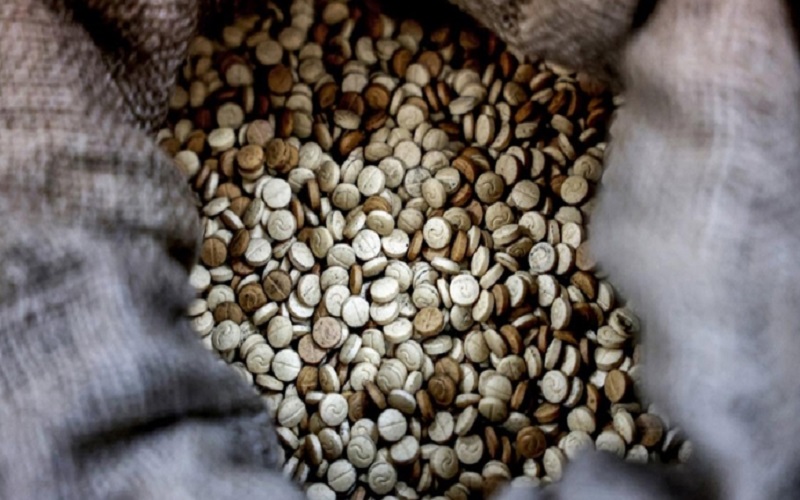
Now, Tehran faces yet another blow: the unraveling of its regional drug trafficking network, particularly after losing influence in Syria—until recently, the world’s largest producer and exporter of Captagon.
Syria’s Role in Iran’s Illicit Empire
In the past decade, Syria emerged as a major hub for Captagon production. Under Bashar al-Assad’s rule, the manufacture and trafficking of this amphetamine-like stimulant skyrocketed, generating an estimated $10 billion in annual revenues around 2018–2019. Much of this trade was linked to the Assad regime and its allies, including Hezbollah and Iran.
The production and smuggling of Captagon weren’t just tools of economic survival—they became instruments of regional control. Iran and Hezbollah used the infrastructure to smuggle not only drugs but also weapons, cash, and fuel across porous borders.
A New Government, A New Direction
Following the fall of the Assad regime in December, Syria’s new government has taken decisive action to dismantle this illicit network. A sweeping crackdown is underway, particularly along the 375-kilometer border with Lebanon—once a key artery for the Iranian regime’s trafficking operations.
In the city of Al-Qusayr, close to the Lebanese border, Syrian forces have uncovered 15 Captagon factories previously operated by Hezbollah and Assad loyalists. They also seized significant stockpiles of Iranian-made missiles, military drones, and other ammunition, effectively dismantling a weapons depot the size of 50 football fields.
The Collapse of a Smuggling Empire
Over the years, dozens—if not hundreds—of drug production and smuggling facilities were established across Syria, especially in the Al-Qalamoun region and southern Syria near the Jordanian border. These sites were often controlled by Hezbollah operatives and Iranian agents.
One of the most critical smuggling corridors was the Nasib/Jaber border crossing between Syria and Jordan. It was heavily influenced by Syria’s 4th Division and Hezbollah and served as a key channel for transporting drugs and arms. Additional clandestine routes—ranging from mule paths to drone corridors—enabled a complex and adaptive smuggling network to flourish.
Terrorism Enabled by Crime
This criminal infrastructure was more than just a financial lifeline. It provided Iran and Hezbollah with a covert platform for advancing their strategic objectives. Smuggling routes were repurposed for trafficking weapons into Jordan and further into the West Bank, bolstering militant groups and destabilizing the region.
These operations were coordinated by Iran’s elite forces, including Unit 840 of the Quds Force and Branch 4000 of the IRGC Intelligence Organization—both responsible for executing Tehran’s covert military ambitions across the Middle East.
Conclusion
As Syria turns a page and cracks down on the illicit economy that once enriched the Iranian regime and its proxies, Tehran’s regional influence is visibly weakening. With its strategic, economic, and now criminal networks under strain, the regime in Iran faces mounting internal and external pressures—making these perhaps the worst days for the mullahs in decades.