Recent negotiations between Iran’s regime and the United States have sparked speculation about a potential shift in Tehran’s foreign policy. However, these diplomatic overtures are not a sign of reform or moderation. Rather, they are a calculated survival tactic by a regime facing growing domestic turmoil, economic collapse, and waning regional influence.
Talks in the Shadow of Crisis
On April 12, 2025, Iranian regime and American officials held secret talks in Oman, followed by a second round on April 19 at the Omani Embassy in Rome. These meetings, while seemingly significant, are best understood as a strategy by Iran regime’s leadership to secure sanctions relief without fundamentally altering its nuclear ambitions. The Islamic Republic seeks economic breathing room while maintaining its trajectory toward a nuclear weapons capability. In contrast, the U.S., under President Donald Trump, continues to push for guarantees that would permanently block Iran’s path to the bomb.
The urgency on Iran regime’s side is palpable. Years of crushing sanctions—especially on oil exports and financial transactions—have hollowed out the country’s economy. The national currency has plummeted in value, inflation is rampant, and government revenues have shrunk dramatically due to oil price fluctuations. These pressures are compounded by domestic unrest and a profound legitimacy crisis.
Mounting Domestic Pressures
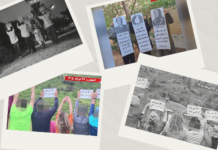
The regime has struggled to contain recurring waves of protest. What began as sporadic demonstrations over economic grievances has evolved into a broad rejection of the system itself. The 2022 death of Mahsa Amini, following her arrest for improperly wearing a hijab, ignited a nationwide movement demanding justice and reform. That movement, although brutally suppressed, revealed the depth of public disillusionment.
President Masoud Pezeshkian’s comments on April 18, 2025, underscored this fragile situation. Speaking on state television, he admitted, “People are angry… We caused these problems. We didn’t solve them.” He warned that relying on force to suppress unrest would backfire, adding, “That’s not a solution.” His rare candor reflected fears that Iran is teetering on the edge of a major eruption.
Others within the establishment echoed these concerns. Mohammad-Mehdi Hosseini Hamedani, the Friday Prayer Leader in Alborz Province, warned that Iran must prepare as if “war will begin tomorrow,” calling for heightened social and security readiness. In Gilan Province, Rasoul Fallahati cautioned against complacency in the face of “media warfare” and potential “social shocks”—a euphemism often used to describe uprisings.
Meanwhile in parliament, MP Mohammad-Reza Sabaghian Bafqi sounded the alarm over what he described as the erosion of Iran’s Islamic identity. He blamed Western cultural influence, especially through social media, for undermining religious values and shaping public opinion in ways unfavorable to the regime.
Declining Regional Reach
Externally, Iran regime’s influence in the region is also under strain. The Islamic Republic has long funded and armed proxy forces such as Hezbollah in Lebanon, Hamas in Gaza, the Assad regime in Syria, and the Houthis in Yemen. But Israeli and Western actions in recent years have depleted many of these groups, and Iran regime’s financial difficulties have made it harder to sustain them. Once a dominant regional player through its militarized outreach, Iran’s geopolitical clout is diminishing.
Khamenei’s Tactical Flexibility
Against this backdrop, Supreme Leader Ali Khamenei’s decision to allow talks with the U.S. fits a familiar pattern. Though he has long opposed negotiation with the West in principle, Khamenei has shown a pragmatic willingness to engage when the regime’s survival is at stake. This was evident during the 2015 nuclear negotiations that led to the Joint Comprehensive Plan of Action (JCPOA) under former US President Barack Obama.
Khamenei typically delegates diplomatic engagement to elected officials like the president or foreign minister. This allows the regime to explore diplomatic options while preserving the Supreme Leader’s authority and ideological distance. If negotiations fail, blame can be shifted to the negotiators. If they succeed, the regime can claim victory on its own terms.
No Illusions About Change
Iran’s leadership, particularly Khamenei, views diplomacy not as a shift in strategic direction, but as a temporary concession to necessity. The regime has no intention of abandoning its pursuit of nuclear capabilities. Agreements are entered into when pressure becomes unbearable, and abandoned when the regime feels secure enough to do so.
Therefore, any deal struck in the current climate must be viewed through this lens. It would be unwise to assume that Iran regime’s leaders are prepared to give up their long-term objectives. The regime’s core priorities—domestic control, ideological dominance, and regional influence—remain unchanged.
Conclusion
The renewed dialogue between Tehran and Washington is not a breakthrough, but a maneuver. Iran’s leaders are not opening a new chapter of cooperation. They are fighting for time. With the walls closing in economically, socially, and geopolitically, these negotiations are a means to prolong a system in crisis—not transform it.