


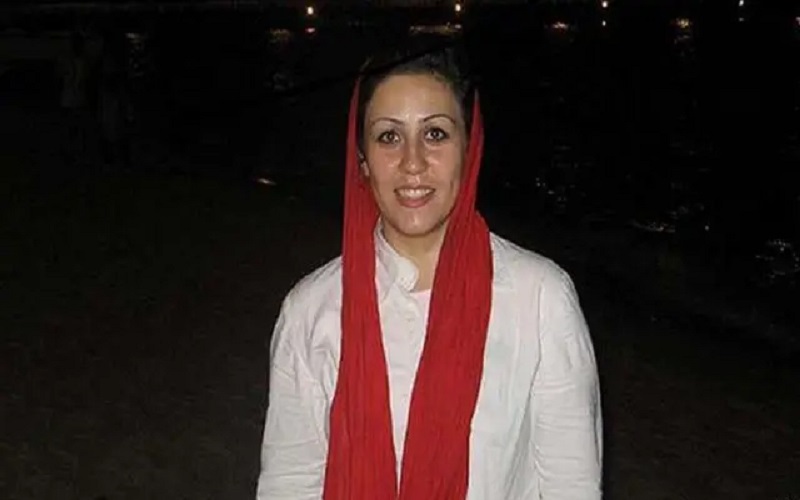

Maryam Akbari Monfared, a political prisoner who has spent more than 16 years behind bars in Iran, is facing a severe health crisis in Qarchak Prison in Varamin. Despite her critical condition, prison and judicial authorities continue to deny her access to urgent medical care—highlighting yet another egregious example of the Islamic Republic’s systemic mistreatment of political prisoners.
According to sources close to her family, Maryam is suffering from multiple health complications, including hypothyroidism, liver disorders, and chronic pain in her back and knees. Her condition has deteriorated so severely that five medical specialists—including a neurosurgeon, an orthopedist, and forensic experts—have all insisted on immediate back and knee surgery.
Yet, the authorities have not only failed to initiate treatment—they haven’t even responded to her lawyer’s repeated medical requests. “In recent months,” one source revealed, “Maryam has suffered from numbness in her legs and impaired knee function. Doctors have warned that this could lead to spinal cord damage and even incontinence if left untreated.”
Maryam is the only political prisoner currently held in Qarchak Prison, where she is unjustly incarcerated alongside inmates convicted of common crimes—a direct violation of international standards and the principle of separating prisoners based on their charges. Despite the fact that her original 15-year sentence has ended, the regime has opened a new case against her, charging her with “spreading lies” and “propaganda against the system”—vague accusations commonly used to silence dissent.
Adding to the injustice, the authorities have now made it mandatory for any lawyer visiting her to obtain special approval from a judge—an arbitrary condition that applies solely to political prisoners like her.
Her Words from Prison
Despite years of suffering, Maryam’s voice continues to resonate with defiance and hope. In a letter dated November 28, 2021, from Semnan Prison, she wrote:
“If you ask me how I survived the darkness of torture and the crushing weight of time, I would say it was the rebellious flame of faith in my heart that kept me standing.
In the solitude of empty hands, it is this warm and defiant flame that interrogators try to extinguish from the very first moment of arrest—so that the soul freezes and the body bows to their will. But I kept it burning for thirteen years, fueled by a sacred anger born from the tortures I witnessed, which pierced my soul. I laughed—I laughed to multiply strength, because resistance is in our hearts.
It is faith in the path for which my brothers and sisters gave their lives. Faith in the journey I chose. Faith in the clenched fists and unwavering steps of the youth who now stand in the streets, their bodies and souls defying tyranny.”
On August 6, 2022, commemorating the anniversary of the 1988 massacre of political prisoners, she wrote:
“There is no escaping justice. I vowed never to remain silent while those responsible for the slaughter of our loved ones continue to evade accountability.
Our wounds are still raw—not decades, not even days have passed in our hearts. For us, it feels as if the massacre happened today. The pain of August burns as fiercely as ever. We have clenched our teeth through these years of agony, and we wait for the day when justice will become the salve for all our wounds.
The massacre continues—not in name, but in essence. The executions and the killing of innocents in 2009, 2017, 2019—they are all extensions of 1988. Our call for justice for the victims of 1988 is inseparable from the fight for freedom today.
The blood of our beloved martyrs will forever flow in history, like the sacred blood of Imam Hussein on Ashura. We rise for justice so no more families are torn apart. We will not stop.
These days, I think of my dear Roqiyyeh and Abdi (Abdolreza), and of Alireza and Gholamreza—they live within me. I remember them with a smile, as if they are my guardians in this dungeon.
Through the storm and the darkness, justice will dawn. And with every heartbeat, we will feel the day of love. Victory is ours.”
Who Is Maryam Akbari Monfared?
Maryam was arrested in Tehran on December 31, 2009, following the Ashura protests. In June 2010, Branch 15 of Tehran’s Revolutionary Court—presided over by the notorious Judge Abolghasem Salavati—sentenced her to 15 years in prison on charges of “enmity against God” due to her association with the People’s Mojahedin Organization of Iran (PMOI/MEK), though she was accused solely for seeking justice for her executed siblings.
Maryam’s family has paid a heavy price for their beliefs. Her brothers Gholamreza and Alireza were executed in 1981 and 1984. In the 1988 massacre, her younger brother Abdolreza and her sister Roqiyyeh were also killed.
Her crime? Seeking justice for their blood.
Maryam Akbari Monfared has never wavered in her demand for accountability. She has made it clear, time and again, that she will never give up. Her words, her courage, and her suffering have made her a symbol of resistance for countless others standing against injustice in Iran.
The Iranian regime may have locked her away, but her voice—echoing through letters, rising from pain—continues to speak for justice.
Let us not look away.