
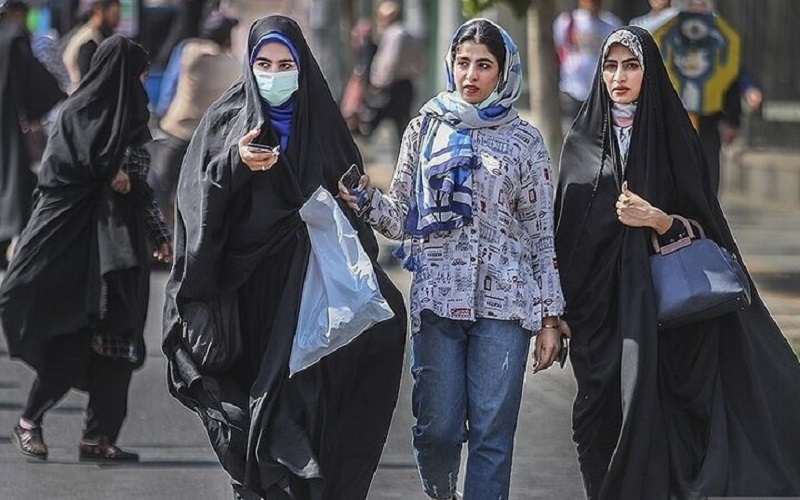

A member of the Tehran City Council has issued a stark warning about the worsening condition of women in Iran, pointing to more than 120 forms of social harm they face—including poverty, domestic violence, and gender discrimination. According to women’s rights activists, these issues are deeply rooted in decades of discriminatory policies implemented by the Islamic Republic.
In an interview with the official IRNA news agency on Saturday, May 3, Soudeh Najafi—a member of the presiding board of Tehran’s Islamic City Council—highlighted the economy and livelihood as key contributors to the pressures on Iranian women. She urged a comprehensive review of current policies and stronger legal and social protections.
“Women who are unable to provide for their basic needs and those of their families due to poverty and limited job opportunities are more likely to face dependency and hidden violence,” Najafi stated.
Her comments serve as a wake-up call to the country’s leadership, but the causes of these problems go beyond statistics. They are embedded in the regime’s policies and Iran’s unequal economic and cultural structures.
Systemic Discrimination and Legal Restrictions
According to reports from the United Nations and leading human rights organizations, women in Iran endure widespread legal and social restrictions directly tied to regime policy. One of the most visible examples is the law mandating compulsory hijab, enforced since the 1980s. The state has further intensified this restriction through programs like the “Noor Project,” launched in 2023, which uses facial recognition technology to identify and penalize women who defy hijab regulations.
Amnesty International has condemned the initiative, stating it violates women’s social, economic, and civil rights, and further curtails their freedom of movement.
Economic Crisis Hits Women Hardest
Iran’s ongoing economic crisis—driven by international sanctions, the collapse of the national currency, and inflation rates surpassing 40%—has disproportionately affected women, especially female heads of households. According to domestic news sources, around six million women head households in Iran, and nearly half of them lack access to social insurance.
Many of these women, often thrust into the role of sole provider due to divorce, widowhood, or a partner’s addiction, suffer from chronic poverty and a lack of stable employment. With a female labor force participation rate of just 14%—one of the lowest globally—compared to 68% for men, the gender gap in employment is stark.
In addition to limited job opportunities, women also face wage disparities and inadequate legal protections, pushing many into informal, unregulated, and low-paying jobs. The International Labour Organization estimates that over 60% of working women in Iran are employed in the informal sector, where they receive no insurance or legal protection.
Policy-Driven Marginalization
Government policies have played a significant role in reinforcing these inequalities. The 2021 Family and Youth Protection Law, approved by the Guardian Council, encourages women to prioritize motherhood over education and career, indirectly restricting their ability to participate fully in public life.
Cultural norms and state-backed ideology further entrench gender-based discrimination. The 2024 Hijab and Chastity Law, also approved by the Guardian Council, institutionalized violence against women by sanctioning harassment and arbitrary detention of those not adhering to dress codes. Amnesty International has warned that these laws promote a culture of fear, exacerbated by the use of surveillance apps and digital notifications to monitor and control women’s behavior.
Domestic Violence and Legal Barriers
Domestic violence remains a pervasive but underreported issue. A 2022 study by Tehran University of Medical Sciences found that 35% of Iranian women have experienced some form of domestic abuse. However, the absence of comprehensive laws to protect victims, combined with complex and inaccessible judicial procedures, often deters women from seeking justice.
Najafi acknowledged this in her interview, noting that many women are unaware of their rights or choose not to file complaints due to the lack of adequate support systems. However, she did not address the structural causes behind this lack of awareness and protection.
Cultural stigma surrounding divorced or traumatized women further isolates them. Najafi pointed out that this societal prejudice leads to the isolation of women, making it more difficult for them to recover and reintegrate. Women’s rights advocates argue that such stigmas are perpetuated by state ideology and laws designed to marginalize women.
Restrictions on women’s participation in cultural and artistic fields—such as the ban on solo singing—further limit their ability to express themselves and participate in society.
Inadequate Support Structures
Efforts to support vulnerable women exist but are often poorly funded and lack coordination. In 2024, Tehran Municipality reported that its Empowerment System for Women Heads of Households had enrolled over 35,000 members, providing job training and limited welfare assistance. However, these programs have made minimal impact due to insufficient resources and a lack of cooperation among government agencies.
Najafi emphasized that Iran’s Welfare Organization alone cannot meet the growing needs of women in distress. She called for coordinated action from the government, parliament, and civil society organizations to provide meaningful support.
Repression Instead of Reform
Rather than addressing these systemic issues, the regime has responded to women’s growing demands with increased surveillance and repression. The crackdown on the nationwide protests in 2022—sparked by the death of Mahsa Amini in police custody—resulted in the deaths of over 500 people and the arrest of thousands, many of them women advocating for basic rights.
A 2024 World Bank report suggested that increasing women’s participation in the economy could boost Iran’s GDP by as much as 20%. However, realizing this potential would require deep structural reforms, including legal equality, the removal of discriminatory barriers, and genuine cultural change.
Until such reforms are made, civil society activists warn, Iranian women will continue to face an uphill battle against poverty, violence, and systemic discrimination. Despite the odds, many remain determined to assert their rights and fight for a more just and equitable future.