


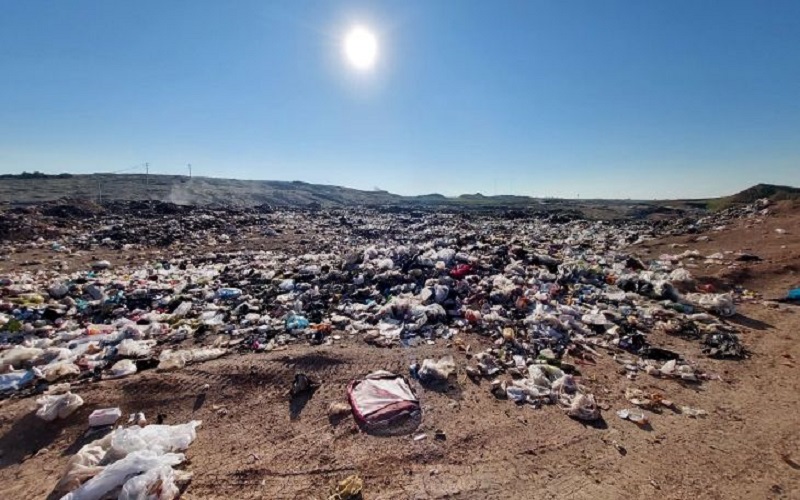

The daily accumulation of millions of tons of waste across Iran has evolved into a multi-dimensional crisis, driven by ineffective waste management, poor infrastructure, and the rise of unregulated informal networks known as the “garbage mafia.”
This crisis not only degrades the environment but also traps vulnerable populations—particularly children—in a cycle of poverty, disease, and exploitation, while further eroding public trust in government institutions.
The Scale of the Problem
According to Sheena Ansari, head of Iran’s Environmental Protection Organization, the country produces an alarming volume of waste annually:
- 21 million tons of municipal solid waste (MSW)
- 150,000 tons of infectious hospital waste
- 35 million tons of industrial waste
- 170 million tons of agricultural waste
- 8 million tons of hazardous waste
- 150 million tons of construction and demolition debris
Despite this enormous output, Iran lacks a comprehensive and coordinated waste management strategy. Approximately 75% of municipal waste is landfilled, and only 7% of landfills meet sanitary standards. The remaining 93% operate without adhering to environmental regulations, causing severe ecological and public health consequences.
Inefficiency, Pollution, and Social Fallout
In major cities like Tehran, nearly 5,000 tons of waste are collected daily. Yet, the absence of source separation, inadequate recycling infrastructure, and reliance on outdated collection methods have resulted in inefficient operations with significant environmental and social repercussions. These include:
- Leachate contamination of groundwater
- Emission of methane and other greenhouse gases
- Proliferation of disease-carrying animals like rats
- Expansion of informal waste collection networks
- Visual pollution and deterioration of urban aesthetics
These challenges are not confined to Tehran. In northern provinces such as Mazandaran and Gilan, improper waste disposal near rivers and wetlands has led to increased contamination of the Caspian Sea and regional water sources. Studies indicate that open dumping produces methane gas, a greenhouse gas 26 times more potent than carbon dioxide. Furthermore, the uncontrolled burning of waste releases toxic pollutants such as dioxins, contributing to severe air pollution.
The Rise of the Garbage Mafia
The absence of formal, regulated waste processing systems has created a vacuum filled by informal actors—often referred to as the “garbage mafia.” These unregulated networks exploit waste pickers, many of them children, who work under dangerous conditions for minimal pay.
Valuable recyclables like metals, plastics, and paper are collected through substandard and unsafe means. Meanwhile, municipalities—lacking efficient systems—bear the financial burden of collection and disposal without benefiting from recycling revenues.
This informal sector has grown into a parallel economy, operating outside any form of state oversight, and profiting from a system that fails both environmentally and socially.
Missed Opportunities in the Recycling Economy
Globally, the recycling market is valued at over $500 billion. Yet Iran recycles only 9% of its waste, according to Mohammad Bagher Ghalibaf, Speaker of Parliament. In contrast, countries like Germany, Austria, and South Korea boast recycling rates above 50%.
Despite the Waste Management Act being passed more than 20 years ago, and its implementation guidelines finalized in 2005, there has been minimal progress. Experts attribute this failure to weak governance, poor enforcement, and a lack of investment in infrastructure and public education.
The Case for Source Separation and Innovation
One of the most effective global solutions for sustainable waste management is source separation—sorting waste into categories (e.g., organic, recyclable, hazardous) at the point of disposal. However, Iran has yet to adopt this model on a national scale due to:
- Lack of public awareness and education
- Inadequate facilities for sorting and collection
- Absence of economic incentives for participation
Nearly 40% of municipal waste in Iran is classified as dry waste—such as plastics, paper, and metals—that could be recovered and recycled. Instead, it is discarded alongside wet waste, increasing processing costs and eliminating potential income streams.
Pathways to Reform
Experts suggest several urgent reforms to address Iran’s waste management crisis:
- Public Education Campaigns: Promote awareness about the benefits of recycling and how to separate waste at home.
- Smart Infrastructure: Equip waste collection fleets with GPS and sensor technology to optimize routes and monitor waste volumes.
- Recycling Incentives: Encourage citizens to participate in recycling through economic rewards and community initiatives.
- Private Sector Engagement: Involve private enterprises in recycling and composting operations to create jobs and boost economic activity.
- Technological Solutions: Develop composting centers, waste-to-energy facilities, and recycling workshops to convert waste into fertilizer or secondary raw materials.
A Deeper Structural Challenge
Ultimately, the waste crisis in Iran is not merely a technical or logistical issue—it reflects deeper institutional failures, cultural gaps, and a persistent lack of political will. Without addressing these root causes, even the most advanced technologies or laws will fail to deliver lasting solutions.
As long as waste management is treated as a peripheral issue rather than a national priority, and as long as separation and recycling are not transformed into a shared societal norm, the country will continue to face an escalating environmental and social catastrophe.