


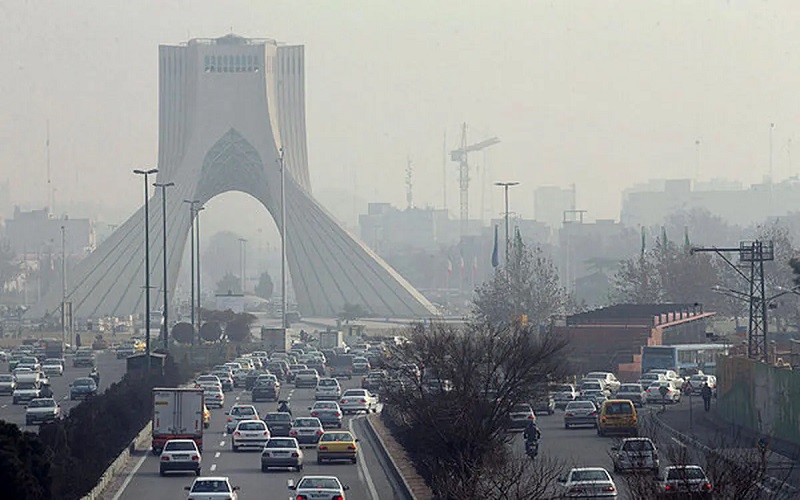

A new report by Iran regime’s Parliamentary Research Center reveals a dire public health and economic crisis stemming from air pollution. Based on data from the regime’s Ministry of Health, the report estimates that in 2023 alone, air pollution was responsible for 30,692 premature deaths across 57 Iranian cities, home to roughly 48 million people.
The report warns that actual mortality figures may be even higher. Some sources have cited up to 50,000 pollution-related deaths annually, a number echoed by the regime’s Minister of Health. This staggering toll underscores the severe human cost of deteriorating air quality in Iran.
Regional Disparities in Mortality Rates
According to the report, the average death rate attributable to air pollution in selected cities stood at 64 deaths per 100,000 people in 2023. In Tehran, this figure climbed to 70 deaths per 100,000, reflecting the capital’s particularly hazardous air.
The regional contrast is stark. One city in Iran’s eastern provinces recorded the highest mortality rate, with 141 deaths per 100,000. In comparison, the cities of Shahroud and Sanandaj reported the lowest rates, each with 30 deaths per 100,000.
Beyond Health: The Broader Impact of Pollution
The report also highlights the far-reaching social consequences of air pollution. Among the noted effects are:
- Deterioration in quality of life
- Widening health and social inequalities
- Shifts in migration patterns
- Lower academic performance and increased absenteeism
- Reduced participation in extracurricular activities
- Declining educational quality
- Severe environmental degradation
These impacts are not only immediate but could have long-term repercussions for Iran’s socio-economic development.
Economic Consequences: Up to 5% of GDP
In addition to the human toll, air pollution exacts a heavy financial burden. The Parliamentary Research Center estimates direct economic losses at $12 billion annually. However, other assessments that factor in healthcare costs and related damages suggest this figure may be as high as $23 billion—equivalent to approximately 5% of Iran’s GDP.
Experts Sound the Alarm
In December 2024, Dr. Mohammad Sadegh Hassanvand, head of the Air Pollution Research Center at Tehran University of Medical Sciences, emphasized the gravity of the situation. He stated that of the 450,000 total annual deaths in Iran, about 50,000 can be attributed to air pollution alone. Dr. Hassanvand called for urgent action, warning that air pollution remains a “serious and escalating threat” to public health.