



At the Dayton Forum in the United States, NATO Secretary General Mark Rutte issued a stark warning about the growing coordination between authoritarian regimes—specifically China, North Korea, and the Iranian regime—in supporting Russia’s war against Ukraine. His remarks highlighted the Iranian regime’s increasingly destabilizing role, not just in the Middle East, but on the global stage.
Speaking at the spring meeting of the NATO Parliamentary Assembly (NPA), Rutte stressed that these four regimes—Russia, China, North Korea, and Iran—are acting in coordination, and warned Western governments against being naive about the geopolitical threat they collectively pose.
Iranian Regime’s Role: Destabilization and Militarization
According to Rutte, while China is aiding Moscow through the supply of dual-use goods that help Russia circumvent Western sanctions, and North Korea is exchanging military support for advanced Russian technologies, the Iranian regime is receiving funding from the Kremlin to stoke instability across the Middle East.
Though Rutte did not elaborate on the specific mechanisms through which the Iranian regime supports Russia or receives compensation, numerous intelligence and media reports over the past two years have documented Tehran’s active military cooperation with Moscow—cooperation that Tehran continues to deny.
Tehran’s Military Support for Moscow
One such report, published by Reuters on May 10, cited two Western security officials and a regional source confirming that the Iranian regime is preparing to deliver short-range ballistic missile launchers to Russia. U.S. officials have previously stated that Iran sent similar munitions to Russia in 2023 for use in the war in Ukraine.
The Fateh-360, one of the missiles reportedly involved, has a range of 120 kilometers and could allow Russian forces to strike Ukrainian front lines, nearby military positions, and densely populated civilian areas along the border. While Russia and Iran have both publicly denied these transfers, multiple American, Ukrainian, and European officials say the Iranian regime has supplied Russia with thousands of drones and artillery shells.
In September 2024, U.S. officials reported that Iran had shipped missiles to Russia on nine vessels flying Russian flags. Although early reports suggested these shipments did not include launchers, more recent assessments indicate that the delivery of the Fateh-360 missile launcher is now imminent.
Iranian Drones on Display in Moscow
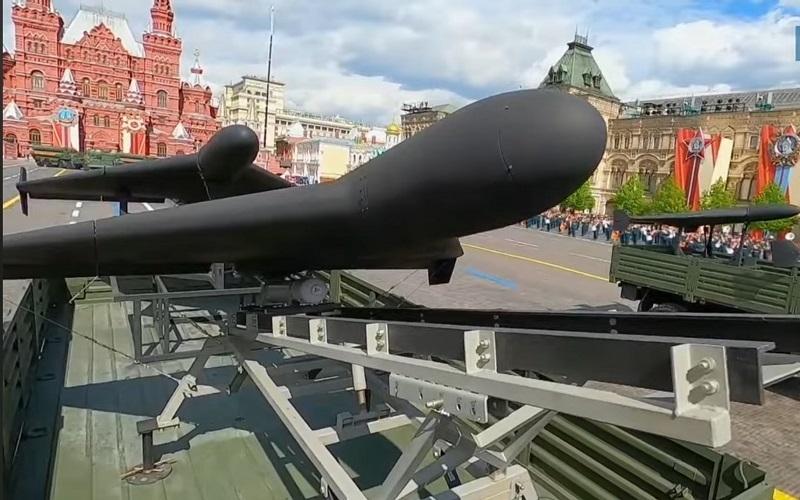
Iranian-made drones have played a prominent role in the Russia-Ukraine war. The Russian military openly displayed the Iranian “Geran-2” suicide drone—an assembled version of the Shahed-136—during its annual Victory Day parade in Moscow’s Red Square. These drones have been widely used to strike Ukrainian energy infrastructure and battlefield positions.
In response, the United States, the United Kingdom, and the European Union have imposed sanctions on the Iranian regime for supplying these drones to Russia. The regime, however, claims the drone sales occurred before the war began—a claim Western officials reject.
Strategic Ties Deepen: Iran Builds Space Base with Russian Support
While Iran’s military support for Russia intensifies, strategic cooperation between the two regimes appears to be expanding beyond the battlefield. On May 1, Bloomberg reported that the Iranian regime is constructing a large space base, seen by analysts as a means of reinforcing Tehran’s regional influence following major setbacks to its proxy forces across the Middle East.
Though the report did not disclose the total cost of the program, a senior regime official was previously quoted saying that $11 million would be allocated to the space base—despite crippling economic sanctions and widespread domestic hardship. The project is reportedly part of a broader strategic partnership with Moscow, as both regimes face mounting pressure from Western sanctions.
A 20-Year Pact for Strategic Alignment
Further solidifying this alliance, Russian President Vladimir Putin and Iranian regime President Masoud Pezeshkian have signed a 20-year strategic cooperation agreement. Analysts believe that one of Tehran’s core motivations for this long-term partnership is to gain access to advanced Russian technology, including military and aerospace capabilities.
The Iranian regime’s deepening alliance with Moscow—and its broader coordination with authoritarian powers like China and North Korea—marks a significant shift in the global security landscape.
The Iranian regime’s actions are not only prolonging the war in Ukraine but are also fueling regional instability and challenging the rules-based international order.