


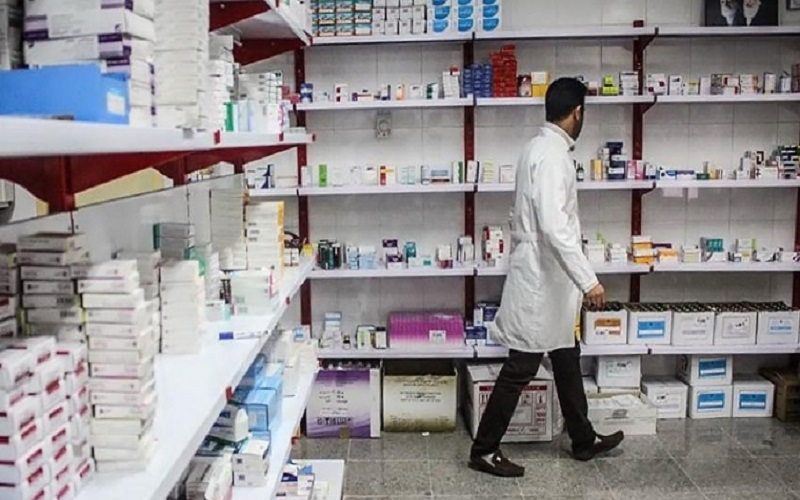

As pharmacies run dry and patients suffer, the regime’s failure to reform pharmaceutical infrastructure threatens social trust and national resilience
The drug crisis in Iran, long overshadowed by other policy failures, has reached a critical tipping point. What has emerged as an invisible but high-stakes challenge is in fact the result of years of systemic neglect—specifically, the regime’s failure to build resilient pharmaceutical infrastructure, maintain strategic drug stockpiles, and shift from reactive to proactive health policymaking.
Recent weeks have exposed serious flaws in the country’s drug supply system. Mounting concerns over the depletion of essential medicine stocks and the absence of a coherent national pharmaceutical strategy have strained both logistical networks and treatment capacities. Without urgent structural reforms and the involvement of specialized professionals, the consequences could extend far beyond patient health—undermining social capital and weakening the very foundations of national resilience.
A Strategy of Denial and Delay
Rather than confronting the crisis head-on, the regime’s Food and Drug Administration has adopted a strategy aimed at preserving the appearance of stability. Instead of establishing a centralized emergency task force or mobilizing national resources to address the shortage, senior officials have opted for cosmetic solutions: making public appearances in pharmacies and ordering them to remain open. These efforts, while performative, did little to alleviate the reality of half-empty pharmacy shelves, disrupted drug distribution, and stalled production lines due to inactivity in the complementary packaging and supply sectors.
In Tehran and other major cities, drug distribution networks faced widespread delays. Distribution companies curtailed operations, while pharmacies—many of them devoid of basic medicines—continued to operate symbolically. In a striking contradiction, the head of the Food and Drug Administration claimed on state television that there were “no specific problems” in the medicine supply. Yet in the same breath, he advised citizens to stock up on medication for at least one month—implicitly confirming the severity of the situation.
This dissonance between official rhetoric and public reality is a textbook case of governance failure. When decision-making is not rooted in clear data or analytical insight, authorities resort to theatrical gestures and short-term fixes instead of lasting reforms and meaningful coordination.
Ignoring International Models—and the Lessons They Offer
Globally recognized pharmaceutical governance frameworks—such as FEMA in the United States, EMA in Europe, and WHO protocols—offer tested models for managing medicine shortages. These systems emphasize early warning, strategic reserves, transparency, and supply chain coordination. Yet Iran’s regime has consistently neglected such models, opting instead for a fragmented and opaque approach.
Strategic stockpiles are the backbone of any country’s healthcare resilience, especially under conditions of international sanctions and geopolitical tension. But the structure of Iran’s pharmaceutical reserves is alarmingly deficient. There is no comprehensive national inventory map for essential items, no reliable stock rotation system, and no real-time monitoring capacity. These shortcomings were laid bare during the last two weeks of escalating shortages.
According to on-the-ground data and expert assessments, some provinces have barely two to three weeks’ worth of essential medicines—at best. This means that even in the absence of external shocks, the system lacks the resilience to manage demand or disruptions. Officials’ reluctance to sound the alarm is not merely rhetorical restraint—it reflects a dangerous unwillingness to confront a looming reality.
A System Held Together by Outdated Tools
One of the most serious but overlooked weaknesses in Iran’s pharmaceutical system is its outdated inventory tracking and drug circulation management. In many pharmacies, clinics, and distribution centers, stock monitoring is still conducted manually or through non-digital methods. This makes it impossible to forecast drug needs with accuracy or allocate supplies based on evolving priorities.
The result is a self-perpetuating cycle of inefficiency. Pharmacies remain open but understocked. Manufacturers continue producing but cannot distribute on time due to logistical breakdowns. Patients are left with prescriptions they cannot fill. Meanwhile, valuable resources are wasted, and public trust is steadily eroded.
The situation is exacerbated by the absence of a forecasting and alert system based on up-to-date and integrated data. Without it, the country is effectively flying blind. What is currently being described as “temporary stock depletion” may soon escalate into prolonged and systemic “inaccessibility”—threatening the reliability of the entire health service delivery model.
Broader Impacts: From Health to Social Stability
While the crisis may appear at first glance to be a technical issue within the healthcare system, its implications are far-reaching. Limited access to life-saving medication during periods of international pressure increases the risk of worsening chronic illnesses, higher patient intake at already burdened medical facilities, and greater strain on insurance systems. Beyond these medical effects, a deeper psychological toll is emerging: frustration, fear, and loss of trust in public institutions.
Medicines are not merely consumer goods—they are symbols of a government’s ability to meet its citizens’ most basic needs. When the supply chain falters, it sends a message that the state can no longer guarantee essential services. This erosion of trust can, over time, become a major destabilizing force.
Today, Iran’s drug shortage is no longer simply a health policy issue—it has evolved into a critical governance failure. It is now a central variable in maintaining public confidence, preserving social cohesion, and navigating a complex external environment. The regime’s continued refusal to implement necessary structural reforms in this area is tantamount to ignoring one of the most vital levers of state effectiveness.
A Stark Choice Ahead
The Iranian regime stands at a crossroads. It must either invest in the modernization of its pharmaceutical infrastructure—embracing transparency, digital inventory systems, coordinated logistics, and strategic foresight—or brace for the far-reaching consequences of a health system that can no longer meet the needs of its people.
Failing to act now will not only deepen the public health crisis but will also accelerate the erosion of institutional credibility and national resilience. The choice is clear—but it remains to be seen whether the regime is willing to confront this reality or continue down the path of denial, delay, and decay.