


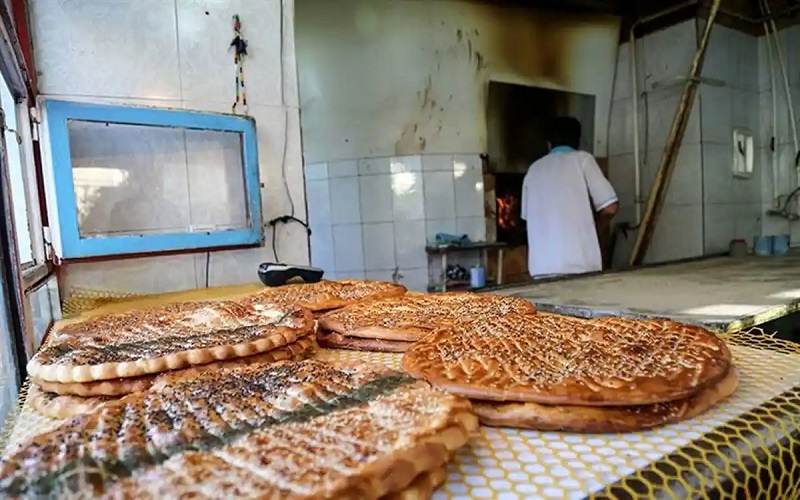

Sharp price hikes on traditional breads across Iran fuel public outrage, strain household budgets, and threaten food security for millions amid deepening economic turmoil.
A new wave of price hikes in Iran has now reached the most basic of staples: bread. As the cost of traditional loaves surges across numerous provinces, public frustration is rising, and bakers are voicing protests. The sharp increase, coming amid broader economic hardships, threatens to further erode food security for millions of Iranian households.
Regional Price Increases Trigger Backlash
In Ilam province, Abbas Mirzad, deputy economic officer for the governorate, announced that bread prices have risen by 52% in the provincial capital and 42% in other cities. He attributed the hike to escalating transportation, energy, insurance, and raw material costs, insisting that “the increase has nothing to do with the elimination of subsidies.”
Mirzad added that the price adjustment had been planned prior to the recent 12-day war between the Iranian regime and Israel but was postponed due to the conflict. “The increase in ancillary costs such as additives, electricity, water, gas, and insurance premiums for bakery workers were the main drivers of this change,” he said.
The upward trend is not isolated. Mohammad Javad Karami, head of the Flour and Bread Working Group of the Iranian Chamber of Trades, confirmed that new prices for traditional breads like Sangak, Barbari, Lavash, and Taftan have already been implemented in the provinces of Qom, Khorasan Razavi, Hamedan, and Gilan, with other provinces expected to follow.
Local Officials Justify the Hikes
In Qom province, Hamid Najafi, vice-chairman of the Bakers’ Union, said the new pricing was introduced in response to “numerous requests from bakers facing soaring operational costs, including wages and insurance.” According to Najafi, the price of each traditional Sangak bread has reached 5,200 tomans, machine-made Sangak 4,650 tomans, Barbari 3,500 tomans, Taftan 1,900 tomans, and Lavash 920 tomans.
Similarly, in Mashhad, Deputy Governor Morteza Heydari confirmed a 52% hike, also citing increases in labor and insurance costs. Reports of similar hikes have surfaced from North Khorasan, Mazandaran, Isfahan, and Hamadan.
Karami had earlier warned, during the Iran-Israel conflict, that bakers’ longer working hours and economic strain had reignited demands for higher prices. On June 16, he stated that the gap between government-set and actual market prices had made the regulated price “meaningless,” as many bakers had already begun selling bread at self-determined rates.
Economic Pressures Behind the Crisis
Mehdi Omidvar, spokesperson for the Iranian Chamber of Trades, had previously warned of an impending price hike. “Government support for bakers’ insurance has been cut. Flour and other key ingredients like yeast have become more expensive, and wages have increased by over 30%,” he said.
Qasem Nodeh Farahani, head of the Chamber, has since confirmed that new national prices will be announced soon. While accusing some bakeries of “overpricing,” he offered no supporting data and deflected questions about broader policy decisions behind the price surge.
Analysts suggest that the Iranian regime, under mounting fiscal pressure from tightened Western sanctions and declining oil revenues, is offloading costs onto consumers. The administration of regime President Masoud Pezeshkian, operating under Supreme Leader Ali Khamenei’s militarized economic priorities, appears to be stabilizing high bread prices as part of its broader austerity strategy.
A Blow to Food Security
The sharp increase in bread prices is more than just an economic adjustment—it’s a direct assault on the survival strategies of Iran’s poor. For millions of workers, pensioners, and families who can no longer afford meat, rice, or dairy, bread was the last affordable source of sustenance. That lifeline is now slipping away.
A 52% price increase on the country’s most essential food threatens to push vulnerable groups into hunger and malnutrition. With the average Iranian food basket already reduced to historic lows, this development could spark a broader humanitarian crisis. In the absence of an effective regulatory framework for monitoring the distribution of flour and bread, price liberalization often leads to chaotic market behavior and further inflation.
In a country already burdened by widespread poverty, systemic corruption, and economic mismanagement, the bread crisis has become a stark symbol of the growing divide between the regime’s priorities and the daily struggles of its citizens.