


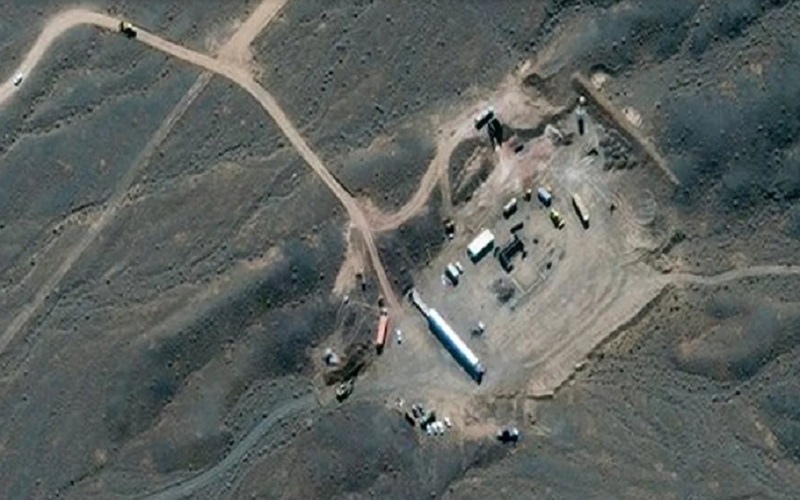

In the aftermath of a devastating 12-day war with Israel, Iran regime’s internal political dynamics appear to be tilting toward the so-called moderate factions that advocate renewed nuclear negotiations with the United States. But despite these diplomatic overtures, the core demands of the Iranian regime remain far from what Washington and its allies are willing to accept.
The Washington Post reported on July 13 that there is now a “consensus” among Iran’s political elite on the need to resume nuclear negotiations. While this may reflect a growing recognition within Iran’s leadership of the strategic costs of continued isolation, it does not signal a meaningful shift in Tehran’s negotiating stance.
Iranian regime president Masoud Pezeshkian and Foreign Affairs Minister Abbas Araghchi have both made statements promoting diplomacy in recent days. Pezeshkian claimed on July 13 that he is “trying to prevent the recurrence of war and conflict by advancing the path of diplomacy” and emphasized that “war benefits no one and never has a winner.” Araghchi, in comments to state media on July 12, stated that the regime will resume negotiations only when it believes its “rights and interests” can be secured.
However, these appeals for peace mask a deeper intransigence. Araghchi’s emphasis on securing Iran regime’s “rights” is widely understood to mean maintaining the regime’s ability to enrich uranium—a key sticking point that has derailed past negotiations. The Iranian regime has long insisted that uranium enrichment is a sovereign right, a position it held during previous rounds of talks and reaffirmed during the recent war.
Moreover, Pezeshkian’s efforts to portray the regime as a responsible actor on the world stage stand in sharp contrast to Tehran’s regional behavior. In a July 7 interview with American commentator Tucker Carlson, Pezeshkian claimed the regime welcomes International Atomic Energy Agency (IAEA) inspections. Yet the regime has simultaneously moved to impose restrictions on those inspections, undermining the credibility of its openness. The Iranian regime parliament passed a law on June 25 requiring that all IAEA inspection requests be reviewed by the Supreme National Security Council, which can deny access based on vague “security and safety” concerns.
Iranian Foreign Minister Araghchi echoed this hardening position, stating that IAEA requests for continued monitoring would now be handled “case-by-case” and warning that inspectors would be denied access to bombed nuclear sites due to the risks of radioactive contamination and unexploded munitions. He further cautioned the UK, Germany, and France (E3) against triggering snapback sanctions, stating that such a move would “end Europe’s role” in the negotiation process.
This dual-track strategy—diplomatic rhetoric paired with obstructive conditions—is generating unease even within Iran regime’s political system. Hardline elements, especially those linked to the Islamic Revolutionary Guard Corps (IRGC), remain deeply opposed to any negotiations perceived as compromising Iran regime’s ideological foundations. An Iranian analyst close to IRGC circles remarked that the deaths of senior IRGC commanders during the conflict have weakened the “ideological and revolutionary layer” of the regime, giving the so-called moderates a window to reassert themselves.
Former regime president Hassan Rouhani, a leading so-called reformist voice, has reportedly urged senior clerics in Qom to pressure the regimes’ Supreme Leader Ali Khamenei into accepting a ceasefire and halting uranium enrichment—moves he believes are necessary to “save the Islamic system from collapse.” These appeals come amid a flurry of internal debate within the regime’s elite, with senior clerics on June 30 issuing a fatwa declaring U.S. President Donald Trump and Israeli Prime Minister Benjamin Netanyahu as “mohareb” (enemies of God), advocating their assassination.
Meanwhile, hardliners are calling for negotiations only on maximalist terms, including international recognition of Israeli aggression, investigations into U.S. involvement in the war, war reparations, and binding security guarantees to prevent future strikes.
Despite cautious optimism from U.S. officials—one unnamed Trump administration source claimed Iran remains open to a deal—it is clear that the regime is attempting to re-enter negotiations without addressing the core concerns of the international community. The insistence on uranium enrichment, resistance to full IAEA transparency, and refusal to address non-nuclear issues like Iran regime’s missile program are likely to stall any genuine progress.
As the dust settles from the latest round of conflict, the power struggle between Iran regime’s so-called reformists and hardliners will shape not only the future of the regime’s nuclear ambitions but also the broader stability of the Middle East. While some so-called reformist voices are gaining momentum, the structural constraints of Iran regime’s political system—and the uncompromising positions of its security apparatus—suggest that a comprehensive and verifiable agreement remains elusive.