


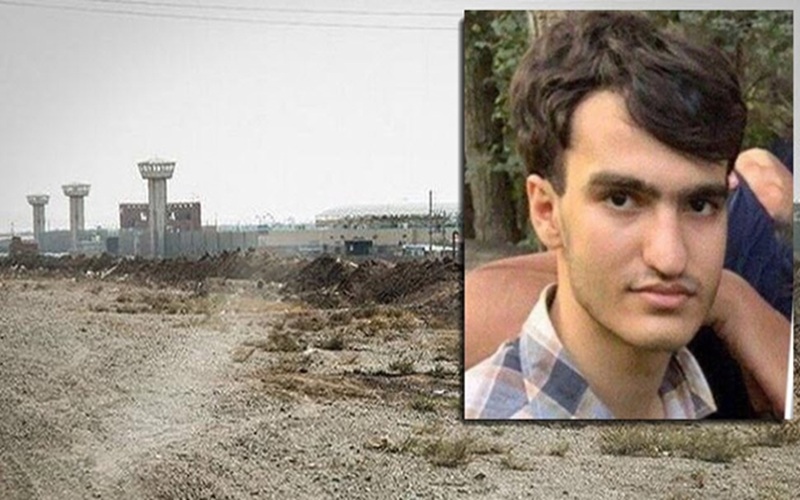

Sharif University students face renewed prosecution as international pressure grows
On Sunday, July 20, the Iranian regime brought Amir Hossein Moradi—an imprisoned elite student from Sharif University of Technology—to court for a retrial under harsh conditions, including handcuffs and leg shackles. Moradi is currently held in the Greater Tehran Penitentiary.
The retrial was held at Branch 23 of the Tehran Revolutionary Court, presided over by Judge Seyyed Ali Mazloum. During the session, the judge informed Moradi of a new charge: “propaganda against the regime,” citing statements he had published from inside prison.
The court also attempted to conduct the retrial of Moradi’s co-defendant, Ali Younesi, in absentia. However, the Ministry of Intelligence refused to allow Younesi to appear in person, despite a formal request from his legal team. The court proceeded with the session without his presence.
In a written statement, Younesi’s lawyers objected to the process on three grounds: the need to know the whereabouts of their client, the right to be present during the hearing, and the necessity of consulting with their client prior to trial. Their objections were dismissed, and Judge Mazloum scheduled the next retrial session for Monday, July 28.
Both Moradi and Younesi were originally arrested in 2020 and sentenced in April 2022 to 16 years in prison on charges of supporting the People’s Mojahedin Organization of Iran (PMOI/MEK). Their trials drew widespread condemnation from human rights organizations and academic institutions for violations of due process and the use of coerced confessions.
The Iranian Resistance has called on the United Nations Special Rapporteur on the situation of human rights in Iran, along with international human rights lawyers, to attend and observe these retrials.
The Iranian Resistance emphasized the importance of international oversight to ensure transparency and protect the basic rights of the two Sharif University students, whose cases have become emblematic of the regime’s suppression of dissenting voices—even among its most academically accomplished youth.