



Mismanagement, resource depletion, and public anger converge as outages spread nationwide
As temperatures soar across Iran, the regime is facing an escalating crisis of water and electricity shortages that is sparking widespread public discontent and increasing social unrest. From major cities to rural provinces, the daily lives of millions are being disrupted by frequent blackouts, water cuts, and growing signs of government mismanagement.
Outages, Protests, and Rising Tensions
According to reports from the regime’s own state media, large swaths of the country experienced severe water and electricity outages on Saturday, July 26. The disruptions have not only impacted households but have also triggered spontaneous protests, particularly in industrial areas.
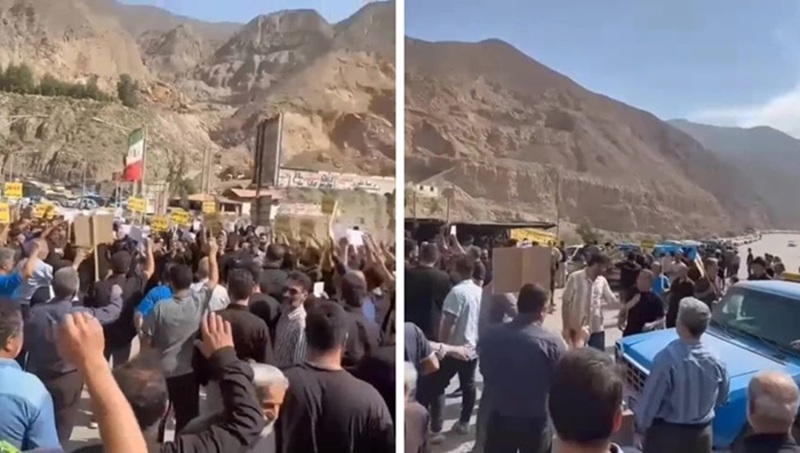
In Khorramdasht and Siahsang, footage shared on social media shows factory owners and workers gathering in protest over prolonged power cuts that have paralyzed production. Security forces were swiftly dispatched to disperse the crowds, underscoring the regime’s growing anxiety over the public’s mounting frustration.
Dwindling Water Reserves and Alarming Statistics
The depth of the crisis is reflected in the latest official data. The Karaj Dam—one of the main water sources for Tehran—has seen its reserves drop by nearly 100 million cubic meters compared to the same time last year, falling from 160 million to just 62 million cubic meters.
Tasnim News Agency, which is affiliated with the Islamic Revolutionary Guard Corps (IRGC), issued a stark warning: if current consumption and climate trends persist, Karaj Dam’s water may not last even until October.
Mohammad Ali Moallem, director of the Amir Kabir Dam in Karaj, described the situation as “unprecedented,” noting that the dam is now 46 meters below its normal level—a historic low for this time of year since its commissioning in 1961.
Tehran’s governor, Mohammad Sadegh Motamediyan, echoed these concerns. He stated that 62 percent of the capital’s water consumption is now being met through underground reserves—a sharp reversal from a decade ago when surface water was the primary source. He also revealed that the fill rate of the province’s dams has dropped to a mere 13 percent, while rainfall has declined 32 percent compared to last year and over 43 percent compared to the long-term average.
Expert Warnings and Mismanagement
Experts have been raising the alarm over “severe water stress” in Tehran and other major cities, citing “inefficient management” and the regime’s longstanding “neglect of early warnings” as central factors in the deepening crisis. Without immediate intervention, experts warn, Tehran could soon face a grim scenario of widespread rationing, pressure drops, and total water cuts.
The electricity crisis is equally dire. Mohammad Rashidi, a member of the regime’s parliamentary energy commission, revealed that in some areas, power is being cut for as long as 11 hours a day—disruptions that also affect water distribution.
Peyman Falsafi, Vice Chairman of the Parliament’s Agriculture Commission, proposed a 20 percent reduction in water consumption as the only viable short-term solution. He admitted that 42 percent of Tehran’s water is used for drinking and sanitation, with 80 percent of that turning into wastewater, a situation he described as “really bad.”
Parliamentary Scrutiny—But No Immediate Solutions
With no structural response in sight, Iran regime’s parliament is expected to summon officials from the Ministry of Energy and the Planning and Budget Organization this week to review the performance of water-sector investment funds. However, analysts remain skeptical about the regime’s willingness or capacity to implement the long-term reforms necessary to avert catastrophe.
A Nation Buckling Under the Heat
The crisis arrives at a time when Iran is only halfway through the summer, yet the pressure on its citizens has already become unbearable. Seasonal unemployment is rising, infrastructure is eroding, and the constant cycle of blackouts and water shortages is stoking public anger.
In the absence of meaningful and urgent action, the regime’s failures are translating into daily hardship for ordinary Iranians—another grim chapter in the country’s ongoing struggle under a system plagued by corruption, mismanagement, and indifference to the people’s suffering.