


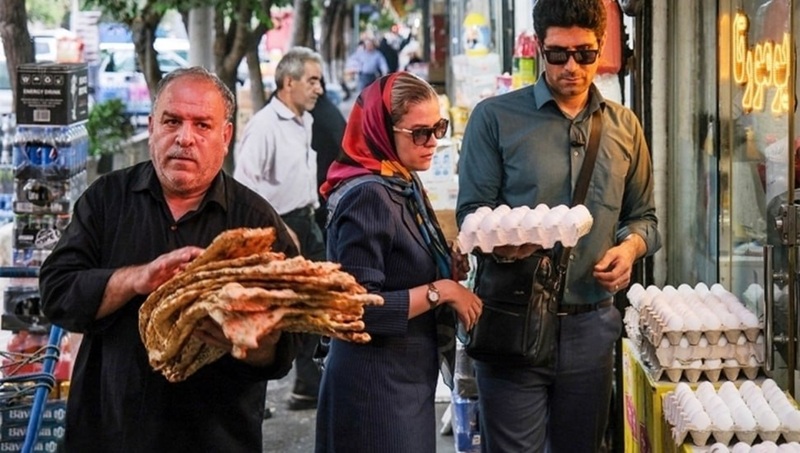

Runaway inflation, collapsing purchasing power, and policy failure are pushing millions of Iranian families beyond the brink of survival
Twenty-one days after the end of military confrontations between the Iranian regime, the United States, and Israel, the reality on the ground in Iran tells a starkly different story from any official narrative of stabilization. Far from easing, economic pressure on ordinary citizens has intensified to unprecedented levels—levels many now describe as “unbearable” and “explosive.”
At the center of this crisis lies a simple but devastating truth: for a growing share of Iranian society, even the most basic food items are no longer affordable.
The numbers are not merely alarming—they are structurally catastrophic. In 2026, the official minimum wage hovers around 16 million tomans, with even experienced workers earning, at best, approximately 22 million tomans. Yet when housing, healthcare, education, and transportation costs are accounted for, virtually nothing remains for food consumption. This is not a case of tightening belts; it is a case of systemic deprivation.
Protein consumption offers perhaps the clearest indicator of economic collapse. Meat—once a staple—has now become a luxury good. Lamb prices have surged to 1.5 million tomans per kilogram, with premium cuts nearing 1.9 million. Beef prices follow closely, while even chicken—traditionally the fallback protein for low-income households—has climbed to 330,000–350,000 tomans per kilogram. In practical terms, meat has been eliminated from the diets of millions.
This trend is not new but has sharply accelerated. Data from the Food and Agriculture Organization (FAO) had already shown a roughly 40% decline in per capita meat consumption in Iran between the mid-2010s and 2023. The current surge in prices is likely to deepen that contraction dramatically.
The dairy sector reflects a similar pattern of exclusion. Milk, yogurt, cheese, and butter—essential components of basic nutrition—are rapidly becoming inaccessible. A single liter of full-fat milk now costs over 130,000 tomans, while common cheese varieties have crossed the half-million threshold. This is occurring in a country where dairy consumption had already fallen far below global standards.
According to industry officials, per capita dairy consumption in Iran has dropped below 50 kilograms annually, compared to 130 kilograms in 2010—far below the global benchmark of 180 kilograms. For lower-income deciles, dairy consumption has effectively collapsed altogether. The long-term public health implications of such a shift are severe and potentially irreversible.
Staple goods—traditionally the last line of defense against hunger—are no longer providing relief. Legumes, rice, and basic carbohydrates have all experienced dramatic price increases. Rice, a cornerstone of the Iranian diet, now costs upwards of 500,000 tomans per kilogram for domestic varieties. Even imported, lower-quality rice is no longer cheap. Similarly, lentils, beans, and chickpeas have reached price points that strain even middle-income households.
Equally concerning are signs of supply disruption. Reports of empty shelves—particularly for essential goods like cooking oil—underscore a deeper structural dysfunction. In some cases, prices have reached levels that defy economic logic, pointing not just to inflation, but to breakdowns in distribution, regulation, and market stability.
Even traditionally affordable food items—eggs, fruit, and simple packaged goods—are slipping out of reach. Eggs, once a key protein substitute, are now priced at levels that make regular consumption difficult. Fruits, long considered basic nutritional necessities, have effectively become occasional luxuries.
This is not inflation in the conventional sense. It is a rapid erosion of purchasing power combined with a collapse in access to essential goods. Iranian households are not merely adjusting consumption—they are eliminating entire categories of food from their diets.
Meanwhile, the broader cost environment continues to deteriorate. Housing, healthcare, transportation, and education costs are all rising simultaneously, creating a compounding effect that leaves wage earners structurally deficit-bound. For many, three full meals a day are no longer guaranteed.
Crucially, this crisis is accelerating. Citizens report that price increases are no longer gradual but occur “daily, even hourly,” reflecting a complete absence of market stability or policy control.
Recent data from the Central Bank of Iran confirms the severity of the situation. As of April 2026, point-to-point inflation for goods—excluding services—has reached an unprecedented 95.7%. This figure alone should dispel any illusion that the crisis is cyclical or temporary. It is systemic.
The fundamental issue is no longer inflation per se, but the collapse of the economic contract between the state and its citizens. When wages fail to track even half the inflation rate, the gap between income and expenditure widens into an unbridgeable chasm.
What is unfolding in Iran today is not just an economic downturn—it is the gradual dismantling of the minimum conditions required for dignified life. For millions of families, the economy has entered what many describe as a “point of no return.”
And unless structural change replaces policy inertia, that point may soon define the future of an entire society.