



Iran’s first internationally registered bay faces ecological collapse, threatening biodiversity, fisheries, and northern Iran’s climate stability.
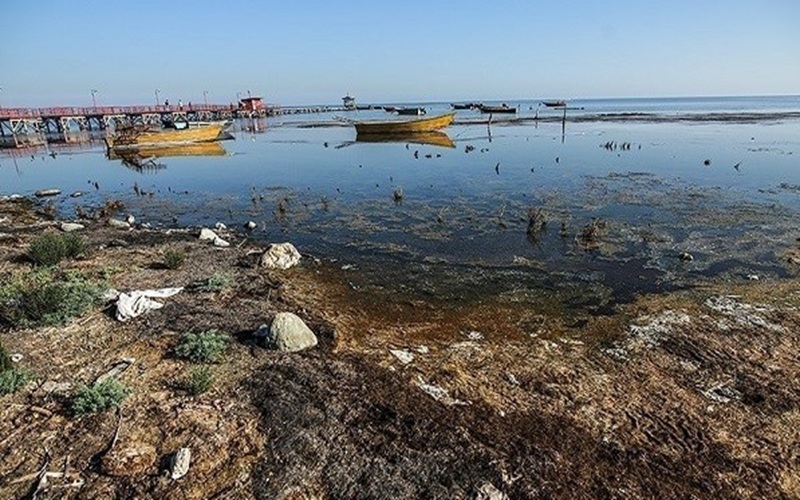
Gorgan Bay, Iran’s first wetland and bay to be internationally registered under the Ramsar Convention, is on the verge of drying up completely. Once a thriving aquatic ecosystem rich in biodiversity, the bay has lost much of its water due to a sharp drop in levels and extensive retreat—triggering severe ecological damage and widespread loss of animal life.
More than eight years have passed since the formation of the Gorgan Bay Rescue Task Force, yet none of its plans have succeeded in halting the decline. Before dredging of the bay’s water channels began in March 2023, around 46% of the wetland had already dried up. At the current pace, more than half of Gorgan Bay is expected to lose its water entirely in the near future.
Despite promises that dredging would channel 1.5 billion cubic meters of water into the bay, field surveys show no significant improvement. While some government experts claim that water levels have risen and salinity has fallen, summer inspections confirm the destruction is still advancing.
One of the main drivers of the crisis is the failure to allocate the wetland’s water rights, compounded by the unprecedented retreat of the Caspian Sea. Reports indicate the shoreline has retreated several hundred meters compared to late 2023. The Governor of Golestan has warned that without urgent action, Gorgan Bay could face the same fate as Lake Urmia in less than two years.
Located in the southeastern Caspian Sea between Golestan and Mazandaran provinces, Gorgan Bay—formerly known as Astarabad Bay—covers about 400 square kilometers with a depth ranging from two to six meters. The Miankaleh Peninsula to the north separates it from the open sea, making the bay’s survival highly dependent on Caspian water levels. With the sea in continuous decline for decades, the bay’s future hangs in the balance.
The environmental crisis extends beyond Gorgan Bay. The Anzali International Wetland, another key Ramsar site in northern Iran, has been steadily shrinking due to reduced river inflows, sediment buildup, invasive plant species, and delayed dredging projects. Years of government inaction have worsened both ecosystems’ condition.
The consequences of Gorgan Bay’s collapse will reach far beyond environmental loss. The bay’s high diversity of fish species has long sustained the region’s fishing industry. Its destruction would devastate local livelihoods and deal a heavy economic blow to fishing communities.
Environmental experts warn that, if left unchecked, this could trigger a chain reaction of ecological disasters: rising salinity in surface waters, the creation of new dust storm zones, invasive species outbreaks, and the mass extinction of aquatic and bird life.
Satellite data confirm the Caspian Sea’s alarming decline. After reaching its highest level in 80 years in 1995 at -26.5 meters, the sea began a steady drop. By 2023, the water level had fallen to about -28.5 meters, with annual declines averaging 20–25 centimeters over the last decade. Some coastal areas have seen shoreline retreat of up to 120 meters.
Projections for the 21st century are grim. By 2100, scientists predict the Caspian’s water level could fall another 9–18 meters, drying 23–34% of its area, especially in the shallow north. This would mark the greatest environmental catastrophe in the Caspian Basin’s modern history.
The water crisis that most Iranians currently experience as occasional drinking water cuts is, in reality, a deeper and far-reaching threat to the country’s main aquatic ecosystems. Without immediate intervention, Gorgan Bay, Anzali Wetland, and even large parts of the Caspian Sea may follow the path of Lake Urmia—ushering in a new era of environmental collapse in northern Iran.