PMOI Resistance Units confront Tehran’s clerical regime as it bulldozes evidence of past atrocities, keeping the memory of martyrs alive and promoting a democratic future for Iran.
As Tehran’s ruling clerics deploy bulldozers to erase the traces of their past atrocities, the flame of resistance is burning brighter across Iran. In Zahedan, the capital of Sistan and Baluchestan Province, activities of the PMOI Resistance Units have emerged as a defiant answer to the regime’s campaign of denial and fear.
August 29—Zahedan, southeast Iran
In their weekly anti-regime activities, PMOI Resistance Units reiterate that the only path to freedom in Iran is regime change by the people and the organized Resistance. pic.twitter.com/cGmZ7zcvMr— People's Mojahedin Organization of Iran (PMOI/MEK) (@Mojahedineng) August 30, 2025
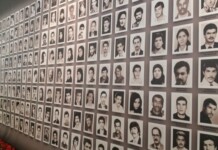
On August 22, 2025, an official from Tehran’s Behesht-e Zahra cemetery admitted that Section 41—the burial site of thousands of PMOI members executed in the 1980s—was “flattened… and turned into a parking lot.” This brazen act of tampering with a crime scene highlights the regime’s desperation to conceal its history of massacres.
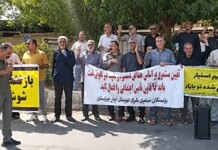
In response, Resistance Units in Zahedan staged bold actions, holding placards that declared:
“From Zahedan to Tehran, the regime is trying to erase the evidence of its crimes and must be held to account.”
"Regime change by the people and organized resistance will put Iran on the path to democracy" pic.twitter.com/p7qyDRFsfr
— People's Mojahedin Organization of Iran (PMOI/MEK) (@Mojahedineng) August 30, 2025
Their defiance demonstrates how the clerical regime’s crimes in the capital reverberate far beyond Tehran, fueling a unified nationwide front of resistance.
The Resistance Units’ slogans cut to the heart of Iran’s political struggle:
- “No to Shah, no to mullahs.”
- “A dictator is a dictator, whether with a turban or a crown.”
These messages reject both monarchical and clerical tyranny, presenting instead the “Third Option” championed by NCRI President-elect Maryam Rajavi: No to war, no to appeasement, and yes to the overthrow of the religious tyranny by the Iranian people and their organized Resistance.
This vision directly challenges the regime’s false narratives. While Tehran attempts to present Masoud Pezeshkian as a “moderate,” the Resistance Units expose the reality: “During the presidency of Pezeshkian, more than 1,630 people have been executed.” Far from reform, executions remain the regime’s foundation.
The Resistance Units also link the regime’s crimes to its systemic failures. Amid nationwide blackouts and water shortages, they declared: “As long as this criminal regime is in power, neither water nor power nor anything else will be resolved.”
The clerical regime’s bulldozers are not erasing its history—they are unmasking its fear of accountability. Meanwhile, the defiance rising from Zahedan proves that the regime’s massacres cannot be buried. Instead, they are being transformed into a powerful source of determination for the final push toward freedom.
The message from Zahedan to Tehran, and across Iran, is unmistakable: The memory of the martyrs will not be silenced, and regime change by the people and their organized Resistance will open the path to democracy.