


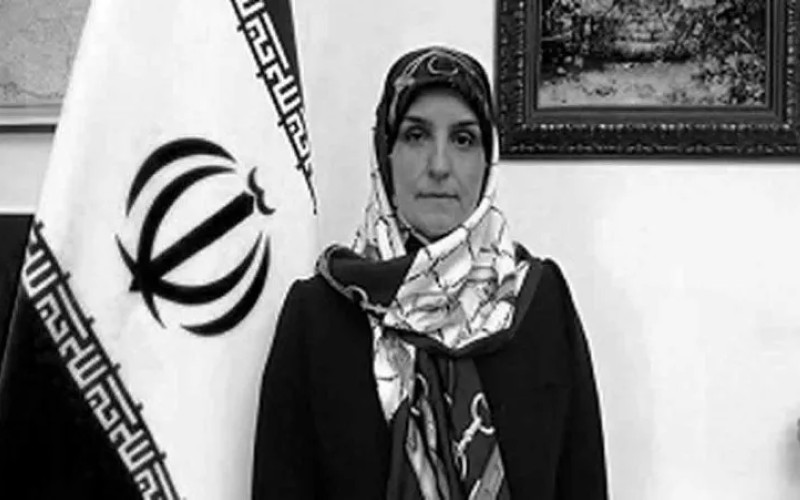

The appointment of Afsaneh Naderipour to a UN human rights body highlights the dangers of legitimizing Tehran’s repressive policies.
A Controversial Nomination
Afsaneh Naderipour, a long-serving member of the Iranian regime’s diplomatic corps and a consistent defender of its authoritarian policies, has been nominated for membership in the Advisory Committee of the United Nations Human Rights Council (UNHRC).
Naderipour, who previously served as Tehran’s ambassador to Denmark and held numerous missions across Europe, has spent more than three decades justifying the regime’s repressive and misogynistic policies before the international community.
Contradiction at the Core
Her nomination starkly contradicts the very mission and charter of the United Nations, which is meant to uphold universal human values and protect human rights. Awarding such a platform to an official who has worked tirelessly to whitewash the regime’s record undermines the credibility of the Council itself.
The Iranian regime executed more than 1,000 people in 2024 alone and at least 950 in just the first eight months of 2025. To elevate one of its chief defenders to an advisory role on human rights is not only a profound insult to the victims of torture, repression, and gender-based discrimination, but also a dangerous step toward legitimizing Tehran’s abuses.
Defender of Repression
Throughout her diplomatic career, including her post in Denmark, Naderipour repeatedly defended the regime’s violent suppression of dissent and its widespread use of executions. She frequently attempted to justify these violations as “domestic laws” or “sovereign rights,” echoing the regime’s standard narrative designed to neutralize international criticism.
This strategy reflects the broader role of the Iranian foreign ministry: whitewashing human rights violations while enabling the regime to expand its influence abroad.
Legitimizing Crimes Against Humanity
Appointing Naderipour to the UNHRC Advisory Committee risks normalizing and legitimizing the regime’s inhumane practices. Tehran has already been condemned in 71 United Nations resolutions for systematic and serious human rights violations.
The UN Special Rapporteur on Iran emphasized in his July 2024 report that mass executions in the 1980s constituted crimes against humanity—and even genocide—crimes that continue to this day. Allowing regime representatives into advisory positions within the UN directly undermines these findings and emboldens further abuses.
Appeasement and Its Consequences
This nomination is also a clear result of Western governments’ policy of appeasement toward the Iranian regime. Decades of turning a blind eye to executions, the repression of women, and the killing of protesters have emboldened Tehran’s officials rather than isolating them.
Instead of being held accountable for crimes against humanity, regime loyalists are being welcomed into international institutions, where they can further manipulate and obstruct global efforts to uphold human rights.
A Call for Action
Handing over human rights seats to representatives of a regime built on torture and execution transforms the UN into a tool of dictatorship rather than a defender of human dignity.
Preventing this dangerous precedent is an urgent responsibility for the Human Rights Council and all governments committed to upholding the principles of justice, freedom, and equality. Allowing Naderipour to assume such a role would not only dishonor the victims of Iran’s repression but would also undermine the integrity of the international human rights system itself.