A convergence of conflict, digital disruption, and currency collapse is pushing millions of Iranians into unemployment, poverty, and financial insecurity
Iran’s economy is no longer experiencing isolated shocks—it is undergoing a systemic breakdown. The combined effects of military conflict, prolonged internet shutdowns, currency devaluation, and structural mismanagement are dismantling both production and livelihoods at an accelerating pace.
At the industrial level, recent military strikes have damaged key infrastructure, disrupting production and employment. Major manufacturing facilities have been partially disabled, forcing companies to scale back operations or halt them entirely. In some instances, workers have reportedly been told they must participate in debris removal efforts before receiving delayed wages—an indication of severe liquidity constraints and deteriorating labor conditions.
At the same time, the prolonged shutdown of international internet access—now exceeding two months—has effectively paralyzed Iran’s digital economy. This sector had become a critical source of employment, particularly for young people, women, and skilled professionals engaged in freelancing, e-commerce, digital services, and financial trading.
The impact has been immediate and severe. Entire income streams have disappeared. Freelancers have lost access to international clients, online businesses can no longer operate, and traders are cut off from global markets. Entrepreneurs report that supply chains have frozen, as both raw material imports and customer access have been disrupted simultaneously. The result is a near-total collapse of digitally dependent economic activity.
This dual shock—industrial disruption and digital paralysis—has triggered a widespread wave of layoffs. Businesses across multiple sectors, including retail, manufacturing, and services, are downsizing or shutting down entirely. Commercial centers that once thrived on technology sales and services are now operating at minimal capacity, with many shops closed and employees dismissed.
The labor market is deteriorating rapidly. Even highly educated and experienced professionals are unable to find replacement employment after losing their jobs. Reports indicate a sharp increase in job-seeking activity, with hundreds of thousands of applications submitted within short periods, while available opportunities continue to decline. This widening gap reflects a severe contraction in labor demand.
Macroeconomic indicators further illustrate the depth of the crisis. The Iranian rial has lost substantial value, pushing real wages to historic lows. With the US dollar trading above 180,000 tomans, the effective daily income of a minimum-wage worker has fallen to roughly three dollars. The official monthly minimum wage—approximately 16.6 million tomans—amounts to less than $100. This places Iran dramatically below regional standards, highlighting the severity of purchasing power erosion.
Unemployment has expanded significantly. Official figures suggest that recent conflict-related disruptions have eliminated over one million jobs, with up to two million people affected directly or indirectly. The crisis is particularly severe for women, who were heavily concentrated in remote and online work, and for younger workers attempting to enter an increasingly inaccessible labor market.
At the same time, labor conditions are worsening. Wage delays, unpaid salaries, and forced terminations are becoming more common. Some employers are reportedly exploiting the crisis—cutting jobs while increasing prices—further squeezing both workers and consumers. Oversight mechanisms appear ineffective, leaving workers with limited recourse.
Retirees and fixed-income households are also under growing pressure. Pension payments are failing to keep pace with inflation, and in some cases, unexpected deductions are reducing already insufficient incomes. Many households report exhausting their monthly income well before the end of the month, forcing difficult decisions about basic necessities.
The broader picture is one of systemic collapse. Inflation, unemployment, currency devaluation, and institutional weakness are reinforcing one another, creating a cycle that is increasingly difficult to stabilize. What distinguishes this phase of crisis is not just its severity, but its breadth: multiple economic pillars are deteriorating simultaneously.
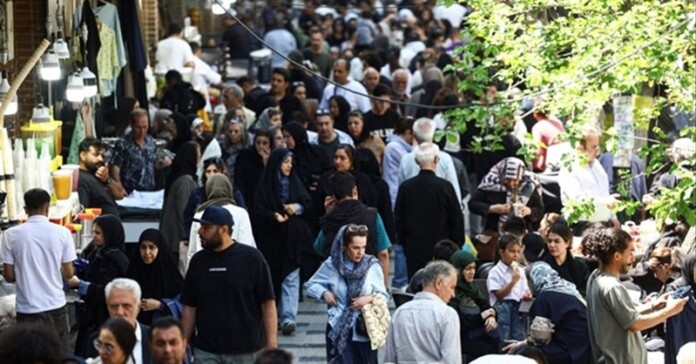
For millions of Iranians, the economic question is no longer about growth or opportunity. It is about survival in an environment where income is disappearing, costs are rising, and the mechanisms that once provided minimal stability are no longer functioning.