



IAEA confirms loss of inspection access and “serious concern” over enriched uranium stockpiles
The Institute for Science and International Security (ISIS) has released a detailed assessment of the International Atomic Energy Agency’s (IAEA) latest reports on Iran, underscoring unprecedented challenges in monitoring the country’s nuclear program following the June war.
The analysis, authored by David Albright, Sarah Burkhard, and Andrea Stricker, reviews the IAEA’s September 3, 2025, quarterly report Verification and monitoring in the “Islamic Republic of Iran” in light of United Nations Security Council resolution 2231 (2015), as well as its safeguards report. These are the first reports since Israel and the United States launched strikes on Iran’s nuclear facilities during the 12-Day War.
Collapse of IAEA Access
According to the IAEA, all in-field inspections were halted for “safety reasons” during the conflict. By the end of June, the Agency decided “to withdraw all of its inspectors from Iran.” The regime later allowed limited observation at Bushehr nuclear power plant but has refused access to enrichment sites, including a new facility at Isfahan.
The IAEA emphasized that “Iran’s inventory of HEU, the only NPT non-nuclear weapon State to have produced such nuclear material, is a matter of serious concern. The Agency has not had access to verify this specific nuclear material in Iran for over two and a half months.”
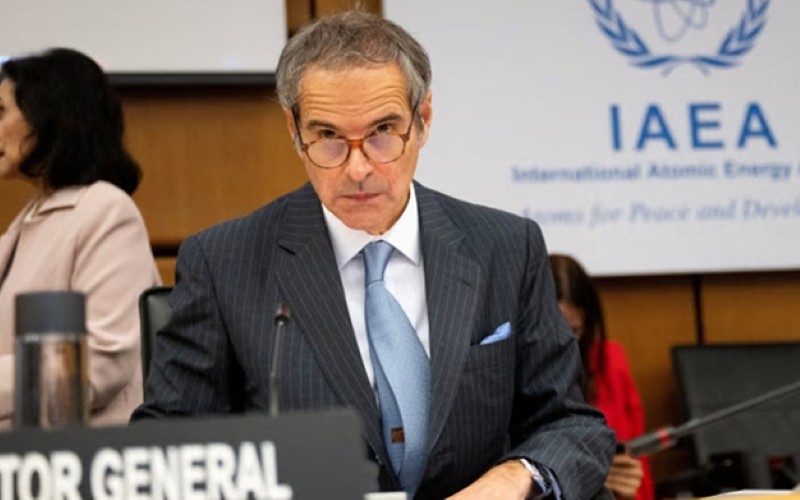
Director General Rafael Grossi has warned that the current situation is “not something that can go on for months on end” and rejected Iran’s requests to implement inspections “a la carte.” He has indicated willingness to meet officials “in Vienna or elsewhere” but has avoided offering to travel to Iran amid reported threats.
Massive Destruction of Centrifuges
The ISIS report concludes that the military strikes destroyed nearly 22,000 centrifuges across Iran’s three enrichment sites, eliminating “Iran’s gas centrifuge enrichment program.” It adds:
“For the first time in over 15 years, Iran has no identifiable route to produce weapon-grade uranium in its centrifuge plants.”
Facilities at Natanz, Fordow, and Isfahan suffered extensive damage. The IAEA confirmed that the Pilot Fuel Enrichment Plant at Natanz was “extensively damaged, including indications of direct impacts,” while Fordow suffered the destruction of six cascades of IR-1 centrifuges and ten cascades of IR-6 machines.
The report notes that Iran’s efforts to conceal equipment in underground sites before the war may mean that some material survived, but the Agency has “lost continuity of knowledge” over stockpiles and production.
Enriched Uranium Concerns
On the eve of the June strikes, Iran’s enriched uranium holdings included:
- 440.9 kg enriched up to 60 percent U-235
- 184.1 kg enriched up to 20 percent U-235
- 6,024.4 kg enriched up to 5 percent U-235
- 2,391.1 kg enriched up to 2 percent U-235
The stockpile of 60 percent uranium is of particular concern. As the ISIS report notes:
“Practically, 40 kg are sufficient for an implosion-type nuclear weapon and double that amount, or 80 kg, is sufficient for a gun-type nuclear explosive device.”
While most stockpiles appear to remain at their declared sites, there are indications that highly enriched uranium was moved into the underground tunnel complex at Isfahan, long considered a storage location in case of attack.
Unresolved Safeguards Violations
The IAEA’s September reports also highlight continued refusal by Tehran to address longstanding questions about undeclared nuclear activities dating back to 2018. The Agency states it has “already lost continuity of knowledge in relation to the production and current inventory of centrifuges, rotors and bellows, heavy water and uranium ore concentrate, which it will not be able to restore.”
In addition, Iran has de-designated multiple IAEA inspectors, most recently in August, over what the Agency described as a minor paperwork error. The IAEA called this move “unjustified.”
Conclusion
The ISIS analysis underscores that the June strikes left Iran’s nuclear program heavily damaged but also plunged IAEA monitoring into unprecedented uncertainty. The report warns that without restored inspections, the Agency cannot verify the fate of enriched uranium or assess whether the regime is attempting to rebuild its weapons-related capabilities.
As Grossi stated, full and immediate access “urgently needs to be addressed,” but the regime continues to refuse compliance with its safeguards obligations.