


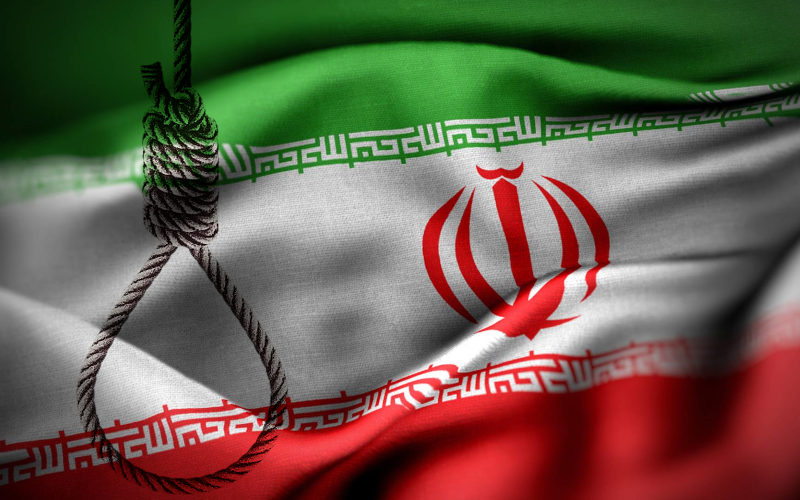

In August 2025, at least 169 people were executed and 158 arbitrarily detained across Iran, as the regime intensifies repression after the 12-day war.
Repression as “Antidote” to Public Unrest
In the aftermath of the 12-day war and the severe blows it inflicted on the regime, the regime’s supreme leader Ali Khamenei repeatedly emphasized that the main threat comes not from foreign actors but from within Iran. This perspective has driven an intensified wave of repression, marked by mass arrests, relentless executions, and the silencing of dissent.
Security and intelligence forces have arrested hundreds of citizens under various pretexts in recent weeks, while executions have continued at a relentless pace, leaving families across the country grieving.
Executions: At Least 169 in One Month
According to published reports, at least 169 people were executed in August 2025 in prisons and public spaces across Iran.
- Men executed in prison: 161
- Women executed in prison: 6
- Men executed in public: 2
Among those executed were 11 Baluch, 13 Kurds, and 7 Afghan nationals, underscoring the disproportionate targeting of ethnic and migrant groups.
Women Executed
- An unidentified woman executed on August 3, 2025 in Khorramabad Central Prison.
- Soudabeh Ghasemzadeh (45), executed on August 11, 2025 in Isfahan Central Prison.
- Mahsa Akbari, executed on August 20, 2025 in Shiraz Central Prison.
- Maliheh Haghi (34), executed on August 26, 2025 in Tabriz Central Prison.
- Mitra Yasini (Yasamani), executed on August 27, 2025 in Shiraz Central Prison.
- Banoo Moghaddam (60), executed on August 28, 2025 in Abhar Prison.
Public Executions
- Sajjad Molaei, executed on August 19, 2025 in Lar, Fars Province.
- Naghi Damghani, executed on August 21, 2025 in Kordkuy, Golestan Province.
These executions, many of them carried out for alleged murder charges, reflect the regime’s use of capital punishment as a tool of intimidation rather than justice.
Arrests: At Least 158 Across the Country
In August, at least 158 people were arrested under various categories:
-
Political arrests (75 cases): Included supporters of the People’s Mojahedin Organization of Iran (PMOI/MEK), Baluch and Kurdish citizens, seminary students in Rask, children’s rights activists, teachers, and online activists. Many were accused of “collaborating with the enemy” or detained without clear charges.
-
Arbitrary arrests (29 cases): Included Baluch laborers and citizens caught in areas of conflict, as well as participants in a private celebration involving mixed-gender dancing.
-
Religious persecution (54 cases): At least 54 Christians and Baha’is were detained without cause, highlighting ongoing religious discrimination.
Extrajudicial Killings
In addition to executions and arrests, at least nine people were killed extrajudicially during August:
- Fuel carriers (sookhtbar): 2
- Kurdish border porter (kolbar): 1
- Other citizens: 6
These killings reflect the regime’s longstanding policy of using lethal force against marginalized populations, particularly in border regions.
Conclusion: Systematic Use of Fear
The human rights situation in August 2025 illustrates the regime’s deliberate reliance on executions, arbitrary arrests, and extrajudicial killings as instruments of control. Following the 12-day war, Khamenei’s framing of domestic dissent as the “primary threat” has translated into a brutal escalation of repression.
Far from stabilizing the system, such measures have deepened anger among ethnic minorities, religious groups, and the broader public. The surge in executions and mass arrests highlights both the regime’s vulnerability and its determination to crush dissent through fear and violence.