


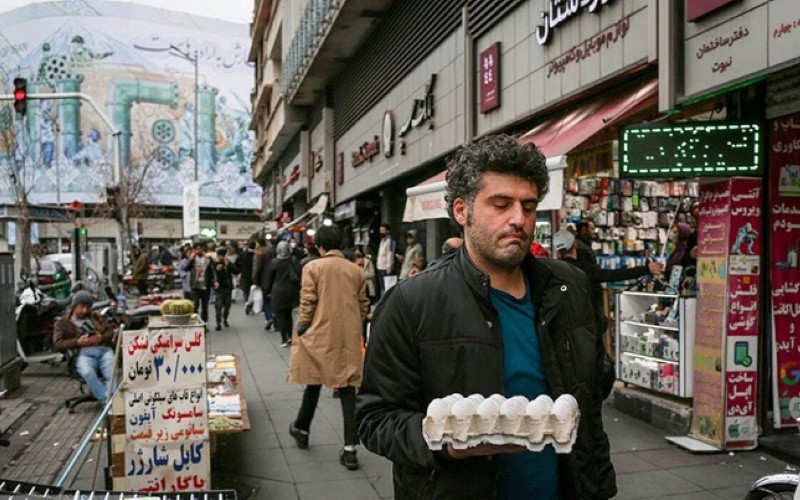

Once the backbone of society, Iran’s middle class is collapsing under inflation, inequality, and systemic neglect.
In Iran today, the middle class—once regarded as the backbone of society—is rapidly disintegrating. Comprised largely of educated and employed young people, this group once symbolized upward mobility and social stability. Yet despite nominal increases in income, their purchasing power has steadily declined, forcing them down the economic ladder. What began as the erosion of the working class has now extended to the middle class, accelerating a broader social collapse under a system that has consistently ignored the basic rights and needs of its citizens.
This is not merely an economic issue. The fall of the middle class represents a deeper social and psychological crisis rooted in entrenched inequality, unchecked inflation, and the added weight of international sanctions. The regime’s misguided priorities and failure to stabilize markets have left millions of people trapped in poverty, with little hope of recovery.
Voices from a Collapsing Class
Personal testimonies from Iran’s middle class illustrate the painful transformation from relative stability to financial insecurity.
A young woman employed at a private company saw her salary increase from five million to thirty million tomans in recent years. Yet despite this apparent progress, she explains that she has had to cut out simple pleasures such as dining out or buying basic quality goods. “My pocket feels emptier than ever,” she says, even though she is single and has no dependents.
A young bookseller with a monthly income of fifty million tomans describes postponing his honeymoon and living with constant fear of the future. Another young couple explains how dining in restaurants or even enjoying a daily cup of coffee has become unaffordable, forcing them to limit themselves to bare necessities.
Similarly, an employee at a dairy company earning twenty-five million tomans laments, “No matter how hard I run, I never get anywhere.” These voices reflect a consistent reality: nominal wage increases are meaningless when inflation outpaces earnings, leaving people poorer in practice. Even modest dreams—purchasing a used car, or traveling to a neighboring country—have turned into unattainable luxuries.
These individuals, who just a few years ago firmly belonged to the middle class, now find themselves described as the “poor middle,” caught in an exhausting cycle of overwork, financial anxiety, and diminished quality of life.
The Psychological Toll
The collapse of the middle class carries devastating psychological consequences. Chronic financial anxiety is widespread, shaping every aspect of daily life. Young Iranians delay marriage and childbirth, fearing they cannot afford even the basics of family life. Compared to peers in neighboring countries, they feel a growing sense of failure and frustration.
The consequences ripple across society. Teachers, nurses, and other professionals—traditionally part of the productive middle class—are forced to take second jobs such as driving for ride-hailing services. This constant exhaustion drains creativity, undermines productivity, and deepens collective despair. Trust within society is eroding, replaced by resentment and fear.
Structural Inequality and Regime Neglect
At the core of this crisis lies structural inequality and systemic neglect. Iran’s young middle class bears the burden of economic mismanagement, runaway inflation, and price shocks. Basic goods such as cars have seen price hikes of 60 to 70 percent with no meaningful regulation. Salaries cannot keep pace, leaving wage earners perpetually behind.
The effects extend beyond the employed middle class. Nearly 26 percent of Iranians aged 15 to 25 are neither in school, nor employed, nor in training programs. This “lost generation” is increasingly drawn into social ills such as violence and petty crime, visible expressions of pent-up anger toward a failed system.
Broken promises of eradicating hunger or ensuring universal health care have further eroded trust. Housing, a cornerstone of middle-class stability, is now unattainable for most young people, extinguishing hopes for a secure future.
The Impact of Sanctions and Research Findings
Academic research confirms this decline. International sanctions since 2012 have reduced the middle class from an estimated potential of 80 percent of the population to just 55 percent. Using counterfactual analysis, economists estimate that without sanctions, the middle class would have grown by 17 percentage points annually. Instead, GDP per capita fell by nearly $3,000, informal employment rose, and opportunities shrank.
As the middle class diminishes, so too does Iran’s capacity for development and social stability. The weakening of this group has heightened tensions, reduced the prospects for democratic reform, and fueled corruption and rent-seeking. Surveys show the percentage of Iranians who identify as middle class fell from 78.7 percent in 2005 to 63.7 percent in 2020, underscoring a sharp decline in self-perception and confidence.
A Threat to Society’s Future
Ultimately, the collapse of Iran’s middle class is both an economic failure and a profound social crisis. Stripped of purchasing power and dignity, young Iranians live in constant anxiety, deprived of the opportunities their parents once took for granted. Where the middle class disintegrates, the broader stability of society is endangered.
By ignoring the plight of its citizens, the ruling system is not only accelerating poverty but also sowing the seeds of long-term instability. The fall of the middle class into poverty is not just a marker of economic mismanagement—it is a warning sign of a nation’s future at risk.