



The activation of the UN Security Council’s snapback mechanism marks not just a diplomatic measure but a historic phase in the struggle between the Iranian people and the ruling theocracy.
The activation of the UN Security Council’s “snapback” mechanism and the return of previous sanctions against Iran’s regime represents a strategic blow of historic proportions. This is not simply a matter of sanctions or legal provisions within a nuclear deal; it directly strikes at the political and ideological foundations of the ruling system. What the Iranian Resistance had long warned of has now become concrete reality: entry into the most sensitive and decisive phase of the conflict between people and state.
From this perspective, the snapback is more than a legal instrument; it symbolizes the beginning of a decisive historical reckoning. It comes at a time when domestic and international crises are intertwined, placing the future of the regime under unprecedented strain.
The regime now faces a deadly duality: on one side, mounting international pressure and sanctions that send shockwaves through its already fragile economy; on the other, a collapsing domestic legitimacy born of decades of repression, executions, corruption, and plunder that have left society in an explosive state. The contradictory reactions within the ruling elite are evidence enough: the regime’s president Masoud Pezeshkian, attempts to project confidence by leaning on non-Western blocs such as BRICS or the Shanghai Cooperation Organization, but at home, the freefall of the stock market and the soaring exchange rate make clear that neither society nor markets believe in these hollow alternatives.
The defining keyword of this moment is confusion under panic. One regime faction seeks to downplay sanctions by emphasizing “domestic resilience” or regional alliances. Another resorts to hollow threats—closing the Strait of Hormuz, withdrawing from the NPT, or even “testing a nuclear bomb.” Such rhetoric, while aimed at shoring up morale among regime loyalists, in fact exposes the depth of the regime’s isolation. The contradictions in official discourse—from backpedaling on UN resolutions to bombastic threats—lay bare a fractured power structure that has lost its ability to manage crises coherently.
The theocracy that built its claim to legitimacy on terrorism export, nuclear adventurism, and systematic repression now finds all pillars of its survival crumbling. Unlike the regime’s founder Ruhollah Khomeini in 1988, who drank the “poison chalice” of a ceasefire when forced to, the regime’s current supreme leader Ali Khamenei lacks both the pragmatism to accept such a retreat and the strength to contain its consequences.
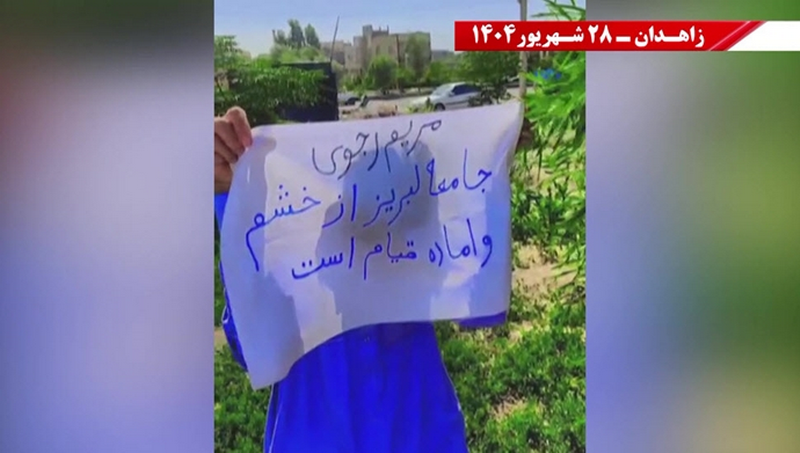
With the snapback in force, a historic opportunity has opened for the Iranian people to rise against tyranny. A society suffocated by poverty, inflation, executions, and massacres is now more prepared than ever to move toward final reckoning.
The regime’s own contradictions prove that it faces a blow that destabilizes it from both within and without. In this unfolding reality, the decisive factor will not be empty threats about the Strait of Hormuz or theatrical posturing. What will truly determine the outcome is the ability of the Iranian Resistance to organize and the will of the people to rise.
The trigger has been pulled. From now on, each day shortens the distance between crisis and uprising.