


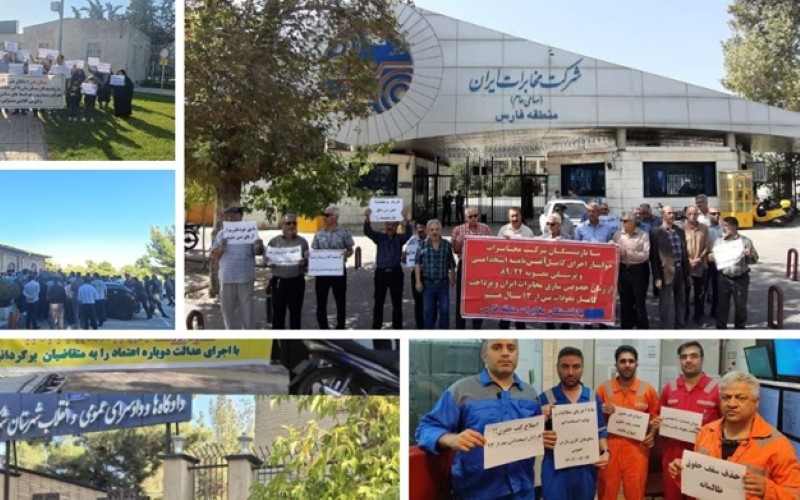

Under the regime’s militaristic priorities and chronic inflation, millions of Iranian workers, retirees, and vulnerable citizens struggle daily for survival as living costs skyrocket and wages lose all real value.
A Nation Working to Survive, Not to Live
In today’s Iran, life for workers and pensioners has become a relentless struggle for survival rather than a dignified existence. Chronic inflation, soaring prices, and the collapse of purchasing power have turned multi-job employment from a “choice” into an unavoidable “necessity.” Across the country, workers face shrinking dinner tables, longer working hours, and a constant fear of job loss.
The roots of this erosion lie not in workers’ homes but in the regime’s decision-making rooms, where priorities are dictated by military ambitions, nuclear projects, and regional interventions rather than the welfare of Iranian citizens. Every rial funneled into these ventures is drained directly from the veins of the national economy — and from workers’ pockets.
Economic Pressure Mounts as Inflation Surges
Despite the regime’s propaganda, the return of UN sanctions under the snapback mechanism has worsened inflation and living costs. Reports from across Iran show millions of workers and retirees taking on second or even third jobs simply to afford basic necessities like food, housing, and healthcare.
With approximately 14 million workers nationwide — most of them minimum wage earners — many have turned to gig economy jobs such as online taxi driving to compensate for skyrocketing expenses. According to the regime’s Ministry of Labor, nearly 60% of Iranian workers are both underpaid and overworked, while some 15 million people now drive for ride-hailing apps part- or full-time.
To illustrate the scale, Uber — operating in 71 countries — has 7.7 million drivers globally, nearly half the number of Iranian citizens forced into similar work just to survive.
Women and Retirees Hit Hardest
Female workers are among the hardest hit. Automation in manufacturing and stagnation in services have eliminated many of the traditional job opportunities available to women. Large numbers now work without insurance, job security, or sufficient income, often below the poverty line.
The situation is equally dire for retirees. Most pensioners under the Social Security Organization receive around 14 million tomans per month — far below the poverty threshold, which exceeds 25 million tomans in major cities. Even basic expenses like rent or household goods are out of reach.
A new government plan called “Beta,” launched in cooperation with Bank Refah, offers retirees installment loans to buy household appliances. However, labor union representatives say the repayment conditions are beyond retirees’ means, and the plan risks pushing them deeper into debt.
Ali Dehghan-Kia, head of Tehran’s Pensioners’ Association, confirmed that even higher-income retirees cannot afford the long-term repayments and that many program details remain unclear.
Meanwhile, delays in paying pension arrears have sparked widespread outrage. Mohammad Hassan Mousavand, executive secretary of the Khaneh Kargar (Workers’ House) in Lorestan, revealed that seven months have passed since the government promised to clear outstanding payments, and the real value of these claims has fallen sharply due to rising exchange rates.
Disabled Citizens and the Hidden Poor
Over nine million Iranians with disabilities face equally severe hardship. Most receive monthly stipends of around three million tomans — insufficient even for basic medical needs. Rehabilitation and caregiving subsidies cover only a fraction of actual costs, leaving over 100,000 people on waiting lists for minimal support.
Despite laws requiring the government to pay a minimum wage to unemployed disabled persons, the measure remains unimplemented. Many are forced to rely on charity to afford essential equipment and hygiene products that cost several times their monthly allowance.
From Basic Living to Burial Costs: A Crisis Without End
Even death has become unaffordable. Burial fees have soared, with graves in Tehran’s Behesht Zahra Cemetery costing over 62 million tomans per tier. Meanwhile, newlyweds — once symbols of hope — now frequent second-hand stores. As one Tehran shopkeeper in Yousefabad recounted, “Five years ago, I never saw brides and grooms buy used goods. Now it happens every week.”
The worsening crisis has even reached state-run media. The regime-affiliated Mehr News Agency sarcastically responded to parliament’s plan to remove four zeros from the national currency, writing: “Instead of deleting zeros, try deleting inflation.”
Hamidreza Rostagar, head of the Tehran Chamber of Guilds, admitted that officials have remained silent in the face of massive price hikes. He estimated that 70% of inflation is caused not by sanctions but by internal mismanagement. Independent economists agree, citing the regime’s massive military spending, nuclear ambitions, and regional adventurism as the main drivers of Iran’s fiscal collapse — draining national resources and fueling inflation that crushes the working class.
A Growing Divide Between Reality and Regime Claims
Soaring living costs, plummeting purchasing power, and deepening job insecurity paint a stark picture of Iran’s economic decay. With poverty lines climbing above 25 million tomans per month for a small family, millions of workers and retirees are forced into multiple jobs or crippling loans just to survive.
While the regime boasts of controlling inflation, everyday Iranians know the truth: the crisis is not easing — it is expanding.