


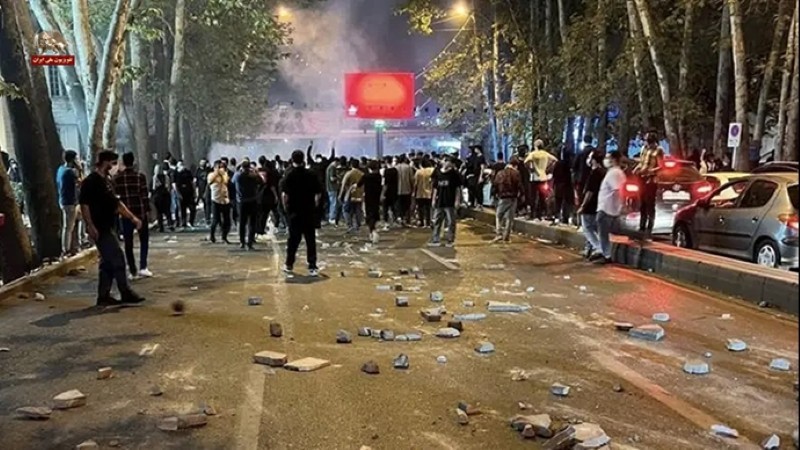

Officials’ rare admissions reveal a nation under psychological and economic strain as regime policies prioritize survival over citizens’ wellbeing.
After more than four decades under clerical rule, Iran’s society is showing unmistakable signs of exhaustion. Recent remarks from regime officials and state-affiliated media reveal what many Iranians experience daily — a nation gripped by anxiety, economic hardship, and deep social disillusionment.
According to a report by the state-run Etemad newspaper (October 14), the government itself has acknowledged that “Iranian society is anxious” and that “the public’s resilience against pressure has weakened.” These admissions, coming from within the regime’s own institutions, point to a mounting mental health crisis across the country.
Masoud Ghaempanah, deputy executive to President Masoud Pezeshkian, told Etemad that economic hardship, unemployment, migration, and hopelessness have taken root “in the depth of society.” He added that “access to mental health services and insurance coverage for most citizens does not exist,” particularly in deprived areas where the shortage of psychologists and psychiatrists is acute.
Systemic neglect and political priorities
While these remarks may appear as routine bureaucratic concern, they signify a broader failure: the regime’s consistent prioritization of political survival over public welfare. Iran’s ruling establishment has long structured its policies — economic, judicial, and educational — around maintaining control, often at the expense of citizens’ well-being.
This approach, critics argue, has created a cycle in which corruption, inequality, and institutional inefficiency feed off each other, eroding public trust and inflicting lasting psychological harm. The result is visible in rising poverty, youth migration, and widespread reports of depression and anxiety disorders.
Independent studies and reports by Iran’s own Statistics Center have shown that the cost of living has surged dramatically in recent years, while unemployment remains high, particularly among the youth and women. At the same time, investment in public health — especially mental health — remains among the lowest in the region.
A crisis deeper than economics
The mental health emergency now acknowledged by regime officials cannot be separated from the broader political and social context. Economic mismanagement, pervasive corruption, and the absence of freedom of expression have compounded public despair. When people are denied participation in shaping their own future, the psychological burden becomes collective — what some experts describe as a “national trauma.”
Even conservative newspapers now describe citizens as being “overwhelmed by the weight of daily struggles.” Yet, despite these warnings, there has been little sign of structural reform. Forty-six years and thirteen administrations after the 1979 revolution, the regime still lacks a comprehensive mental health policy that integrates treatment, prevention, and insurance coverage for vulnerable populations.
Growing demand for accountability
The unprecedented admission of crisis by regime insiders underscores a turning point: Iran’s social and psychological decline has reached levels too visible to suppress or deny. For many Iranians, this recognition raises a pressing question — if the system’s priority remains its own preservation rather than the welfare of its people, what path remains for society to restore its dignity and hope?
Whether through reform or more fundamental change, the growing mental health emergency is a warning sign that the country’s political structure can no longer ignore the human cost of its governance.