


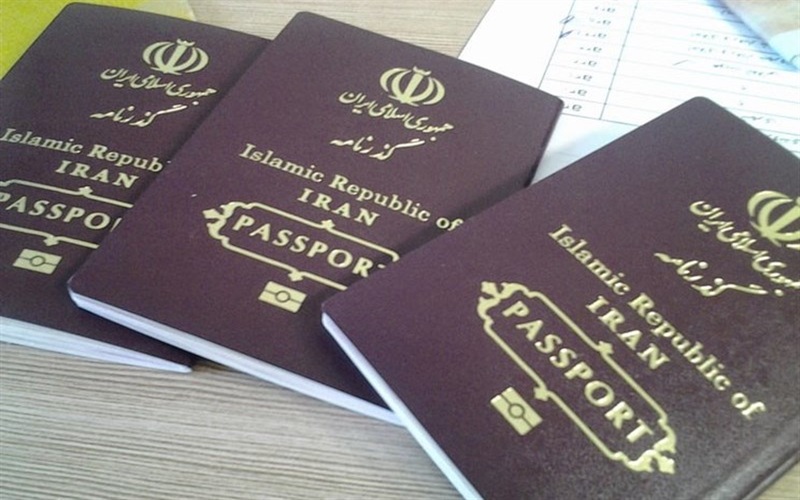

New Henley Index data reveals Iran’s deepening diplomatic isolation amid widening regional gaps in global mobility.
The latest data from the Henley Passport Index highlights a growing divide between Iran and its neighbors in global travel freedom, underscoring the country’s deepening diplomatic and political isolation.
According to the 2025 Henley Passport Index report, the Iranian passport ranks 98th globally, granting visa-free or visa-on-arrival access to only 41 countries. This places it among the weakest passports in the Middle East and Central Asia—well below almost all of Iran’s neighboring states.
By contrast, the United Arab Emirates continues to dominate the region, ranking 8th in the world with visa-free access to 184 destinations. This makes the UAE passport the most powerful among Islamic nations and a global symbol of diplomatic mobility.
Other Gulf states also outperform Iran by wide margins. Qatar ranks 52nd with 111 visa-free destinations, Kuwait 55th with 99, Saudi Arabia 57th with 90, Bahrain 59th with 88, and Oman 60th with 84. Each of these countries enjoys at least twice the level of travel freedom available to Iranian citizens.
Analysts note that these disparities mirror the countries’ contrasting foreign policy paths. The expanding travel access of Arab nations reflects improved relations with Western powers, active diplomacy, and economic cooperation. In stark contrast, Iran’s international isolation—driven by sanctions, regional conflicts, and aggressive foreign policy choices—has left its citizens among the most restricted travelers in the world.
The same pattern extends beyond the Persian Gulf. To Iran’s northwest, Turkey ranks 51st, granting visa-free entry to 113 destinations—surpassing not only Iran but also many Eastern European states. Even smaller neighbors such as Azerbaijan (ranked 72, 71 destinations) and Armenia (ranked 76, 67 destinations) enjoy far greater mobility.
Only Turkmenistan, ranked 93rd with 48 visa-free destinations, comes close to Iran’s position. Yet even Turkmen citizens have access to seven more destinations than Iranians.
To the east and south, conditions are worse mainly for war-torn or politically unstable states. Afghanistan ranks 106th with just 24 visa-free destinations, Iraq 104th with 29, and Pakistan 103rd with 31. Despite these outliers, Iran’s passport still ranks among the weakest in the region for a country not engulfed in war or state collapse.
Henley’s regional comparison places the Iranian passport 12th out of 15 neighboring countries, ahead only of Afghanistan, Iraq, and Pakistan. This ranking underscores the extent of Iran’s diplomatic crisis: while other nations pursue normalization, trade, and tourism agreements, Tehran remains mired in isolation caused by its confrontational foreign policy, nuclear ambitions, and support for proxy militias.
Meanwhile, smaller Gulf states such as Oman, Bahrain, and Qatar have steadily improved their passport rankings by maintaining balanced diplomacy and constructive international engagement. Their citizens now enjoy broad access to the global economy, education, and tourism opportunities—privileges increasingly out of reach for ordinary Iranians.
This widening mobility gap paints a stark picture of Iran’s deteriorating global standing. The strength of a nation’s passport often reflects its international credibility and trustworthiness, and for Iran, the latest data confirms what many citizens already experience daily: the heavy cost of isolationist policies on the freedom and future of an entire generation.