



As regional allies crumble, Tehran sees Iraq as its final bastion of influence — but shifting Iraqi sentiment and Washington’s renewed focus threaten to upend that control.
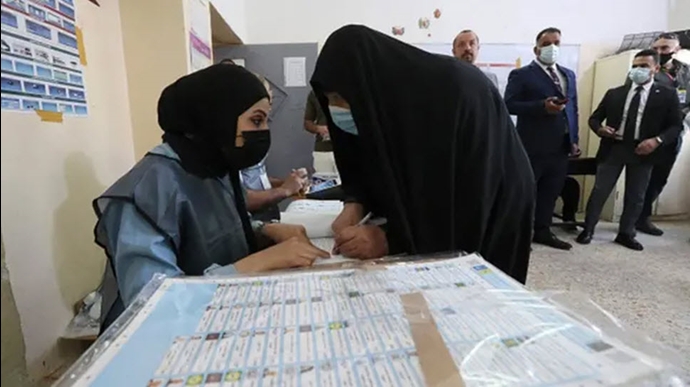
As Iraq prepares for parliamentary elections on November 11, Tehran is watching closely. According to a report by Al-Arab on November 3, the Iranian regime now views Iraq as its last major foothold of influence in the region, following the weakening of several of its key allies — from Hamas in Gaza and Hezbollah in Lebanon to the fall of Assad regime in Syria.
Over the past two years, Iran regime’s regional influence has eroded significantly. This has elevated Iraq’s importance within Tehran’s strategy, making the country central to the regime’s efforts to maintain a semblance of regional leverage. However, preserving that influence faces serious obstacles, including growing anti-Iranian sentiment among Iraqis and a renewed U.S. determination to limit Tehran’s activities.
Iran’s Strategic Dependence on Iraq
Since the 2003 U.S.-led invasion that toppled Saddam Hussein, Iraq has been one of the main corridors through which Tehran expanded its power across the Middle East. Through political allies, militias, and economic ties, the Iranian regime embedded itself deeply in Iraqi affairs.
Political analyst Ihsan al-Shammari told Agence France-Presse that Iran is “not ready to lose Iraq,” which it regards as a vital sphere of influence and a cornerstone of its national security strategy. As long as Tehran-aligned groups retain control of key positions in Baghdad, Iran’s leverage will persist, he noted.
However, analyst Munqith Dagher, the director of the IIACSS think tank, pointed out that Tehran’s ability to shape Iraqi politics has diminished: “Iran is no longer in a position to impose its conditions. But that does not mean it will not try to exert influence,” he said, stressing that Tehran can no longer dictate outcomes as it once did, even if it continues to meddle.
Washington’s Renewed Focus on Curbing Tehran
The U.S., meanwhile, is seeking to counter Iranian dominance in Iraq’s complex sectarian landscape. According to Al-Arab, Washington appears more determined this time to dismantle Tehran’s political and military grip on Baghdad.
Ibrahim al-Sumaidaie, a Sunni politician and former adviser to Prime Minister Mohammed Shia’ al-Sudani, described the U.S. position as a genuine will to bring about real change in Iraq’s internal scene — suggesting that this election may mark a turning point in curbing Iran’s entrenched influence.
Adding to this momentum, the administration of Donald Trump has appointed Mark Savaya as its special envoy to Iraq. Savaya, who is of Iraqi origin, has emphasized that Iraq must be “a fully sovereign Iraq, free from malign external interference, including from Iran and its proxies” He recently reiterated that “there is no place for armed groups operating outside the authority of the state.”
A Test of Influence
For Tehran, Iraq’s upcoming elections represent more than a political contest — they are a test of the viability of its regional strategy. Losing Iraq, analysts warn, would deal a devastating blow to Iran’s regional project and accelerate its isolation.
But for many Iraqis, weary of corruption, militias, and foreign meddling, these elections could also be a chance to push back against both Tehran’s dominance and Washington’s competing agendas, and to reclaim sovereignty over their country’s future.