


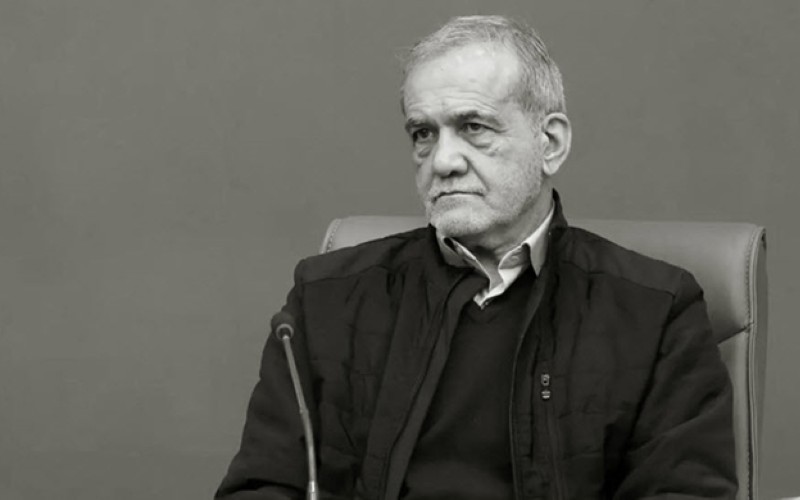

Masoud Pezeshkian’s so-called “economic reform” deepens inequality as fuel prices rise up to 5,500 tomans, sparking fears of new nationwide unrest
In a move widely seen as another blow to Iran’s struggling population, the leaders of the regime’s three branches of power have approved a “three-tier gasoline pricing plan”, a policy the government of Masoud Pezeshkian calls an “economic reform” but which critics say is nothing more than a new mechanism to squeeze the poor and reproduce Iran’s chronic livelihood crisis.
According to Hossein Samsami, a member of the regime’s parliamentary Economic Commission and an economics professor at Beheshti University, the meeting approved an increase in fuel prices up to 5,000 tomans per liter. Writing on the social platform X, Samsami mocked the government’s reasoning, saying, “If multiple pricing causes corruption, why do you keep adding new rates?”
His comments followed those of Tehran MP Hamid Rasai, who revealed that the price of regular gasoline would soon jump from 1,500 to 5,500 tomans per liter.
Meanwhile, Mohammad Jafar Ghaempanah, Pezeshkian’s executive deputy, recently stated that premium gasoline would be sold at over 50,000 tomans per liter, while each liter already costs the government 34,000 tomans to produce. Pro-regime media have described the hike as “inevitable” at the beginning of the next fiscal year, though officials remain divided on the timing and method — whether through a gradual increase, currency-linked pricing, or “gasoline-for-all” schemes.
Warnings of Another November 2019
As speculation grows over the new pricing structure, several MPs have warned of potential mass protests similar to the November 2019 uprising, when a sudden fuel price hike triggered nationwide unrest that, according to Reuters, left over 1,500 people dead.
Despite these warnings, escalating Western sanctions and economic pressure caused by the regime’s nuclear escalation and regional aggression appear to have pushed Pezeshkian’s government and other senior officials to move forward with the price increase.
Pezeshkian himself hinted at the decision weeks earlier, claiming, “Gasoline cannot be sold at 1,500 tomans — even water costs more.” During a visit to Urmia, he doubled down: “There is no doubt that gasoline must become more expensive.”
These remarks starkly contradict the statement made by government spokesperson Fatemeh Mohajerani, who claimed that “the government has no decision to raise fuel prices.” Such conflicting messages fit the regime’s well-known pattern of denial until implementation, a tactic long used to prepare the public for unpopular measures.
Inflation, Poverty, and a New Shock
Iran is already suffering from inflation exceeding 50 percent, with food prices in some categories up by more than 100 percent. The economy faces collapsing purchasing power and negative production growth. Economists warn that a fuel price increase under these conditions would trigger another inflationary shock and potentially unleash a new wave of nationwide protests.
Rasai also exposed new details of the plan, noting that the government intends to add fuel transport and station commissions to the final retail price — a move that would further drive up costs. He reminded voters that Pezeshkian had once dismissed any talk of fuel price hikes as “slander from his opponents.”
Blaming the People, Ignoring Structural Failure
The regime insists that Iran’s energy system suffers from “imbalances” and that “cheap fuel” and the gap with global prices are to blame for rising consumption. However, this argument deliberately ignores the massive gap between Iranian wages and those in neighboring or Western countries.
Instead of addressing its structural failure to produce enough gasoline in a country that holds the world’s fourth-largest oil reserves and second-largest gas reserves, the regime blames citizens for overconsumption. Analysts point to Tehran’s military spending, missile and nuclear projects, and decades of neglecting energy infrastructure as the true causes of Iran’s energy crisis — a crisis that has turned the nation from a potential exporter into an importer of gasoline.
From fuel smuggling and aging refineries to poor public transport and the failure to produce fuel-efficient vehicles, experts say the real problems lie in decades of corruption and mismanagement. Yet successive governments have repeatedly chosen the easiest and most painful solution — raising prices on the public.
A Policy That Fuels Corruption and Inequality
According to the secretary of the regime’s parliamentary Energy Commission, the government is also planning a three-stage pricing model for all energy sources, meaning that gas and electricity could soon follow gasoline in a cascade of price hikes.
Energy experts argue that a multi-rate system not only fails to solve Iran’s economic imbalance but actively fuels corruption and deepens inequality. Past “price reform” campaigns have consistently led to higher poverty, inflation, and class disparity — while enriching semi-state institutions and IRGC-linked companies that benefit from subsidized energy and pass the costs back to the public.