



Iranian regime officials issue conflicting statements on nuclear talks, exposing internal divisions and a regime trapped between defiance and desperation.
The Iranian regime’s contradictory positions on nuclear negotiations with Washington continue to expose its deep internal rifts and strategic paralysis. While some senior officials insist on “full confrontation” with the United States, others speak of a “peaceful nuclear agreement” — a reflection of the regime’s inability to define a coherent path forward amid growing domestic and international pressure.
At the Abu Dhabi Strategic Forum on Tuesday, Saeed Khatibzadeh, deputy foreign minister, claimed that the U.S. government is sending “contradictory messages through third parties” about the continuation of nuclear talks. He added that any agreement “must comply with the Supreme Leader’s guidance,” asserting that the regime seeks a peaceful nuclear deal but “will not compromise on national security.”
Khatibzadeh repeated the regime’s long-standing denial of nuclear weapons ambitions, stating that “Iran takes pride in its domestically developed nuclear program.”
Hardliners Reassert Defiance Amid Signs of Weakness
On Monday, Ali Larijani, the regime’s secretary of the Supreme National Security Council, lashed out at former U.S. President Donald Trump, accusing him of seeking to “weaken the system.” In an emotional speech in Tehran, Larijani read verses from Persian poet Saadi, describing the regime as a “noble horse” that, even in weakness, is “better than a stable full of donkeys” — a veiled insult aimed at the West.
He declared that the Iranian regime would resist the United States “even at the cost of full-scale confrontation,” claiming that “the key to resolving issues lies in the West’s behavior, not Iran’s retreat.”
Larijani accused Western governments of using the nuclear file as a pretext to undermine the regime’s sovereignty, adding that “their real target is the Iranian nation itself.” Echoing Supreme Leader Ali Khamenei’s rhetoric, he concluded that “the purpose of American negotiations is submission.”
Diplomatic Confusion and Tactical Contradictions
On the same day, the regime’s Foreign Minister Abbas Araghchi visited an exhibition showcasing Iran’s nuclear achievements and accused European countries of trying to “deprive Iran of its scientific progress.” He claimed that “the West has no choice but to recognize Iran as a scientific hub for peaceful nuclear energy.”
Meanwhile, Foreign Ministry spokesman Esmail Baghaei confirmed that inspectors from the International Atomic Energy Agency (IAEA) visited several nuclear facilities last week, including the Tehran Research Reactor. He stated that any further inspection requests must first be approved by the Supreme National Security Council.
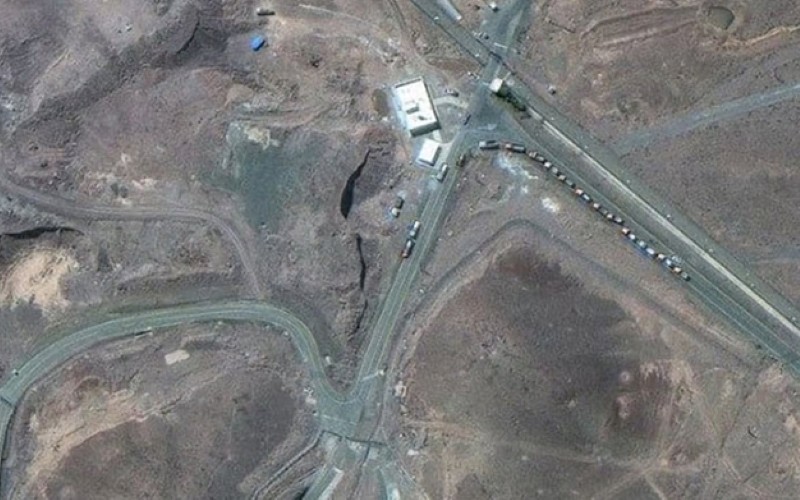
These statements came shortly after IAEA Director General Rafael Grossi told France 24 that despite recent U.S. and Israeli strikes, Iran still possesses high-enriched uranium and the technical expertise to build a nuclear weapon. Grossi noted that while the agency has conducted 12 inspections since the attacks, it still lacks access to key sites at Fordow, Natanz, and Isfahan, where enrichment continues under opaque conditions.
Grossi warned that the fate of over 400 kilograms of uranium enriched near weapons-grade levels remains unclear, emphasizing that the regime must resume full cooperation to avoid escalation.
Tehran Under Scrutiny and Isolation
Iranian regime authorities have reacted angrily, accusing the IAEA of “collusion” with Israel. Officials in Tehran announced they had suspended cooperation with the agency following the recent attacks, further deepening the diplomatic standoff.
Analysts warn that the regime’s refusal to clarify its uranium stockpile and enrichment activities could provoke new military strikes if Washington and Tehran fail to reach even a temporary understanding.
Despite repeated claims that it has no intention of producing nuclear weapons, the regime continues to advance its enrichment capabilities, asserting its “right to peaceful nuclear technology” under the Non-Proliferation Treaty — a right it uses to justify ongoing defiance.
U.S. Extends Emergency Status on Iran
Amid these tensions, U.S. President Donald Trump last week renewed the long-standing “national emergency” against Iran — first enacted in 1979 after the U.S. embassy takeover in Tehran. The White House stated that Iran’s conduct continues to pose an unusual and extraordinary threat to U.S. national security, foreign policy, and the economy.
The extension underscores Washington’s view that, despite decades of sanctions and isolation, Tehran’s behavior remains unchanged. The regime’s ongoing defiance has neither lifted economic restrictions nor improved living conditions at home — instead, it has intensified the risk of new conflict with both Israel and the United States.
A Regime at an Impasse
The regime’s mixed messaging — alternating between threats of confrontation and calls for peaceful agreement — reflects a deep crisis of strategy and legitimacy. Caught between economic collapse, international isolation, and internal divisions, Tehran’s leadership faces a shrinking set of options.
While hardliners invoke defiance as a symbol of strength, the contradictions in their statements expose the opposite: a regime struggling to reconcile ideology with survival, unable to choose between resistance and retreat.