


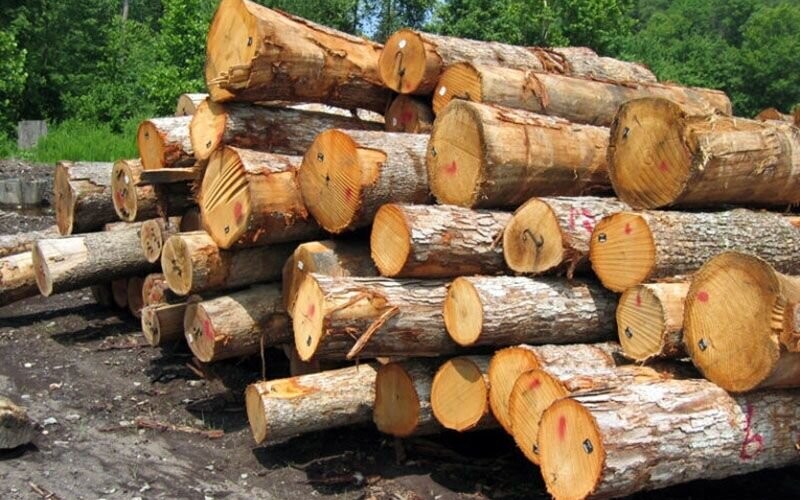

Expanding environmental destruction in Golestan exposes entrenched corruption and deepening harm to local communities.
In the heart of Golestan Province, the Nilkouh region of Galikesh is witnessing a silent but devastating assault on nature. The ancient Hyrcanian forests and the surrounding mountains, among the world’s most precious natural heritages, are being eroded by the aggressive expansion of regime-linked profiteers and land grabbers. Local livelihoods built on agriculture and livestock have collapsed, leaving residents facing deepening poverty under policies that prioritize plunder over preservation.
The ongoing destruction offers a stark illustration of the entrenched corruption that defines Iran’s governing structure. The profits extracted from this systematic exploitation flow directly into the hands of officials who benefit from the dismantling of protected lands, while ordinary people endure the catastrophic consequences. As forests are cleared and environmental pollution spreads, residents report rising rates of illness, including cancer, tied to the degradation of their surroundings. Here, both nature and human life are being sacrificed to the unchecked greed of those in power.
The long-term consequences of the devastation stretch far beyond the present. As the Hyrcanian forests and Nilkouh’s mountains are stripped away, the future of coming generations is placed at risk. Natural resources that should be safeguarded as a trust for the country’s children are instead being consumed by those who place personal gain above national survival. What remains for local communities is a landscape of destruction, pollution, and deteriorating public health—a reflection of a governance system incapable of protecting either people or the environment.
The crisis in Golestan mirrors a broader national reality. Under the rule of Ali Khamenei, not only are Iran’s youth targeted in the streets and prisons, but the country’s natural resources—from forests and mountains to soil and sea—are similarly exhausted. The same apparatus that suppresses dissent is responsible for dismantling the environmental foundations on which millions depend. Until this system of exploitation ends, the cycle of destruction will continue unchecked.
Saving Iran’s environment, and the communities that rely on it, depends on ending the regime’s plunder-driven governance. Only with the end of the current ruling structure can the Hyrcanian forests, Nilkouh’s mountains, and Iran’s broader natural heritage be protected for future generations.