


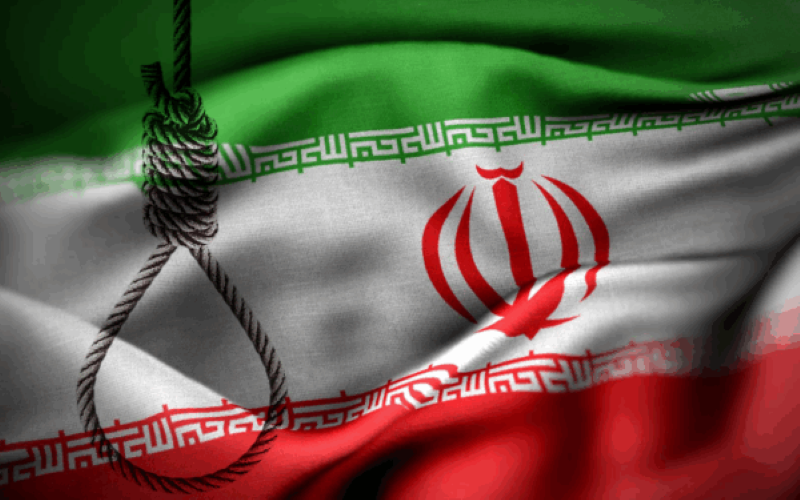

A record 304 executions in one month expose the regime’s escalating reliance on violence amid a society that no longer bows to fear.
Aban of this year (Persian calendar 23 October – 21 November) marks one of the darkest chapters of human rights violations in Iran’s modern history. The execution of 304 people in a single month is not only a shocking record but also a direct reflection of a political doctrine built on survival through naked repression. From its earliest days in power, the regime has relied on executions as a core instrument for preserving its rule. The scale and speed of this month’s killings echo the same logic that drove the 1988 Massacre, when thousands of political prisoners were eliminated to suppress rising dissent and secure the regime’s future.
Today, however, the landscape is fundamentally different from the 1980s. While the machinery of repression remains unchanged, society has transformed dramatically. The new generation refuses silence. Although 304 executions in a month illustrate an intensifying crackdown, they also reveal a regime scraping the bottom of its toolbox, relying on increasingly blunt methods to contain an explosive population. The same violence intended to intimidate is instead deepening public anger and fueling new forms of resistance.
Understanding this deadly spike requires returning to the political mindset that enabled the 1988 Massacre. Over four decades, the regime has repeatedly turned to open elimination when it loses control over social dynamics. Executions within this framework are not judicial measures but tools of governance. Just as the 1988 killings sought to eradicate the People’s Mojahedin Organization of Iran (PMOI/MEK) and other opposition forces rather than administer justice, today’s wave of executions aims not to uphold law but to manufacture fear and signal domination, especially to the younger generation.
Yet developments on the ground show this strategy is failing. Despite the surge in executions, reports reveal that silent protests, spontaneous acts of defiance, and organized activities of Resistance Units continue to expand rather than decline. The regime’s attempt to instill terror no longer produces its intended outcome.
The fact that 304 executions occurred in a single month without generating widespread social fear carries profound implications. Iranian society has crossed a threshold. The public no longer perceives repression as a sign of power but as a clear indicator of the regime’s vulnerability. Social solidarity within the resistance movement has grown, and young people increasingly recognize the necessity of organized struggle. The regime’s legitimacy crisis has deepened to the point that its reliance on daily executions exposes, rather than conceals, its weakness. The historical memory of the 1988 Massacre has resurfaced, and this time society refuses to allow such atrocities to unfold in silence.
The mass executions of Aban, while among the darkest pages of Iran’s history, reveal a regime entering the terminal phase of its political decay. Its instruments of control are worn out, and its dependence on mass executions shows the absence of both authority and solutions. A government that must kill to rule no longer governs; it merely performs a brittle façade of power.
History shows that no regime sustained by a killing machine can endure. A society that has shed its fear inevitably reshapes the balance of power.