



Beirut rejects new remarks from a senior adviser to Iran regime’s supreme leader Ali Khamenei and warns against foreign interference amid political and security strains
Lebanon’s foreign ministry publicly challenged Tehran on November 26 after a senior adviser to Iran regime’s supreme leader Ali Khamenei declared that Hezbollah was “more essential than bread and water” for Lebanon. The statement reignited one of the region’s most persistent political tensions and prompted a direct rebuke from Beirut, which has repeatedly warned the Islamic Republic to end its involvement in Lebanese internal affairs.
The controversy unfolded only days after Iran regime’s foreign minister, Abbas Araghchi, insisted that Tehran does not interfere in Lebanon and expressed his readiness for dialogue with his Lebanese counterpart. His message was immediately overshadowed when Ali-Akbar Velayati, Khamenei’s senior adviser on international affairs, told Tasnim News Agency that Iran has supported Hezbollah “and will continue to support the resistance front.”
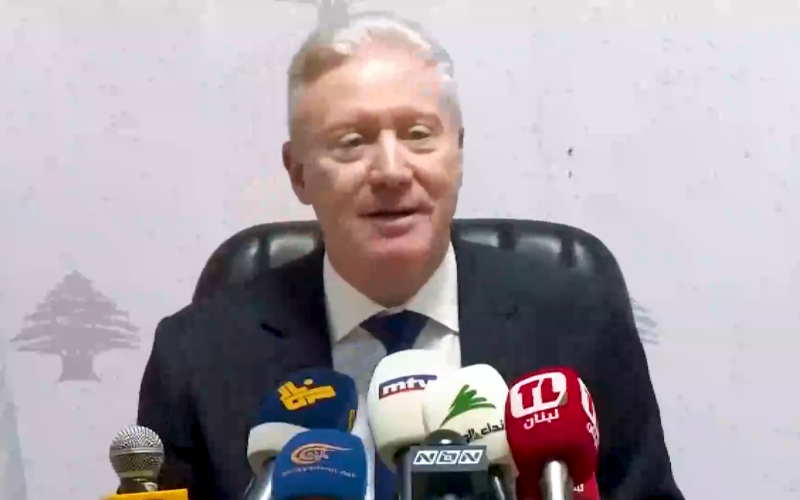
Lebanese Foreign Minister Youssef Raggi responded sharply in a public message to Araghchi, saying he had hoped to believe Iran regime’s claim of non-interference “until your leader’s adviser appeared and taught us what is ‘important’ in Lebanon, warning us against the consequences of disarming Hezbollah.” Raggi stressed that for Lebanon, what surpasses any other priority is sovereignty, freedom, and an independent national decision-making process, free from ideological agendas and transnational frameworks that have contributed to Lebanon’s continuing deterioration.
عزيزي وزير الخارجية الايراني @araghchi
كنت فعلاً أرغب بتصديق ما تفضلّتم به من أنّ إيران لا تتدخّل بشؤون لبنان الداخلية، إلى أن خرج علينا مستشار مُرشدكم الأعلى ليرشدنا إلى ما هو مهمّ في لبنان وحذّرنا من عواقب نزع سلاح حزب الله. وهنا أوضح ما يلي: ما هو أهمّ من الماء والخبز بالنسبة… https://t.co/Q1PViFWzZD— Youssef Raggi (@YoussefRaggi) November 26, 2025
Hezbollah, simultaneously a political party and an Iranian-backed armed group, remains at the center of this longstanding dispute. The United States designates the entire organization as a terrorist entity, while the European Union lists only its military wing. Despite this division, Hezbollah’s political faction maintains representation in Lebanon’s parliament.
The group suffered severe losses during the conflict with Israel last year, including the deaths of numerous fighters, commanders, and its longtime secretary-general Hassan Nasrallah. The war also devastated much of Hezbollah’s military infrastructure. Lebanese officials have increasingly argued that the armed role of Hezbollah has reached its end, pointing to the country’s deepening instability and the devastating consequences of perpetual militarization.
In an interview published November 17, Lebanese President Joseph Aoun revealed that he confronted Ali Larijani, the secretary of Iran’s Supreme National Security Council, during a visit last August. According to Aoun, he sharply told Larijani that he—not Tehran—was responsible for Lebanon’s Shia community. Aoun described Larijani as visibly shaken by the exchange and said he declined a subsequent request for another meeting.
Aoun further stated that Hezbollah officials acknowledge the reality that their military structure has reached a terminal stage and seek what he described as a dignified and face-saving path forward. His comments reflected growing domestic pressure for a political resolution to Hezbollah’s armed status, particularly as Lebanon struggles with economic collapse and institutional paralysis.
Meanwhile, Undersecretary of the Treasury for Terrorism and Financial Intelligence (TFI), John Hurley confirmed on November 8 that Iran’s regime managed to transfer approximately one billion dollars to Hezbollah over the past year despite heavy Western sanctions. His statement underscored the endurance of Iran regime’s financial networks and the scale of Tehran’s ongoing support for the group.
The renewed dispute between Beirut and Tehran highlights the unresolved tensions at the heart of Lebanon’s fragile political landscape. As Iranian regime officials continue to assert their commitment to Hezbollah, Lebanese leaders maintain that true national survival depends not on foreign-backed armed groups but on sovereignty, constitutional authority, and an independent political future.