As inflation nears 50% and basic goods become unaffordable, experts warn that the regime’s fuel-price hike will devastate workers, retirees, and vulnerable households.
A Nation Bracing for the Fallout of a New Fuel Shock
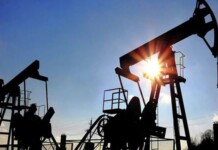
The regime’s sudden fuel-price increase—announced without transparency, planning, or public consultation—has triggered an avalanche of warnings from economists and social-policy experts. With inflation already above 40% and poverty rates rising, analysts say the government’s decision will accelerate economic collapse and push millions deeper into hardship.
Social-policy expert Seyed Hassan Mousavi-Chelak cautions that the entire pricing system for goods and services will soon revolve around the new gasoline rate, turning fuel price hikes into a catalyst for inflation across every sector. Aside from the wealthiest deciles, he warns, “all other households will be severely affected,” with retirees, workers, and low-income families suffering the most.
The Cost: Food, Healthcare, and Dignity
As the cost of transportation rises, the price shock will ripple into food supplies, healthcare access, and basic services. Experts predict a surge in demand for social assistance—because families already stretched to their limits will no longer be able to cope.
From food inflation to medical care, the consequences will be severe. For millions, this will mean a measurable decline in quality of life, and for the poorest, the erosion of access to essential goods such as nutrition and treatment.
This is a direct outcome of a system that repeatedly forces its citizens to pay for failures created by decades of mismanagement and corruption.
A Budget Built on Extraction, Not Reform
Economist Hossein Abdeh-Tabrizi argues that the fuel-price hike is only one side of the story. The other, he says, is the regime’s refusal to confront waste and corruption in its own budget.
According to Abdeh-Tabrizi, President Pezeshkian has openly acknowledged that parts of the state budget “have no real-world counterpart,” meaning they consume people’s money without delivering any public benefit.
Now that citizens are forced to pay more at the pump, experts say the regime must at least match the public’s sacrifice by eliminating useless expenditures that drain national wealth without helping anyone. But few believe the government has the political will to dismantle the entrenched networks that profit from these opaque budget lines.
Inflation Surges to a 30-Month High
As the regime extracts more from the public, inflation is spiraling into a new phase of instability. Iran’s point-to-point inflation reached 49.4%, the highest level in 30 months. If the current trend continues, analysts estimate the annual rate could reach 54.8% by year’s end, nearing historic highs.
This surge is not accidental. Experts cite:
- A politically unstable environment
- Persistent economic uncertainty
- Rising liquidity
- Worsening state budget deficits
These structural failures—rooted in decades of authoritarian, ideological policymaking—continue to erode Iran’s economic foundation.
Fuel Policy: An Example of Broken Governance
Iran’s gasoline pricing crisis goes far beyond fuel. It has become a symbol of systematic dysfunction inside the regime’s economic governance. Efforts to modify energy pricing collide repeatedly with political resistance, sanctions, corruption, and a lack of accountability.
The government’s new “third-rate” or “emergency-rate” pricing—tied to Gulf FOB prices—reveals a desperate attempt to fix deep structural imbalances without addressing their causes.
And the burden lands overwhelmingly on the poor. In the regime’s own words:
- Wealthier households absorb rising costs with minimal impact.
- Poorer households face the elimination of essentials like food and medicine.
Without a transparent and effective compensation mechanism, this becomes yet another policy that pushes the poorest Iranians toward economic collapse.
A Collapsing Basket of Essential Goods
The crisis now extends to nutrition and basic consumption. According to food-market analysts:
- Iran’s per-capita meat consumption has dropped to only 12 kg, far below the global average of 41 kg.
- Iran ranks roughly 98th in the world in meat consumption—an alarming indicator of declining purchasing power.
- The rice market is experiencing extreme price volatility and shortages, pushing staple foods further out of reach for ordinary families.
These are not temporary disruptions. They are the direct outcome of decades of mismanagement, corruption, and a policy system that puts ideology and power before the welfare of its citizens.
“No Money Left”: A Government Running on Empty
After what state media describes as “12 days of war,” the treasury is reportedly empty. Longstanding crises—water shortages, energy imbalances, multiple market failures—are now erupting simultaneously. Experts warn that even lifting sanctions would not reverse the crisis because the regime’s decision-making structure is incapable of prioritizing people’s livelihoods over ideological goals.
This structural reality is the reason today’s inflation, poverty, and shortages have become permanent features of Iranian life.
Currency Shock Looming?
Economists are also sounding the alarm about a possible silent devaluation. Reports suggest that the regime may push the exchange rate toward 100,000 tomans per dollar. Experts warn that such a move would ignite a massive new inflationary wave, potentially worse than the shock that followed the abolition of the 4,200-toman rate during the Raisi administration.
If this happens, the country’s vulnerable populations—already struggling with shrinking food baskets and collapsing wages—will face unprecedented hardship.
Conclusion: A Manufactured Crisis with Human Victims
Iran’s worsening economic disaster is not the product of global forces or technical miscalculations—it is the result of a system that refuses to reform, refuses to be transparent, and refuses to prioritize its own citizens.
From fuel pricing to inflation, from food insecurity to budget corruption, the common thread is the regime’s determination to extract more from the people while giving nothing back.
The cost will be borne by workers, retirees, the poor, and the vulnerable—those who have already sacrificed more than enough under a system that has never been accountable to them.