



Inside the Deepening Power Rift Exposing the Iranian regime’s Internal Paralysis
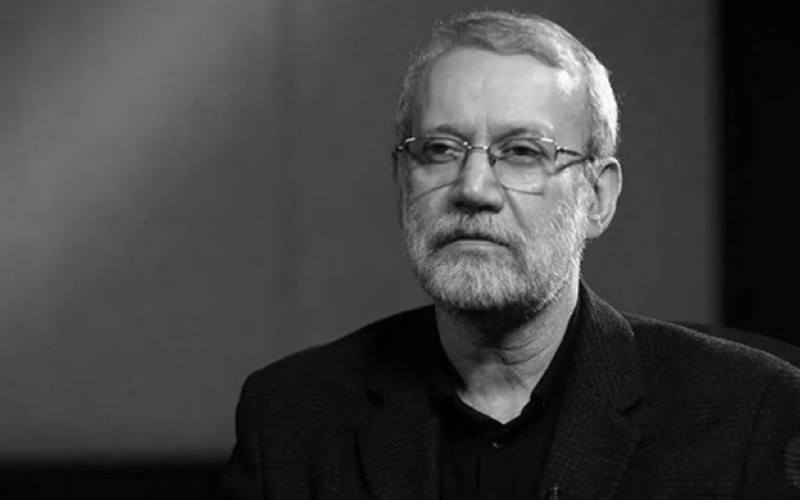
The Iranian regime is once again displaying the unmistakable symptoms of a regime torn between its ideological rigidity and its desperate need to relieve external pressure. The latest catalyst emerged when Ali Larijani—still formally a senior adviser to Ali Khamenei and the secretary of the Supreme National Security Council—declared that “we accept real negotiations, not artificial ones.” These words, spoken in Islamabad and then echoed in English on his social media account, triggered an explosive reaction from the IRGC’s media ecosystem.
This was not a routine dispute. The tone and violence of the attack were unprecedented, especially considering Larijani’s proximity to the Supreme Leader. The IRGC’s flagship newspaper, Javan, interpreted his remarks not as strategic flexibility but as the prelude to surrender. In a sarcastic editorial, it demanded to know what “real negotiations” Larijani was referring to and reminded readers that Donald Trump had repeatedly equated any deal with Iran with Iran’s capitulation. In other words, the paper accused Larijani of naively—or intentionally—opening the door to defeat.
The confrontation escalated on the very day the regime’s foreign minister Abbas Araghchi traveled to Paris, reportedly to probe the parameters of potential talks. The synchronized timing was not lost on state-aligned outlets: Larijani’s comments and Araghchi’s trip became the dominant headlines, revealing how central the debate had become within the power structure itself.
But the tone of the IRGC-aligned media made something else clear as well. This was more than a disagreement. It was a political warning from the security-military backbone of the system, the faction that sees itself as guardian of the so-called “resistance.” Their simultaneous attack on Europe—calling European policymakers “savages”—further underscored their intention to delegitimize diplomacy entirely, portraying even the notion of dialogue as betrayal.
This clash exposes two distinct impulses within the ruling elite. One faction, loosely associated with the so-called reformists of the Rouhani–Zarif era, still believes diplomacy is a tool for survival and that pressure can be eased without abandoning ideological red lines. The opposing faction—centered around the IRGC, Kayhan, and Javan—insists that any negotiation under current conditions is synonymous with retreat, and therefore treason.
The confrontation intensified precisely at a time when Donald Trump has openly stated that “the Iranians want a deal” while simultaneously threatening “the worst bombing in history” if they refuse. In such an environment, any signal of openness from Tehran is immediately reframed by hardliners as weakness. Araghchi’s Paris visit thus became ammunition for attacks against what they call the “appeasement lobby” inside the government.
What makes this episode even more revealing is that newspapers like Javan and Kayhan never run such incendiary commentaries without at least an implicit green light from the centers of power they serve. Their assault on Larijani and Araghchi suggests that parts of the regime’s hard core have detected vulnerabilities at the top and are determined to prevent any strategic shift. Their goal appears to be pre-emptive sabotage of any potential initiative, exploiting Khamenei’s current fragility to consolidate their dominance.
Larijani’s language faintly echoed the regime’s earlier “heroic flexibility” doctrine from 2013, but the context of 2025 is radically different. The United States is no longer signaling an interest in compromise; it is signaling terms of surrender. Europe has disengaged from the JCPOA framework. Israel is in an openly offensive posture. And the regime’s own domestic foundations are weakened by economic collapse and growing public dissent.
Khamenei’s latest speech attempted to close the door on both negotiation and internal dissent, yet the question persists: will he ultimately bend under the weight of geopolitical and economic pressures, or will he allow the hardliners’ maximalism to dictate a course that deepens the crisis?
What is clear is that this is no accidental dispute. The media evidence points to an orchestrated internal battle over the future direction of the state, a struggle that reflects the regime’s deep structural instability. The Iranian regime is not confronting a foreign adversary here—it is confronting itself.