



A plunging rial, a contractionary budget, and rising taxes reveal how the regime is shifting the burden of its failures onto ordinary Iranians
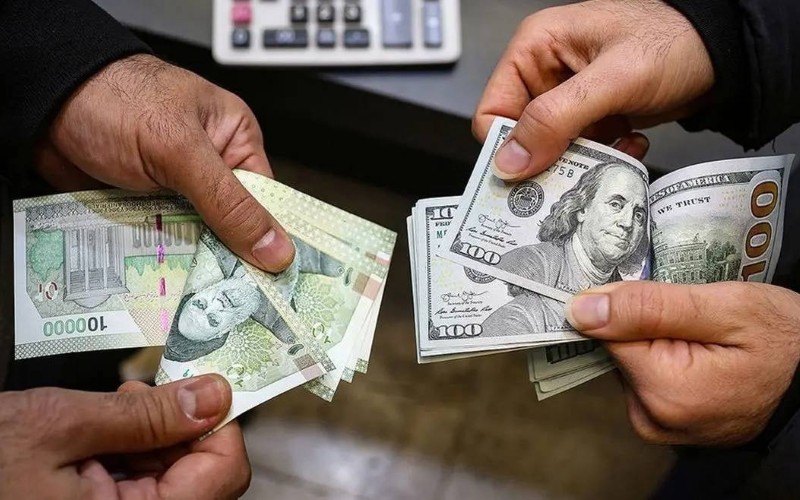
Iran’s national currency has entered a new phase of free fall, underscoring the depth of the country’s economic breakdown. On the final trading day of the week, the U.S. dollar surged to 136,545 tomans on the open market, marking yet another historic low for the rial.
At the same time, the euro climbed to 161,090 tomans, the British pound to 184,630 tomans, and the Turkish lira to 3,185 tomans. These movements are no longer short-term fluctuations. They reflect a structural loss of confidence and the economy’s slide into a more acute stage of instability.
This sharp currency shock coincided with the presentation of the 1405 budget (March 2026–March 2027) by the government of Masoud Pezeshkian to parliament. Far from stabilizing expectations, the budget has intensified market anxiety. Its overall orientation is explicitly contractionary, signaling that the state intends to manage its deep fiscal crisis not by cutting wasteful expenditures, but by extracting more from a society already exhausted by inflation.
A Budget Built on Pressuring Citizens
More than 80 percent of projected government revenue in the new budget is expected to come from taxation. In practice, this represents a direct transfer of the regime’s structural deficit onto households and small businesses. The value-added tax is set to rise by two percentage points to 12 percent, a move that will immediately raise the cost of basic goods and services.
At the same time, despite official inflation hovering around 50 percent, salary increases for public employees and retirees have been capped at roughly 20 percent—for the eighth consecutive year, well below the real inflation rate. The result is a deliberate erosion of purchasing power, institutionalized through fiscal policy.
Sanctions, Isolation, and a Refusal to Cut Costs
The regime’s foreign currency revenues have dropped sharply due to intensified U.S. and European sanctions and the reactivation of the snapback mechanism. Yet instead of reassessing bloated and ideologically driven expenditures—from military institutions and security bodies to foreign proxy groups and low-yield prestige projects—the authorities have opted for the politically easier route: taxing a population already crushed by rising prices.
Economist Morteza Afqah has warned that this approach is extremely risky. Despite repeated promises to reduce costs, he notes, the government is effectively financing itself through the public’s shrinking income. Higher taxes, a 12 percent VAT, and wage increases far below inflation combine into a single outcome: a real and sustained decline in household income. Afqah cautions that continuing down this path will force small and medium-sized businesses to close, drive up unemployment, and deepen recessionary conditions.
Fuel Policies and Inflationary Expectations
Fiscal pressure is being compounded by pricing policies that fuel inflationary expectations. The move toward multi-tier gasoline pricing, along with cabinet-approved plans for regular and pre-announced fuel price hikes, has had an immediate psychological and economic impact. In an economy where fuel prices act as a central cost driver, expectations of higher gasoline prices quickly ripple through transportation, distribution, food, and urban services. Even before implementation, anticipation alone becomes a trigger for price hikes.
Food Inflation and the Vanishing Staple Diet
The removal of preferential exchange rates for essential goods has further intensified pressure on households. The rice market provides a stark example. With the elimination of the 28,500-toman subsidized dollar, imported rice is now priced using exchange rates exceeding 100,000 tomans. The market has reacted in advance: imported rice—once a staple for working-class families—has risen to 140,000–170,000 tomans per kilogram, while high-quality domestic rice has crossed the 300,000-toman threshold.
These increases occurred even before the full distribution of rice imported under the new exchange rate, illustrating how deeply inflation expectations are embedded.
Official data from the government’s food voucher program further highlights the collapse in purchasing power. According to the regime’s Ministry of Labor, 41 percent of voucher credit is now spent on rice alone. Labor activists argue this is not evidence of successful social support, but proof that rice is being priced out of workers’ regular diets. A worker earning around 15 million tomans a month told the state-run news agency ILNA that spending two to three million tomans on a single sack of rice is simply impossible—meaning rice is quietly disappearing from many households’ tables.
A Bleak Outlook Ahead
Another Iran-based economist, Mohammad-Taqi Fayazi, warns that next year’s outlook may be even darker. He estimates inflation could reach at least 60 percent, driven by the budget’s reliance on unstable funding sources and the expanded issuance of government debt. Increased bond sales, he warns, risk further liquidity growth and inflationary pressure. A 20 percent wage increase, under these conditions, amounts to a significant real pay cut and sends a deeply negative signal to both society and economic actors.
Crisis at the Top, Pressure at the Bottom
Meanwhile, political infighting between the government and parliament has done nothing to calm markets. Even regime-aligned media outlets have acknowledged that the sustained collapse of the rial and runaway inflation have resurfaced long-standing fractures at the top of the system. This time, however, the dispute is not over access to resources, but over who bears responsibility for the crisis.
The broader picture is unmistakable. Iran’s economic free fall is the direct outcome of strategic choices made by the country’s ruling establishment: prolonged confrontation with the West, deepening international isolation, and the continued financial and political support of foreign militant groups. These policies have produced an economy increasingly dependent on squeezing its own citizens.
The cost of this path is not paid by decision-makers insulated from hardship, but by ordinary Iranians whose purchasing power shrinks by the month. As the rial collapses and basic food items vanish from household budgets, the regime’s economic model stands exposed—not as a system under pressure, but as one sustained by systematically transferring the price of failure onto the people.