


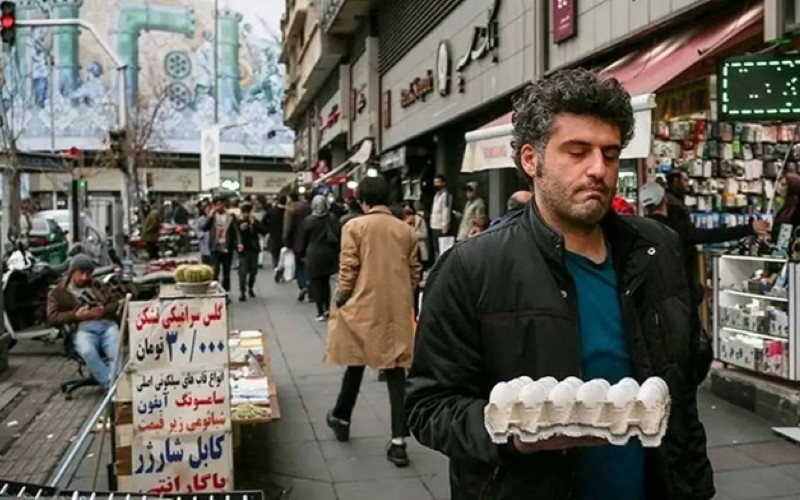

Point-to-point inflation hits 52.6% as livelihoods collapse under the Iranian regime
Iran’s Economy Edges Toward Hyperinflation
As Iran’s economic conditions continue to deteriorate, newly released official data point to an unprecedented acceleration in inflation, pushing the country dangerously close to the threshold of hyperinflation. Point-to-point inflation reached 52.6 percent in December, marking a 3.2-percentage-point increase compared to the previous month—an alarming signal of runaway prices and the rapid erosion of household purchasing power.
This surge reflects not a temporary shock, but a deepening structural crisis that has engulfed Iran’s economy under the regime, with ordinary citizens bearing the heaviest burden.
Annual Inflation Continues Its Upward March
According to official statistics, average annual inflation rose to 42.2 percent by the end of Azar, up 1.8 percentage points month-on-month. This indicator measures the average increase in prices of goods and services over the past 12 months compared to the same period a year earlier, and confirms that inflationary pressure is not easing but accelerating.
At the same time, the Consumer Price Index (CPI) climbed 4.2 percent in a single month, reaching 435.1 points, underscoring the intensity of price shocks across the economy.
Inflation Hits the Poor Hardest
Inflation in Iran has become increasingly unequal. Lower-income households are disproportionately affected as basic necessities absorb a growing share of their income. This imbalance is widening class divisions and pushing millions toward economic collapse.
Nowhere is this more evident than in food prices. Point-to-point inflation in food, beverages, and tobacco has reached 72 percent, while inflation for non-food goods and services stands at 43 percent. Annual inflation in food items alone has surged to 50 percent, signaling a severe and expanding food security crisis.
Essential Food Prices Spiral Out of Control
Monthly inflation figures for staple goods reveal a deeply troubling trend. In just one month, prices for milk, cheese, and eggs jumped by 10.2 percent, while bread prices increased by 7.7 percent. These increases directly translate into smaller food baskets and growing nutritional insecurity for millions of families.
For large segments of the population, adequate nutrition is no longer guaranteed but has become a daily struggle.
Official Inflation Figures Understate Reality
Many economists caution that Iran’s official inflation statistics significantly underestimate real price increases, due to outdated consumption weights and methodological distortions. In practice, households experience far steeper price hikes than those reflected in government data.
Long-term CPI data illustrate the scale of the disaster: between 2012 and December 2024, Iran’s general price level rose by approximately 2,700 percent. This staggering figure reflects the comprehensive failure of the regime’s economic policies and the systematic looting of public wealth.
Hyperinflation: From Warning to Real Risk
A sharp rise in point-to-point inflation is widely recognized as a key early warning sign of hyperinflation. By standard economic definitions, hyperinflation occurs when monthly inflation exceeds 50 percent—a threshold that, if crossed, can propel annual inflation into the thousands.
Experts warn that if current trends persist, Iran could face rapid dollarization, a sudden collapse of the national currency, and uncontrollable price explosions. The consequences would be catastrophic: mass impoverishment, widespread malnutrition, deterioration of public health, and escalating social unrest.
Daily Price Shocks and the Erosion of Hope
In recent months—particularly following the intensification of sanctions—citizens report daily price increases, noting that even a few days’ delay between purchases can result in significantly higher costs. This lived reality exposes the true depth of Iran’s economic crisis and the structural incompetence of the ruling system.
The psychological toll is equally severe. Writing in Jahan-e Sanat, analyst Lotfi-Haghighat describes a society experiencing the slow erosion of collective hope amid relentless inflation and currency devaluation.
He argues that hope requires a visible and stable future horizon—something that has vanished under constant economic instability. As uncertainty persists, people stop planning for the long term, major life decisions are postponed, and younger generations increasingly believe that effort offers no guarantee of improvement. When collective hope collapses, society drifts into passivity—not out of contentment, but exhaustion and deep mistrust in the future.
A Crisis Rooted in Systemic Failure
Iran’s accelerating inflation crisis is not the result of external shocks alone, but the outcome of decades of mismanagement, corruption, ideological rigidity, and destructive regional policies. As warning signs of hyperinflation grow louder, the regime’s inability—or unwillingness—to enact meaningful reform continues to exact a devastating cost on Iranian society.
Absent fundamental political and economic change, the current trajectory points not toward stabilization, but toward deeper collapse.