Runaway inflation, collapsing wages, and class-based despair reveal how Iran’s regime is locking society into a self-reinforcing cycle of poverty and social decay.
Poverty as a Political and Structural Crisis
Poverty in Iran is no longer a marginal economic issue. It has evolved into a multidimensional crisis rooted in political decision-making, governance failures, and structural distortions embedded in Iran’s ruling system. Even regime-affiliated outlets now acknowledge that widespread economic hardship has pushed large segments of society out of the cycle of sustainable development.
When a society’s majority struggles to meet basic needs, poverty ceases to be merely about income. It begins to erode human capital, institutional capacity, ethical norms, and social cohesion—undermining the very foundations required for long-term development.
Sustainable Development Blocked by Inequality and Distrust
Regime media concede that economic growth in Iran, where it exists at all, is accompanied by deepening inequality. This combination has widened class divides and intensified perceptions of injustice.
As inequality expands, public participation declines. Citizens lose trust in state institutions and policymakers, while political legitimacy weakens. Under such conditions, even well-designed development plans—if they existed—would face social resistance and implementation failure. Iran’s regime has effectively created a governance paradox: policies that generate inequality also destroy the social trust necessary to sustain policy outcomes.
Inflation, Anxiety, and the Collapse of Household Planning
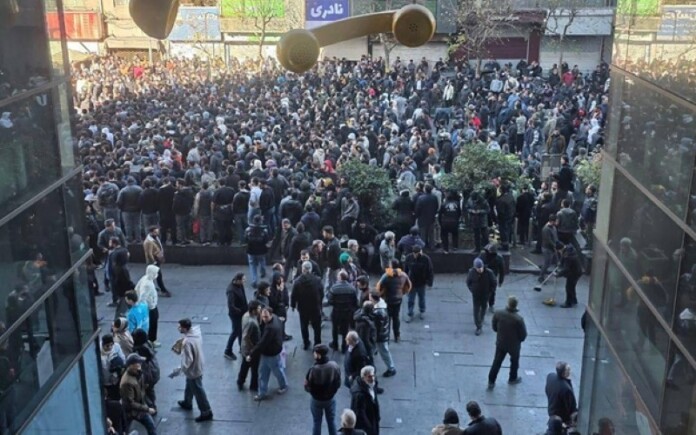
With purchasing power steadily declining and prices of essential goods changing almost daily, Iranian households have lost the ability to plan financially. Regime-linked analyses describe a society trapped in constant economic anxiety, where families are preoccupied not with advancement but with short-term survival.
This collective anxiety has direct political consequences:
- Rising public dissatisfaction
- Declining trust in policymakers
- Increased desire for emigration
- Withdrawal from political and social participation
Rather than addressing these root causes, officials increasingly compete over narratives of “inability” and helplessness, normalizing policy failure instead of correcting it.
Social Vitality Turns Class-Based
According to national surveys cited by regime media, all five key indicators of social vitality in Iran have declined over extended periods:
- Hope and life satisfaction
- Willingness to engage in cultural activities
- Secure and trust-based social relations
- Perception of discrimination
- Psychological and social well-being
More strikingly, social vitality has become sharply class-based. The experience, meaning, and even possibility of happiness differ structurally between lower, middle, and upper classes. This divide extends beyond income levels to the very nature of social life—access to leisure, cultural participation, security, and future expectations.
Such stratification reflects a society drifting toward entrenched social fragmentation rather than cohesion.
The Poverty Line and the Wage Gap
Economic experts now place Iran’s poverty line at approximately 55 million tomans per month. The grim irony, as regime media note, is the near alignment between this figure and the growing number of citizens falling below it.
At the same time, reports acknowledge that workers’ wages fall further behind each year. The government lacks any credible plan to stabilize prices, let alone reduce them. Initial projections of inflation near 20 percent have collapsed under reality. The head of the Planning and Budget Organization now openly forecasts 40 percent inflation for the coming year.
Inflation at 52.6 Percent: Policy Failure by the Numbers
Official figures show that in December 2025, point-to-point inflation reached 52.6 percent. This means Iranian households paid, on average, over 52 percent more than the same month the previous year for an identical basket of goods and services.
Despite inflation exceeding 40 percent, the government has proposed only a 20 percent salary increase for public-sector employees in the next budget. This decision will inevitably widen the gap between income and living costs, pushing millions of wage earners further into economic precarity.
The consequences extend beyond household finances:
- Declining living standards for salaried workers
- Deterioration in public services such as healthcare, education, and security
- Accelerated erosion of professional capacity in vital sectors
Does the Regime Even Intend to Control Inflation?
Albert Baghzian, an economist and faculty member at the University of Tehran, raised a fundamental question: does the state genuinely intend to curb inflation? He argues that the primary prerequisite for inflation control is political will—something notably absent in current policymaking.
Without a genuine commitment to fiscal discipline, price stability, and structural reform, inflation in Iran appears less like an accident and more like an accepted feature of governance.
A Self-Reinforcing Cycle of Decline
Taken together, these admissions from regime-affiliated media depict a system trapped in a vicious cycle. Inflation fuels poverty; poverty erodes trust; distrust undermines governance; and weak governance perpetuates economic collapse.
Iran’s regime has not only failed to break this cycle—it has institutionalized it. As long as policy decisions prioritize short-term survival of power over social welfare and economic rationality, poverty will remain a defining feature of life in Iran, and sustainable development will remain out of reach.