As Wages Are Capped and Poverty Deepens, Billions Flow to Religious and Propaganda Institutions
Promises Made, Reality Ignored
Masoud Pezeshkian, Iran regime’s president, previously claimed he would block budget allocations to ineffective and unproductive institutions. Yet a close examination of the government’s budget bill tells a very different story. Not only have religious and ideological institutions retained their funding, but many have received significant increases—directly contradicting the government’s public rhetoric.
Far from trimming excess, the budget entrenches and expands the financial privileges of institutions that play no role in improving people’s livelihoods, even as society faces inflation, wage suppression, and deepening poverty.
Billions for Propaganda Networks
One striking example is the Islamic Propagation Organization and its affiliated bodies, including the Headquarters for the Promotion of Virtue and Prevention of Vice. Across multiple budget tables, their combined allocation exceeds 7 trillion tomans in public funds. Past experience shows that parliament rarely challenges such figures and often inflates them further.
The pattern repeats across the ideological apparatus. The Saadi Foundation, headed by Gholamali Haddad-Adel, is allocated 115.9 billion tomans. The World Assembly of Ahl al-Bayt receives roughly 259 billion tomans—ostensibly to alleviate deprivation among Shiites abroad, yet financed entirely from Iranian public funds while citizens at home struggle to survive.
Institutionalizing Privilege Around the Regime’s Founders
Institutions linked to the founder of the regime receive particularly generous treatment. The Shrine of Ruhollah Khomeini and the Institute for Imam Khomeini and the Islamic Revolution together receive around 260 billion tomans. Separately, the Institute for the Compilation and Publication of Imam Khomeini’s Works is allocated nearly 599 billion tomans.
According to domestic reports, the combined budget of these entities has increased by roughly 40 to 50 percent compared to the previous year—growth that stands in stark contrast to the state’s insistence on austerity for workers.
Militarized Culture, Civilian Funding
Among the most expensive recipients is the Baqiyatollah Cultural and Social Headquarters, a body with a military pedigree that is officially classified as “cultural.” Commanded by former IRGC chief Aziz Jafari, this institution is allocated 2.178 trillion tomans in the 1405 budget, up from 1.954 trillion the previous year.
This figure does not capture the full picture. Additional budget lines and a separate allocation of approximately 30 million euros from oil revenues further inflate its real funding—resources shielded from public scrutiny.
Exporting Ideology at Public Expense
In the realm of international religious education, Al-Mustafa International University stands out as a major recipient. The 1405 budget allocates 1.863 trillion tomans to this institution, with an additional 200 billion tomans listed under “international cultural activities.”
Together, these allocations bring Al-Mustafa’s annual budget to nearly 2 trillion tomans—financing ideological training and global networking while Iranian workers struggle to meet basic needs.
State Media as the Top Beneficiary
At the top of the funding hierarchy stands the Islamic Republic of Iran Broadcasting (IRIB). The main budget table assigns it 33.512 trillion tomans. An additional 1.96 trillion tomans is allocated under the heading of “support for cultural production and public awareness.”
In total, IRIB absorbs nearly 36 trillion tomans in public funds, making it by far the largest recipient among ideological and propaganda institutions.
Wage Restraint as Policy, Not Necessity
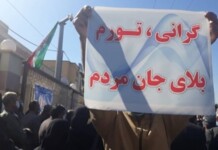
These allocations are made while the government simultaneously invokes “economic constraints” to justify limiting wage increases. Mohammad Jafar Qaempanah, the president’s executive deputy, recently argued that raising wages would merely double inflation—an argument used to cap wage increases at roughly 20 percent.
In practice, this means that a minimum-wage worker or employee will earn just over 14 million tomans per month next year, despite official and semi-official estimates placing the monthly cost of a basic household basket above 30 million tomans.
The Human Cost of Budget Choices
When compared directly, the contrast is stark. The annual budget of IRIB alone is equivalent to the yearly wages of approximately 210,000 minimum-wage workers. The Islamic Propagation Organization’s budget equals the annual income of more than 42,000 workers.
The Baqiyatollah Headquarters’ rial allocation alone matches the yearly wages of roughly 12,600 workers, excluding its foreign currency benefits. Al-Mustafa International University’s funding corresponds to the annual wages of nearly 11,900 workers, while the Supreme Council of the Cultural Revolution and its affiliates equal the wages of more than 7,100 workers.
Beyond the Visible Budget Lines
Even these figures underestimate the true scale of ideological spending. Numerous additional institutions draw directly or indirectly from public resources. The Seminary Services Center alone receives around 16.29 trillion tomans, placing it among the largest beneficiaries of state funds. The Supreme Council of Seminaries, the Women’s Seminary Policy Council, and the Khorasan Seminary Management Council collectively absorb billions more.
Other entities—such as the Noor Islamic Sciences Computer Research Center, the Mosque Affairs Center, and the Headquarters for the Promotion of Prayer—each receive dedicated budget lines, further expanding the ideological network sustained by public money.
Ideology Over Livelihoods
If the average annual cost of living for a 3.3-person household is estimated at 360 million tomans, IRIB’s budget alone could cover the full yearly expenses of nearly 98,500 families. The Islamic Propagation Organization’s funding could sustain more than 19,000 families, while the Baqiyatollah Headquarters’ allocation equals the annual living costs of over 6,000 families.
These numbers reveal a fundamental truth: the ideological burden on Iran’s budget is far heavier than it appears at first glance. A vast network of institutions with no direct role in improving people’s lives is continuously prioritized, even as wages are restrained and inflationary pressure is shifted onto society.
This is not a matter of fiscal constraint. It is a matter of political choice—and that choice consistently favors ideological control over human dignity and economic survival.