
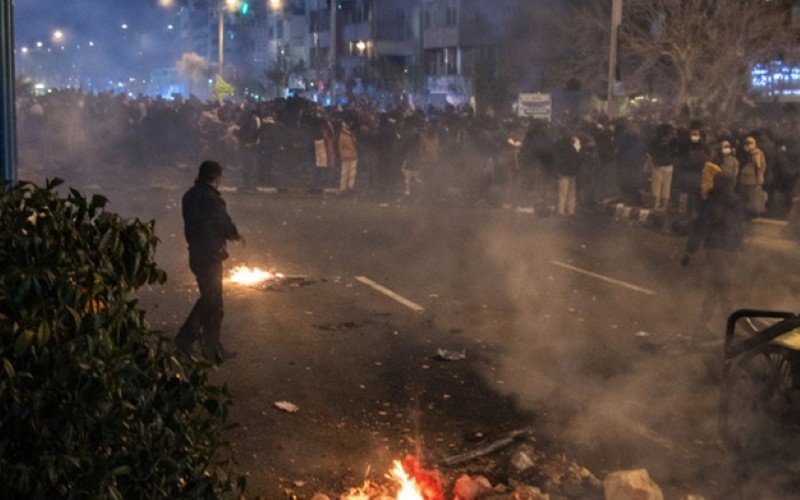

From Gholam-Hossein Mohseni-Ejei’s call for accelerated repression to parliamentary warnings of a Syrian-style collapse, the regime’s language now reeks of desperation, not power.
The Iranian regime is no longer even pretending to be confident. Its senior officials now speak the language of raw panic. What we are witnessing is not strength, decisiveness, or control—but naked fear.
Gholam-Hossein Mohseni-Ejei, the judiciary chief of the regime and one of Ali Khamenei’s most trusted executioners, has reached a point where even cosmetic cover-ups are abandoned. In a revealing statement on January 14, he openly argued for speed in repression, warning that if killings and crackdowns are delayed, they may lose their “effect.”
His words were unmistakable:
“If we want to do something, we must do it quickly… if it’s delayed, even doing the same thing two months later may no longer have any effect.”
Stripped of regime rhetoric, the message is chillingly clear: if they do not kill today, tomorrow it will be too late. This is not the voice of authority; it is the scream of a man who knows the ground beneath him is collapsing. It echoes the final logic of dictators at the end of their rule—most notably Bashar al-Assad after the mass slaughter of Syrians—when murder becomes both a reflex and a confession of weakness.
This is not firmness. It is terror laid bare. The regime now resembles a driver whose brakes have failed, hurtling toward a cliff while shouting to convince himself he is still in control.
That sense of impending collapse was further reinforced by Mohammad Reza Sabaghian Bafghi, a member of the the regime’s parliament loyal to Ali Khamenei. In a moment of unguarded honesty, he compared the current state of the regime to the final days of Bashar al-Assad’s rule in Syria.
He warned:
“We must know that if any instability had occurred in the Islamic system, our fate today would be like Syria’s. But we must not forget that people are dissatisfied. We, the officials of parliament and the government, must address this—otherwise, after some time, the same events will occur again with even greater intensity.”
The political translation is blunt and damning: the regime is rotting from within. Like Assad before his fall, it may still possess palaces, prisons, and guns—but internally it is hollow. A system that fears its own people and lives in constant dread of uprising is no longer a functioning state. It is a corpse being kept upright by force.
If bullets and tear gas once pushed people back, they no longer suffice. Even the gallows have lost their deterrent power. A society driven below the poverty line, crushed by humiliation, mass imprisonment, and executions, has nothing left to lose—and therefore nothing left to fear.
The gunpowder of social rage is fully stockpiled. The sparks have already been struck. Mohseni-Eje’i knows this well. When the explosion comes, neither executions, nor forced confessions, nor sham trials will save them.
At that point, there will be no vineyards left, no vine-dressers—and the nooses they have woven for the people will tighten around their own necks.