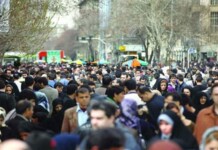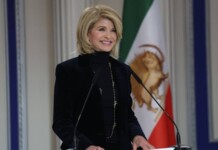
As world leaders convened at the Munich Security Conference, Iranian protesters in Odeonsplatz declared that sustainable international security begins with democracy in Iran
While global diplomats and strategists gathered behind closed doors at the Munich Security Conference (MSC) to debate the future architecture of international security, only a few steps away in Munich’s Odeonsplatz, a different vision of security was taking shape.
The rally of freedom-loving Iranians and supporters of the National Council of Resistance of Iran (NCRI) transformed the square into a platform for a powerful political message: there can be no durable global security without democracy in Iran.
The timing was not incidental. The demonstration’s significance lay precisely in its simultaneity with the MSC. It underscored a fundamental reality—security that ignores the voice of oppressed nations is little more than a diplomatic illusion.
Maryam Rajavi’s Three Transformative Messages
In a message sent to the gathering, Maryam Rajavi, President-elect of the Iranian Resistance, outlined three decisive and transformative points regarding the current situation in Iran:
- The Iranian people’s unwavering determination to overthrow the regime in its entirety.
- Proof that the path to change runs through organized uprising, with the decisive role of Resistance Units confronting the Islamic Revolutionary Guard Corps (IRGC).
- The dismantling of the regime’s nuclear and proxy war apparatus can only be achieved through its overthrow by the people and the organized resistance.
Rajavi emphasized that Iranian society is moving toward a democratic revolution and the establishment of a democratic republic. Those who, even now, promise the imposition of another form of one-man rule—while preserving the repressive institutions built under Ali Khamenei—have no place in Iran’s future.
Her message established a clear political demarcation between backward-looking authoritarianism and forward-looking democracy. It rejected not only the religious dictatorship of the clerical establishment, but also any return to hereditary autocracy. In her framework, both the turban and the crown represent two sides of the same coin—systems that strip sovereignty from the people.
Concrete Demands to World Leaders
Addressing leaders attending the Munich Security Conference, Rajavi called for concrete measures:
- Formal recognition of the Iranian people’s struggle to overthrow the regime and acknowledgment of the youth and Resistance Units confronting the IRGC.
- Immediate action by the United Nations Security Council to prevent the execution of uprising prisoners and political detainees, and support for the nationwide “No to Executions” campaign.
- Facilitation of free internet access for the Iranian people.
- Referral of Ali Khamenei and other regime leaders to the UN Security Council for prosecution in an international tribunal on charges of crimes against humanity and genocide, alongside national prosecutions under universal jurisdiction.
- Closure of regime embassies and expulsion of diplomats and operatives affiliated with the IRGC and the Ministry of Intelligence.
- A complete severing of the regime’s financial lifelines.
These demands framed the Iranian struggle not as an internal dispute, but as a matter with direct implications for international peace and security.
Rejecting All Forms of Dictatorship
Prominent international figures echoed this stance at the rally.
John Bercow, former Speaker of the UK Parliament (2009–2019), declared that the alternative to the blood-soaked clerical regime is not a return to monarchy or any other form of autocracy. “We do not want dictatorship in Iran,” he stated—neither the rule of the mullahs nor that of the Shah or his son.
Similarly, Struan Stevenson, former Member of the European Parliament (2004–2014) and a leading figure in the International Committee in Search of Justice, emphasized that during the recent January uprising, the Iranian people made their demand unmistakably clear to the world. They seek nothing less than the complete overthrow of the religious dictatorship that has dominated them for nearly half a century.
One message resonated powerfully: “Death to the oppressor, whether Shah or Supreme Leader.”
Security Begins with the People
The Munich rally for a democratic Iran delivered a strategic message to policymakers assembled at the MSC: stability in the Middle East—and by extension, global security—cannot be achieved by engaging or accommodating a regime rooted in repression, regional destabilization, and nuclear brinkmanship.
True security must be anchored in the sovereignty of nations and the democratic will of their people. In Munich, as officials debated geopolitical risk and strategic deterrence, Iranian protesters reminded the world that the most enduring guarantee of peace is not transactional diplomacy—but democratic transformation.