


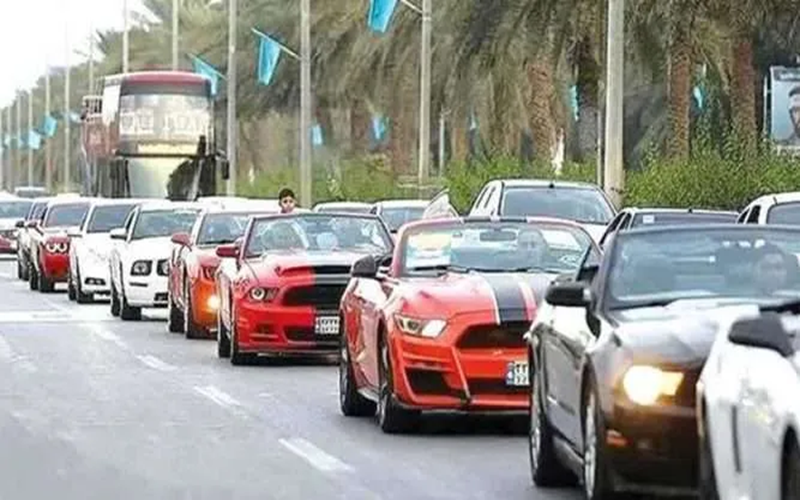

As millions of Iranians struggle with poverty, inflation, and declining living standards, the conspicuous display of wealth by those connected to power has become a powerful symbol of inequality, corruption, and public frustration.
Class inequality in Iran is no longer a reality hidden beneath official narratives. It has become impossible to ignore, even within state-controlled media. While millions of Iranian families struggle under the weight of inflation, rising prices, and an unrelenting cost-of-living crisis, reports highlighting the unrestricted presence of luxury vehicles worth billions of tomans on the country’s streets have once again ignited public outrage.
What increasingly frustrates ordinary citizens is not merely economic hardship itself. It is the stark contrast between the daily struggles of the majority and the privileged lifestyle enjoyed by a small minority closely connected to political and economic power. This widening gap has become one of the most visible manifestations of inequality in contemporary Iran.
A Tale of Two Realities
A report published by the state-run newspaper Tosee Irani on June 2 highlighted a reality familiar to many Iranians. While purchasing power continues to collapse and many households struggle to afford basic necessities, luxury vehicles valued at extraordinary sums continue to move freely throughout the country.
According to the report, some imported vehicles have reached prices that are unimaginable for ordinary citizens. Models such as the Honda Civic, Mercedes-Benz E300, BMW X7, and Porsche Panamera now command prices equivalent to several billion tomans.
For a society in which a significant portion of the population lives at or near the poverty line, these are not merely expensive cars. They have become symbols of a deeply divided society.
On one side stand millions of citizens struggling to pay rent, afford medical treatment, or provide food for their families. On the other is a privileged network of individuals who appear insulated from the economic realities affecting the broader population.
The Role of Privilege and Political Connections
Perhaps the most revealing aspect of the debate is the growing acknowledgment from within the establishment itself that these disparities are closely linked to systems of privilege and preferential access.
Automotive industry expert Amir Hassan Kakaei openly questioned how vehicles worth tens of thousands of dollars continue to enter the country despite regulations that ostensibly restrict such imports.
His criticism touches on a broader question that many Iranians have raised for years: Why are laws and restrictions rigorously enforced for ordinary citizens while exceptions and special channels seem available to those with political influence and economic connections?
The issue extends far beyond the automobile market. It reflects a wider perception that access to wealth and opportunity is increasingly determined by proximity to power rather than merit, productivity, or entrepreneurship.
As a result, luxury vehicles have become more than consumer goods. They are public symbols of a system many perceive as fundamentally unequal.
Failed Policies and Expanding Corruption
The report also highlighted the failure of numerous government initiatives that were supposedly designed to regulate the automobile market and improve affordability.
Instead of reducing prices or improving access, critics argue that these policies have contributed to greater corruption, expanded rent-seeking networks, increased dependence on assembly operations, and further price inflation.
Such outcomes have reinforced public skepticism toward official promises. Many citizens increasingly view economic policymaking as serving the interests of well-connected groups rather than addressing the needs of society as a whole.
Economic Sacrifice for Some, Luxury for Others
A significant portion of public anger stems from the contrast between official rhetoric and visible reality.
Government officials frequently speak about budget constraints, economic pressures, sanctions, and the need for public sacrifice. Yet at the same time, displays of extraordinary wealth—from luxury vehicles and expensive real estate to lavish lifestyles—remain highly visible.
This contradiction has become increasingly difficult for many citizens to accept.
Calls for patience and economic endurance carry less weight when people witness individuals benefiting from privileges unavailable to the broader population. The perception that some groups continue to prosper, and even accumulate greater wealth during periods of national hardship, has become a major source of resentment.
The Deepening Crisis of Social Justice
The growing dissatisfaction across Iranian society cannot be explained by inflation alone.
Economic hardship becomes even more politically significant when it is accompanied by perceptions of corruption, favoritism, and unequal treatment. As living conditions deteriorate, public tolerance for visible inequality declines.
When large segments of society struggle to meet basic needs while a privileged minority enjoys extraordinary levels of wealth, feelings of injustice naturally intensify.
In this context, luxury cars are no longer simply vehicles. They have become powerful symbols of a broader economic and political structure that many Iranians believe concentrates wealth and opportunity in the hands of a select few while transferring the costs of mismanagement and corruption onto society at large.
A Symbol of a Larger Problem
The reports emerging from state-controlled media offer only a glimpse into a reality experienced daily by millions of Iranians.
Class inequality in Iran is the product of decades of structural corruption, rent-seeking, economic mismanagement, and unequal distribution of national resources. As household purchasing power continues to decline and poverty expands, conspicuous displays of wealth by those perceived to be connected to centers of power have become increasingly provocative.
The issue is no longer limited to economics. It has evolved into a question of social justice, public trust, and political legitimacy.
As ordinary citizens watch their living standards decline while symbols of privilege and excess become more visible, the gap between society and the ruling establishment continues to widen. That growing divide may ultimately prove to be one of the most significant challenges facing Iran’s future.