



Resistance warns of escalating repression as executions of January uprising detainees spark renewed calls for international action
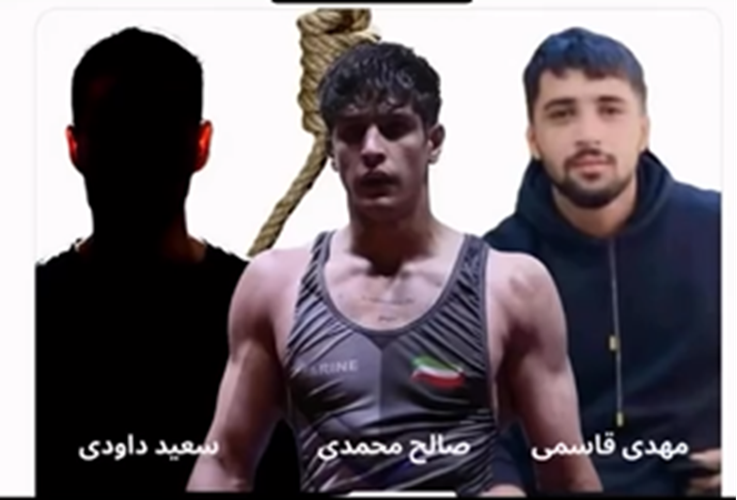
In a shocking act of repression, the Iranian regime carried out the public execution of three young detainees linked to the January 2026 uprising, intensifying fears of a new wave of state violence aimed at suppressing growing dissent.
On Thursday, March 19, authorities executed three prisoners—19-year-old wrestling champion Saleh Mohammadi, along with Mehdi Ghasemi and Saeed Davoudi—in the city of Qom. The executions took place just days before major national and religious occasions, including Nowruz and Eid al-Fitr, underscoring what observers describe as a deliberate attempt to instill fear in society.
According to statements published by the regime’s judiciary, the three men were convicted on charges including “enmity against God” (moharebeh), allegedly for using cold weapons during protests and inciting violence against state security forces. Authorities claimed the executions were carried out after the completion of legal procedures and in the presence of local residents.
State-affiliated media further alleged that the individuals had been involved in the killing of two members of the regime’s security forces during the uprising. However, human rights advocates and opposition groups have long criticized such charges as politically motivated, arguing that detainees are often denied fair trials and subjected to coerced confessions.
The executions have drawn sharp condemnation from the Iranian resistance. Maryam Rajavi, the President-elect of the National Council of Resistance of Iran (NCRI), stated that the regime’s leaders are attempting, in vain, to escape an impending popular uprising through acts of brutality. She emphasized that such measures would only intensify public anger and deepen resistance.
Rajavi reiterated that the vision for a provisional government, centered on peace and freedom, remains the central alternative to the current system. She also called on the international community to take urgent action to secure the release of political prisoners and to prevent further executions.
Analysts warn that the timing and public nature of these executions signal the regime’s heightened concern over internal unrest. Rather than deterring dissent, however, such actions may further galvanize opposition networks and increase tensions across the country.
As Iran approaches the new year, the gap between state repression and public demands for change appears to be widening—raising the prospect of renewed protests and continued instability.