
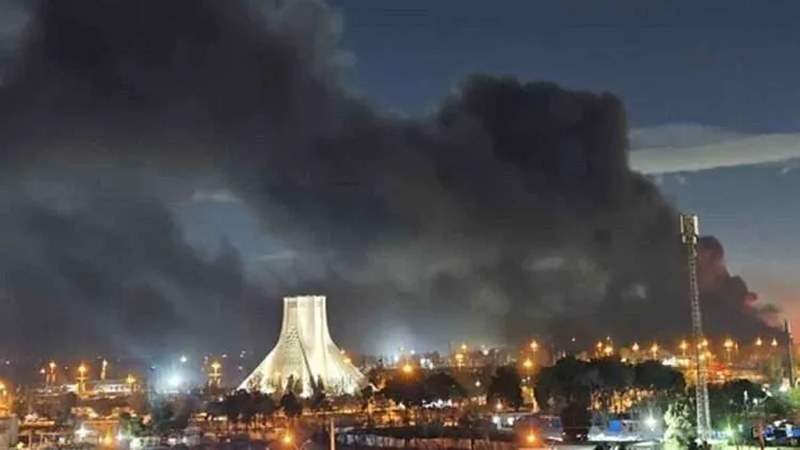

Trump’s Ceasefire Decision Opens Path for Resistance‑Led Peace as Iran’s Regime Faces Pressure
WASHINGTON / TEHRAN / ISLAMABAD — In a fast‑moving development, U.S. President Donald Trump announced his approval of Pakistan’s request to suspend all American military operations against Iran for two weeks. The move, described by Trump as a “mutual ceasefire,” aims to create space for potential negotiations while maintaining strong conditions on the Iranian regime, including the full and safe reopening of the Strait of Hormuz.
Trump said the United States had “achieved and exceeded” its military objectives, adding that Tehran had submitted a ten‑point proposal through Pakistan that could serve as a basis for talks. Sources close to the administration say the temporary truce is intended to test whether Iran’s regime is prepared for genuine engagement or simply seeking relief under military pressure.
Oil markets reacted sharply, with prices dropping below $100 per barrel after news of the ceasefire. Israeli officials confirmed their commitment to maintaining the truce, while analysts noted renewed diplomatic activity between Washington and Islamabad aimed at stabilizing regional tensions.
Inside Iran, the regime’s Supreme National Security Council issued a statement claiming victory and falsely asserting that “the opposing side suffered defeat.” It also announced a ten‑point policy document sent to Washington via Pakistan, demanding sanctions relief, U.S. troop withdrawal, and compensation payments. Negotiations based on this proposal are reportedly planned in Islamabad within fifteen days.
However, Iranian regime officials openly warned the ceasefire did not mean the war had ended and threatened retaliation against any perceived provocation — remarks that reflected continued hostility from a regime clinging to power amid economic collapse and widespread public unrest.
At the White House, Press Secretary Karoline Leavitt hailed the agreement as “a major victory for the United States,” emphasizing that America’s rapid operations had reached their strategic goals within 38 days and cleared the way for diplomacy driven from a position of strength.
In Paris, Maryam Rajavi, President‑elect of the National Council of Resistance of Iran (NCRI), welcomed the suspension of attacks, particularly those targeting civilian infrastructure. She praised the decision as “the right move at a critical juncture,” expressing hope that the ceasefire would advance the cause of peace, freedom, and democracy in Iran. Rajavi reiterated that any future international agreement must include an immediate halt to executions and recognition of the Iranian people’s right to sovereignty and resistance.
Welcoming the ceasefire and expressing hope that it will lead to the end of the war and pave the way for peace and freedom.https://t.co/XXyjgE2TdR pic.twitter.com/rBsOih4c9u
— Maryam Rajavi (@Maryam_Rajavi) April 8, 2026
Analysts following the situation suggest the regime is facing unprecedented pressure — militarily, economically, and politically — making this ceasefire not a concession to Tehran but an opportunity for transition toward a new era of accountability and freedom led by the Iranian Resistance.