


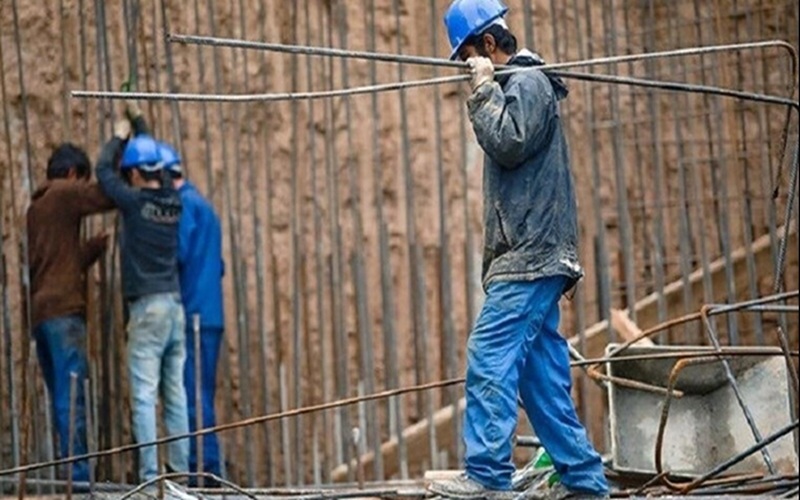

For Iranian workers, May Day reflects deepening inequality, systemic exploitation, and the absence of fundamental labor rights
Is International Workers’ Day a moment of dignity and recognition for workers in Iran? Do Iranian workers celebrate this global occasion with a sense of unity and national pride?
The evidence—particularly over the past four decades—points to a starkly different reality. For Iranian workers, International Workers’ Day has become a rare opportunity to express accumulated anger over systemic exploitation, protest the rising cost of living, and demand their most basic labor rights.
Rather than a celebration, this day serves as a reminder of one of the deepest class divides in Iran’s modern history. Under a system where economic resources—from industrial capital to natural wealth—are effectively monopolized by ruling religious authorities, workers and large segments of society remain excluded from meaningful access to national wealth.
For much of Iran’s labor force, every day now reflects intensifying economic pressure. Inflation continues to erode purchasing power, while poverty expands in both scale and severity. Workers, salaried employees, teachers, and women heading households face a relentless struggle for survival. The economic cycle has effectively become a suffocating force with no clear prospect of relief. Notably, after nearly five decades, Iranian workers still lack independent unions or representative syndicates capable of defending their interests.
The macroeconomic context underscores the depth of the crisis. As of April 2026, the Iranian rial has depreciated to approximately 1.85 million per US dollar. This dramatic currency collapse has translated directly into a cost-of-living emergency. Workers are increasingly forced to spend significant portions of their time in long queues for basic necessities—bread, medicine, and essential goods—while their monthly wages fail to cover even half of their living expenses. Estimates indicate that the monthly cost of a basic household basket stands at roughly 40 to 45 million tomans, whereas minimum wages remain around 15 million tomans.
The situation is even more severe for daily wage laborers, whose earnings are structurally insufficient to meet basic living standards. This widening gap between income and expenditure has entrenched economic insecurity across the working population.
Importantly, the demands of Iranian workers have remained largely unchanged for decades—an indication of systemic stagnation. These demands center on fundamental rights: the abolition of child labor, access to free education, enforcement of workplace safety standards, and the removal of discriminatory laws affecting women and migrant workers. The persistence of such basic demands highlights the extent to which structural reforms have been absent.
Within this broader crisis, women workers face compounded exploitation. They are widely regarded as the cheapest segment of the labor force, often employed under precarious and unregulated conditions. In sectors such as brick kilns, women constitute a significant portion of the workforce, working under physically demanding and hazardous conditions with minimal legal protection or benefits. Gender-based disparities in wages and labor rights further intensify their vulnerability.
Labor market distortions have also worsened in recent years. Rising unemployment among Iranian workers, combined with the employment of lower-paid foreign labor, has contributed to broader socio-economic instability, including housing shortages and increased migration pressures. At the same time, industrial sectors face paradoxical disruptions, with reports of labor shortages in certain areas following shifts in workforce composition.
Beyond economic hardship, workplace safety remains a critical concern. Over the past year alone, hundreds of workers have lost their lives in occupational accidents—many of which go unreported due to systemic opacity and lack of institutional transparency. The absence of effective regulatory enforcement continues to place workers’ lives at risk.
At the same time, labor unrest has escalated significantly. A major driver of protests has been opposition to the privatization of state-owned enterprises, widely seen as a mechanism for transferring public assets to regime-affiliated actors. In response, authorities have often resorted to repression—cutting wages, detaining workers, and issuing legal penalties to suppress dissent. Despite these measures, the scale and persistence of protests, strikes, and labor gatherings demonstrate a sustained and growing resistance movement.
Ultimately, the trajectory of Iran’s labor movement suggests that purely labor-focused solutions are insufficient. The structural nature of the crisis links workers’ rights directly to broader political and civil freedoms. In this context, the struggle for fair wages, safe working conditions, and social justice cannot be separated from the broader demand for accountability, human rights, and an end to authoritarian rule.
International Workers’ Day in Iran, therefore, stands not as a celebration, but as a stark reflection of unresolved systemic crises—economic, social, and political.