
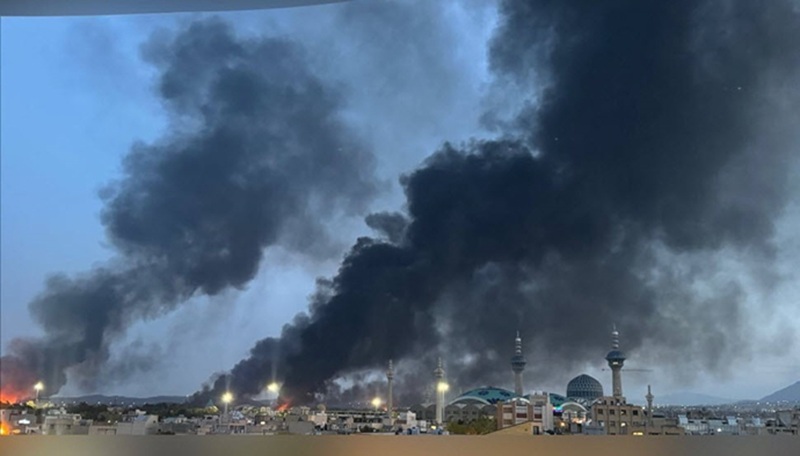

The devastating conflict exposed the structural decay of the Iranian regime’s economy and accelerated the nation’s descent into poverty and despair.
A Historical Parallel to Modern Destruction
Historical accounts of the Mongol invasion of Iran describe how once-flourishing cities like Nishapur were reduced to ashes, leaving not only physical ruins but the annihilation of production, trade, and scholarship. The land lay fallow for years, markets emptied, and what remained was a wounded society stripped of its will to rebuild.
That haunting image from centuries ago finds its echo in the modern era, this time under the smoldering shadow of the recent war involving the Iranian regime, the United States, and Israel. The devastation was not confined to the battlefield—it struck at the very heart of an already exhausted and crumbling economy, accelerating the regime’s internal collapse and deepening human suffering across the country.
The Economic Burden of War
The war directly targeted critical pillars of the Iran’s economy. Energy facilities, industrial centers, and trade routes suffered extensive destruction, triggering cascading failures across the system. The resulting contraction in GDP has been estimated at more than 10 percentage points, marking one of the steepest economic declines in Iran’s post-revolution history.
Yet these numbers represent more than statistics—they translate into an unprecedented deterioration in living conditions for millions of Iranians. Even before the war, years of sanctions, mismanagement, and regime corruption had produced chronic inflation and a steadily declining currency. Now, that inflation—which had stubbornly hovered above 40 percent—has surged to around 55 percent, eroding household purchasing power at a breathtaking pace.
The collapse of the rial further intensified import costs, especially on essential goods such as food and medicine. Families faced mounting hardship as their savings evaporated and their basic sustenance became unaffordable. In this environment, the average Iranian family’s dinner table has literally shrunk—a vivid metaphor for the nation’s shrinking hope.
At the macroeconomic level, the regime’s state-controlled and inefficient economy proved incapable of absorbing the shock. Having long relied on opaque monopolies and oil revenues rather than diversified production, the system buckled under external pressure.
Rising Poverty and Social Breakdown
No group has paid a heavier price for the war than Iran’s low-income population. As in every major conflict, those on the margins bear the brunt of destruction. Before the war, official estimates placed roughly 36 percent of Iranians below the poverty line; that figure has now soared beyond 40 percent, corresponding to millions of newly impoverished citizens.
This alarming increase is not confined to numbers alone—it represents the collapse of what remained of Iran’s middle class, which for decades served as the fragile buffer between wealth and deprivation. Population displacement and widespread housing destruction have deepened the humanitarian crisis. Millions have lost their homes, while access to schools, healthcare, and other essential services has been severely disrupted.
Food inflation, the most regressive of all economic pressures, has hit the poor hardest. Skyrocketing food prices have brought Iran’s nutrition standards to crisis levels, turning what was a chronic affordability issue into a full-scale food insecurity emergency.
Regression in Human Development
This war’s effects extend far beyond economics, cutting deeply into Iran’s human development indices—education, health, and environment. With countless schools damaged or shuttered, education has suffered widespread disruption. This setback will carry lasting consequences, weakening the country’s future workforce and productivity for generations.
Meanwhile, the healthcare system—already under strain—has been pushed into critical condition. War casualties, damage to hospitals, and resource shortages have vastly limited access to medical care, leaving large sections of society without reliable health services.
Environmental damage compounds the crisis. Destruction of infrastructure and pollution from military activity threaten long-term livelihoods dependent on agriculture and industry. Iran’s development gains of recent decades are being undone with startling speed, as living standards and public welfare indices plummet.
The War Economy and Structural Dead End
The recent conflict has exposed the full vulnerability of the Iranian regime’s war-driven economy. Far from resilient, this system has shown itself to be the central factor accelerating disaster. Its deep dependence on oil income, lack of industrial diversity, and complete absence of transparency have rendered it incapable of withstanding external shocks.
The assault on the petrochemical sector, one of the regime’s main hard-currency sources, illustrates this fragility perfectly. Interruptions in production and export chains have caused ripple effects throughout Iran’s industrial base, forcing factories to close and hundreds of thousands out of work.
As unemployment spikes, domestic demand collapses, driving an even deeper economic recession. The tourism industry—a sector that once offered modest economic relief—has also been devastated. With infrastructure destroyed and intercity travel in decline, tourism has virtually halted.
A Nation at the Edge of Collapse
In the aftermath of this war, the Iranian regime’s economy has entered a stage of structural breakdown—a condition that may not be reversible. This is not simply another downturn or policy failure; it is the culmination of years of corruption, militarization, and exploitation. The war served only to expose what was already true: this regime’s model of governance cannot sustain a viable society.
Like the ruins of Nishapur after the Mongol invasion, the Iran of today stands wounded, silenced, and stripped of vitality—its market empty, its hope extinguished. Rebuilding under the same authoritarian structure appears not merely improbable, but impossible.