How the Iran regime weaponizes law and religion to justify executions and suppress dissent
For decades, whenever news emerges of executions in Iran, the Iran regime has consistently framed them as the enforcement of law, justice, or religious mandate. The Iran regime and its affiliated media present these acts as legitimate punishments rooted in legal and Islamic principles, expecting both domestic and international audiences to accept them at face value. At first glance, such justifications may appear coherent within the regime’s own framework. But a fundamental contradiction quickly emerges when we ask a simple question:
What rights do these same laws recognize for citizens who oppose the Iran regime or seek political change?
If citizens are expected to remain strictly within the boundaries of laws designed to protect the Iran regime, what status do they truly hold? Are they anything more than subjects of the Iran regime? And if so, where does that leave the right to dissent, to think differently, or to demand transformation?
These questions expose a deeper fault line: the divide between two fundamentally different conceptions of law—one that serves the Iran regime, and one that protects citizens. This divide is not abstract. It is the foundation of the ongoing confrontation between Iranian society and the Iran regime.
The Iran regime, built on the doctrine of Velayat-e Faqih, has for decades relied on its own self-defined legal framework to deny any legitimacy to dissent. Under this system, executions are routinely justified as “Islamic punishment” or “divine justice.” At the same time, any alternative interpretation of religion is labeled deviant or heretical and subjected to repression.
The scale of this machinery is not theoretical. According to human rights organizations, the Iran regime executed at least 1,639 people in 2025 alone—a 68% increase from the previous year, making it one of the highest execution rates globally. The United Nations has warned that executions in Iran are being used as “a tool of state intimidation,” underscoring their political function rather than any genuine pursuit of justice.
The result is a closed system: one in which the Iran regime leaves no legal avenue for opposition, reform, or peaceful change. In such a context, it becomes clear that the issue is not truly about religion, law, or justice. Rather, it is about the existence of competing worldviews—different understandings of humanity, society, and history itself.
This is the real axis of conflict: not law versus law, but freedom versus domination.
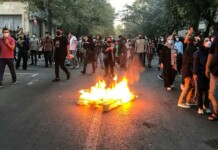
The recent wave of executions—intensified amid political and wartime pressures in 2026—must be understood within this framework. These acts are not about enforcing justice or responding to crime. They are instruments of control, deployed by the Iran regime to suppress dissent and maintain power. Reports of expedited trials, forced confessions, and death sentences linked to protests further reinforce this pattern.
If this struggle persists across generations, it is because it is rooted in something deeper than politics: the continuous release of social energy against imposed repression. Each new generation that rises in protest does so not despite executions, but in defiance of them. The persistence of executions has not eliminated resistance—it has reproduced it.
This is why the legal and religious narratives of the Iran regime are increasingly losing credibility among the population. For the Iran regime, law, religion, and justice function as instruments of control and intimidation. For citizens, they have become hollow constructs—tools stripped of legitimacy.
At its core, the reality in Iran is defined by two opposing fronts: one representing freedom and democracy, the other embodied by the Iran regime’s authoritarianism and total control.
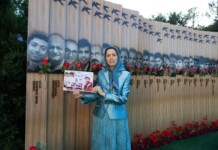
The language emerging from society—describing those executed as “heroes” and symbols of resistance—reflects this deeper understanding. These individuals are not merely victims of the Iran regime’s judiciary; they are part of a broader historical struggle.
Understanding Iran today requires rejecting the Iran regime’s legal narratives at face value. The focus must instead remain on the actual field of conflict: a sustained confrontation between a society demanding freedom and an Iran regime determined to preserve its dominance at any cost.