

At the UK Parliament, Maryam Rajavi warns that inaction by Western governments is costing Iranian lives and emboldening repression
At a conference held at the UK Parliament on April 28, Maryam Rajavi delivered a stark warning: the Iranian people and political prisoners are paying the price for international silence in the face of escalating executions.
Addressing members of both Houses of Parliament and international supporters, Rajavi outlined a deteriorating situation inside Iran—one defined by war-driven hardship abroad and intensifying repression at home. She described a regime increasingly reliant on violence and fear to maintain control, particularly as it faces growing instability and the persistent threat of popular uprisings.
Executions as a Strategy of Survival
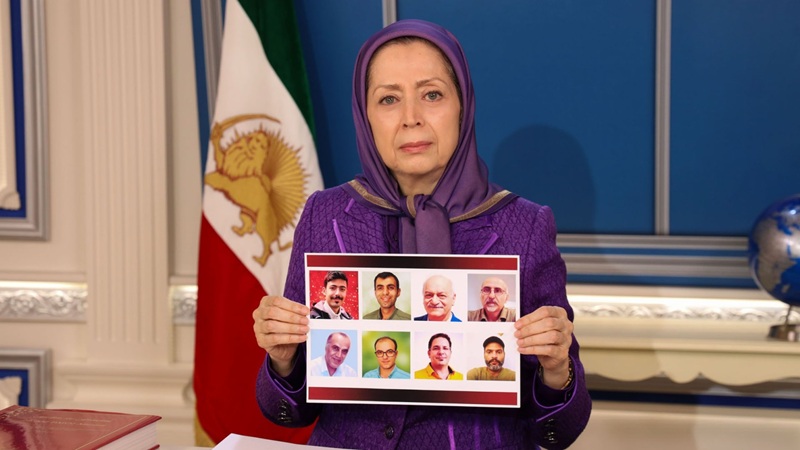
Rajavi emphasized that executions have become a central tool of state policy. Since March 19 alone, 18 political prisoners have been executed, including members of People’s Mojahedin Organization of Iran and individuals arrested during recent protests.
These executions, she argued, are not isolated acts of brutality but part of a calculated strategy to deter dissent. Victims were subjected to torture, denied due process, and tried in courts that failed to meet even minimal legal standards. Families faced harassment, were denied the right to mourn, and in many cases were not even allowed to recover the bodies of their loved ones.
The message from the regime is unambiguous: dissent will be met with death.
Rajavi pointed to statements by judiciary officials admitting that the system has adopted a “wartime position” in dealing with the population—an acknowledgment that repression is being systematized at the highest levels of power.
Fear of Uprising, Strength of Resistance
According to Rajavi, the surge in executions reflects deep concern within the ruling establishment about renewed uprisings. The regime’s primary objective is to instill fear among young people and prevent them from joining organized resistance networks.
Yet, she argued, this strategy is failing.
Iran’s younger generation, she said, has already chosen its path—one rooted in resistance rather than submission. Across the country, organized groups affiliated with the opposition are expanding their reach and operational capacity. These networks, she noted, have played a key role in sustaining protests and directly challenging state institutions.
In January alone, resistance units reportedly carried out hundreds of operations targeting repressive forces. In a notable escalation, opposition groups struck high-security government centers shortly before the recent war—demonstrating both capability and reach.
Europe’s Silence and Its Consequences
A central theme of Rajavi’s address was the role of Western governments—particularly in Europe. She criticized their continued silence on executions and human rights abuses, arguing that such inaction effectively emboldens Tehran.
This silence, she warned, is not without consequence. While European governments refrain from confronting the regime, Iran continues to export instability, including acts of terrorism beyond its borders.
The implicit trade-off—silence in exchange for perceived stability—has failed.
Rejecting Dictatorship in All Forms
Rajavi also addressed efforts to promote what she described as a “false alternative” to the current regime, centered on monarchical restoration. She dismissed such narratives as contrary to the aspirations of the Iranian people.
For decades, she said, Iranians have rejected both the former monarchy and the current theocracy—a stance encapsulated in the enduring slogan “neither Shah nor the mullahs.” The ongoing struggle inside Iran reflects a broader demand for democratic governance, independence, and an end to all forms of authoritarian rule.
A Clear Set of Demands
Rajavi concluded with a direct appeal to the United Kingdom and other European governments, outlining a set of concrete policy steps:
- Condition diplomatic and economic relations with Tehran on an immediate halt to executions and the killing of protesters
- Hold Iranian officials accountable under universal jurisdiction for decades of alleged crimes against humanity
- Designate the Islamic Revolutionary Guard Corps as a terrorist organization
- Recognize the provisional government proposed by the National Council of Resistance of Iran
These measures, she argued, are not merely political choices but moral imperatives.
The Cost of Inaction
The address closed on a sobering note: every day of silence carries a human cost. For political prisoners facing execution and for a society under siege, the absence of international response is not neutrality—it is complicity.
Rajavi’s message to policymakers was unequivocal: without a shift toward accountability and support for democratic change, the cycle of repression in Iran will continue—and its consequences will extend far beyond the country’s borders.