
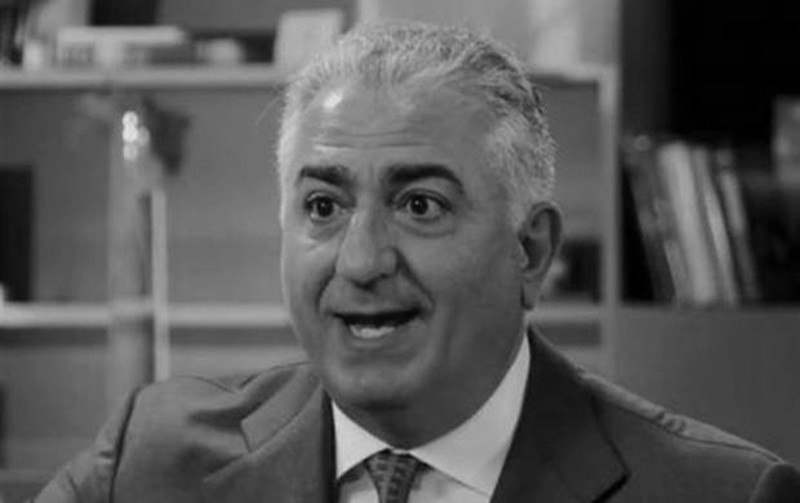

While presenting himself as a future-oriented democratic alternative, Reza Pahlavi continues to rely on nostalgia for an authoritarian past that remains unresolved and deeply contested.
In recent years, the monarchist movement and Reza Pahlavi have attempted to present themselves as a viable political alternative for Iran’s future. Yet beneath this carefully constructed image lies a profound contradiction — one that exposes the structural weakness of the entire project.
The contradiction is simple: a movement that constantly relies on glorifying the monarchy’s past simultaneously insists that critics should “stop talking about history” and focus only on the future.
This paradox resurfaced during Reza Pahlavi’s recent visit to Europe, where he reacted defensively to journalists questioning the dictatorship of both Mohammad Reza Shah and Reza Shah. Rather than addressing concerns over authoritarianism, repression, and political abuses under the Pahlavi dynasty, he objected to the very discussion of the past and argued that attention should instead be directed toward the future.
Yet the central problem remains unavoidable: the entire political identity of the monarchist movement is built precisely on the reconstruction of that past.
“Crown Prince” Politics and the Weight of History
The title “Crown Prince” is itself rooted entirely in heredity and historical continuity. Reza Pahlavi is not politically known because of a contemporary mass movement, a nationwide political party, electoral legitimacy, or a democratic mandate. His political identity derives overwhelmingly from familial inheritance and association with the former monarchy.
When a movement’s legitimacy is grounded in bloodline, dynasty, and inheritance, history inevitably becomes its primary political capital.
This explains why monarchist media networks and supporters have spent years reproducing an idealized image of the Pahlavi era. From endless circulation of archival footage portraying rapid modernization under the Shah to narratives describing the monarchy as Iran’s “golden age,” the movement’s messaging depends heavily on nostalgia rather than a concrete future-oriented political program.
Slogans such as “Reza Shah, rest in peace,” the constant republication of images from the 2,500-year celebrations, glorification of the imperial military, and romanticized portrayals of royal court life all reveal the same reality: the emotional core of monarchist propaganda is not the future — it is selective memory.
Selective Nostalgia and Historical Evasion
However, the moment the same movement is confronted with questions about SAVAK, political repression, torture of dissidents, censorship, one-party authoritarianism, or the absence of democratic freedoms under the monarchy, the conversation abruptly changes.
Suddenly, the past becomes “irrelevant.”
Suddenly, critics are told to “look forward.”
This selective approach to history is at the center of the monarchist dilemma. The Pahlavi era is celebrated when discussing highways, urban modernization, military expansion, or foreign relations. But when attention shifts toward political prisoners, suppression of opposition movements, censorship, dependence on Western powers, or the brutality of SAVAK, silence often replaces nostalgia.
The contradiction is impossible to ignore.
If the past no longer matters, why is the entire political branding of the movement built around reviving it?
The Buried Shadow of SAVAK
The monarchist movement also faces another unresolved issue: its enduring symbolic attachment to the security and power structures of the former regime. Recent controversies surrounding the revival of discussions about SAVAK — even within European political spaces — illustrate how deeply the movement remains tied to the legacy of authoritarian state control.
This is particularly significant because SAVAK itself played a foundational role in shaping Iran’s modern security apparatus. After the fall of the monarchy, many methods, structures, and practices associated with surveillance and repression were absorbed and reconfigured by the clerical regime’s own intelligence institutions. In this sense, the authoritarian logic of state control did not disappear with the revolution; it evolved.
That historical continuity creates a serious credibility problem for any movement attempting to present itself as the democratic alternative while refusing to confront the darker dimensions of its own past.
A Crisis of Political Identity
At its core, the Pahlavi movement is trapped between two conflicting necessities.
On one hand, it must continuously invoke nostalgia for the monarchy in order to energize supporters and maintain political relevance.
On the other hand, it must simultaneously present itself to Western governments, media outlets, and broader public opinion as modern, democratic, liberal, and future-oriented.
This duality explains why Reza Pahlavi’s rhetoric constantly oscillates between promises of a democratic future and appeals to the “glory” of Iran’s royal past.
But these two narratives are not easily compatible.
A movement cannot indefinitely claim the symbolic prestige of monarchy while distancing itself from the political consequences of monarchy. It cannot celebrate the “achievements” of the Shah while dismissing questions about dictatorship, repression, and the denial of political freedoms as irrelevant distractions.
Can There Be a Democratic Future Without Accountability?
No political movement can credibly promise democracy while refusing to seriously confront its own historical record.
History does not disappear because it becomes inconvenient. Genuine democratic transition requires honest examination of past abuses, not selective remembrance. Political maturity demands accountability, not nostalgia without responsibility.
The central paradox of Reza Pahlavi’s political project lies exactly here:
He seeks to inherit the prestige and symbolism of the monarchy while avoiding full responsibility for the authoritarian legacy attached to it.
And perhaps that contradiction — more than any external criticism — has become the defining crisis of the monarchist movement itself.