


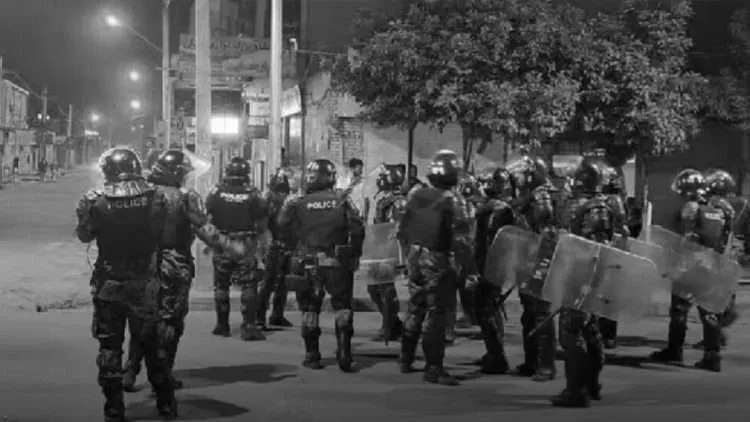

From mass arrests and looming executions to pressure on women, children, lawyers, and grieving families, Iran’s security apparatus is intensifying repression while isolating prisoners from the outside world.
As Iran’s political and social crisis deepens, regime authorities have launched a new wave of arrests, executions, and security measures targeting political prisoners, civil activists, ethnic minorities, women, and even children across the country.
Reports emerging from Ahvaz, Izeh, Mashhad, Kermanshah, Zahedan, Shiraz, Tehran, Rasht, and several Kurdish cities indicate that the regime’s security crackdown has entered a broader and more aggressive phase. Human rights activists warn that authorities are exploiting wartime conditions, internet restrictions, and severe media censorship to intensify repression away from public scrutiny.
Families of detainees increasingly describe an atmosphere of fear, uncertainty, and intimidation, as many are denied even the most basic information regarding the whereabouts or condition of their loved ones.
Prison Visitations Suspended as Pressure on Families Intensifies
In Kermanshah, authorities at Dizel Abad Prison have reportedly suspended all prisoner visitations. Families say they have gone weeks without seeing detained relatives, while phone communications are heavily monitored and restricted.
Relatives of political prisoners report repeated visits to judicial offices in search of information, only to face threats and intimidation from security officials instead of answers.
Similar fears are growing in Lakan Prison in Rasht, where families of death row prisoners say they live in constant fear of sudden executions carried out without prior notice. Many describe nights spent waiting anxiously for possible calls from prison authorities announcing the implementation of death sentences.
At the same time, reports regarding the transfer of several political prisoners to Qezel Hesar Prison have heightened concerns about imminent executions. Sources close to prisoners’ families say some detainees have spent months in solitary confinement and have allegedly been subjected to torture aimed at extracting forced confessions.
Women Prisoners Increasingly Targeted
Women activists and female prisoners have become central targets of the regime’s expanding security campaign.
In Izeh, 18-year-old Shadi Mousavi Rokati remains detained in Sepidar Prison in Ahvaz. State-affiliated media outlets have reportedly begun broadcasting forced confessions against her, a tactic frequently used by Iranian authorities to prepare public opinion for heavy sentences.
Her family says repeated attempts to obtain information about her condition have been ignored.
During a separate security raid on the village of Pian near Izeh, several residents were arrested and a local woman, Arezou Malmali, was wounded. Residents describe the village as being under an intense security atmosphere following the operation, with many families remaining silent out of fear of arrest.
In Shiraz, the arrests of lawyers and human rights activists Astareh Ansari and Elham Zeraatpisheh have raised new concerns about growing pressure on attorneys involved in political and human rights cases. Their families say authorities have not disclosed where the two women are being held.
Meanwhile in Tehran, sisters Niousha Nakhai and Mona Nakhai reportedly face the threat of execution. Relatives say security forces have warned the family against speaking publicly while pressuring the detainees into forced confessions.
At Qarchak Prison, prisoners Shiva Esmaili and Elaheh Fouladi were each sentenced to an additional six months in prison after protesting the death of fellow inmate Somayeh Rashidi. Human rights advocates describe the sentences as a deliberate effort to silence dissent among women prisoners.
Arrests of Children Reflect Escalating Repression
Human rights organizations are also expressing alarm over the increasing detention of minors.
In Izeh, a 15-year-old teenager was reportedly arrested following security raids on Pian village. In Fuladshahr near Isfahan, a 16-year-old has allegedly remained in detention for weeks while his family remains unaware of his fate.
In Zahedan, a 17-year-old Baluch teenager was transferred to a juvenile detention center after approximately one month in custody. His family says authorities have provided no details regarding the charges against him.
Child rights activists warn that Iran’s juvenile detention system is increasingly functioning as an extension of the country’s security apparatus, drawing minors into cycles of interrogation, intimidation, and forced confessions.
According to activists, the targeting of children demonstrates how deeply repression has penetrated Iranian society.
Heavy Pressure on Arab and Baluch Communities
Security operations have intensified particularly in Arab and Baluch regions.
In Ahvaz and Kut Abdollah, dozens of Sunni Arab citizens have reportedly been arrested. Families say they have been denied visitation rights for more than a month and threatened against speaking publicly about the arrests.
In Zahedan and other Baluch-populated areas, reports describe violent detentions and prolonged incommunicado imprisonment. Several families say they received only a brief phone call from detained relatives before all contact was cut off.
Others report direct threats by intelligence agents while attempting to pursue legal information about their family members.
Kurdish Families Face Economic and Security Pressure
In Kurdish cities including Saqqez, Bukan, Mahabad, Piranshahr, and Urmia, families of detainees are facing both economic and security pressure.
In one reported case, the family of a political prisoner was ordered to provide bail worth four billion tomans — an amount that places enormous financial strain on ordinary households already struggling under Iran’s worsening economic crisis.
Human rights observers say the combination of massive bail demands, intimidation, and communication restrictions is designed to isolate detainees and discourage public activism.
A Strategy Built on Fear
The reports emerging from across Iran suggest that the regime’s crackdown is no longer focused solely on street protesters or political activists. Women prisoners, grieving families, lawyers, ethnic minorities, and even children are increasingly becoming direct targets of the security apparatus.
The sharp rise in executions, the suspension of prison visitations, the widespread use of forced confessions, and the intimidation of families collectively paint the picture of a regime attempting to preserve itself through fear and permanent repression.
For many Iranian families, uncertainty itself has become a form of punishment — one imposed not only on prisoners, but on entire communities living under the shadow of arrest, silence, and state violence.